XCZU28DR RFSoC: High-Performance Integrated RF Signal Processing
Table of Contents
- How the XCZU28DR UltraScale+ Zynq RFSoC Architecture Works
- What is an UltraScale+ Zynq RFSoC?
- What the ZU28DR-2FFVG1517I Specifications Mean for Your Design
- How does the -2 speed grade impact RFSoC performance?
- Where the XCZU28DR Fits in Mission-Critical Defense Applications
- What are the primary applications of the XCZU28DR-2FFVG1517I?
- Design Considerations When Integrating the Zynq RFSoC
- Why Authentic XCZU28DR Components Matter for Defense Programs
- Frequently Asked Questions
- What distinguishes the XCZU28DR from other Zynq UltraScale+ devices?
- Is the XCZU28DR-2FFVG1517I suitable for extreme temperature environments?
- What are the typical power consumption considerations for the ZU28DR?
- How does the FFVG1517 package type benefit system integration?
Modern defense systems demand increasingly sophisticated signal processing capabilities, often requiring real-time performance and high integration in constrained environments. The XCZU28DR RFSoC addresses these critical needs by combining advanced radio frequency data converters with powerful programmable logic on a single chip. This integration streamlines system design, reduces latency, and enhances overall system reliability for mission-critical applications.
How the XCZU28DR UltraScale+ Zynq RFSoC Architecture Works
The XCZU28DR integrates high-performance RF-ADCs and DACs directly into a Zynq UltraScale+ programmable logic fabric, which drastically reduces system complexity and latency for real-time signal processing. An RFSoC (Radio Frequency System-on-Chip) merges the analog and digital domains onto a single silicon die. This architecture includes high-speed RF-ADCs (Analog-to-Digital Converters) and RF-DACs (Digital-to-Analog Converters) alongside a Zynq UltraScale+ device.
The Zynq UltraScale+ platform itself is a system-on-chip that combines a powerful ARM Cortex-A53 quad-core processor subsystem with a high-capacity FPGA fabric. This unique combination allows for direct RF sampling, bypassing external data converters and significantly simplifying the signal chain. Embedded systems benefit from reduced board space, lower power consumption, and improved signal integrity. The elimination of discrete converter components also removes potential failure points and reduces the number of interfaces that require careful impedance matching.
What is an UltraScale+ Zynq RFSoC?
An UltraScale+ Zynq RFSoC is a highly integrated device that combines multi-gigasample RF-ADCs and RF-DACs with a multi-core ARM processing system and a high-performance FPGA fabric. This architecture enables direct processing of RF signals without external discrete components, offering a complete signal chain solution from antenna to digital processing. It provides a flexible and scalable platform for advanced applications requiring real-time, high-bandwidth data conversion and processing.
What the ZU28DR-2FFVG1517I Specifications Mean for Your Design
The -2 speed grade of the ZU28DR-2FFVG1517I ensures optimal clock frequencies and signal integrity critical for demanding high-bandwidth applications in extreme operating conditions. This specific part number denotes several key characteristics that directly affect system performance and environmental suitability.
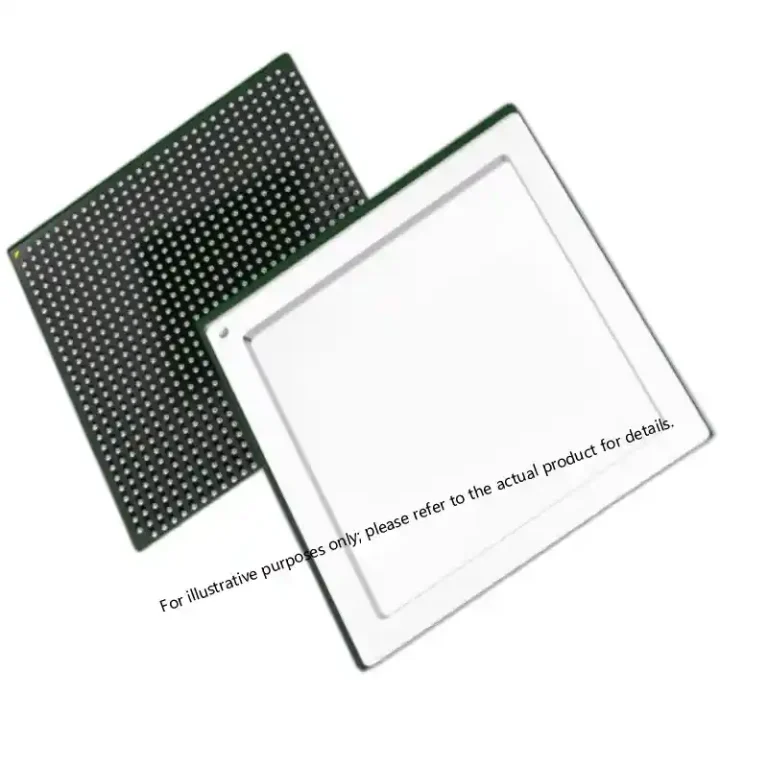
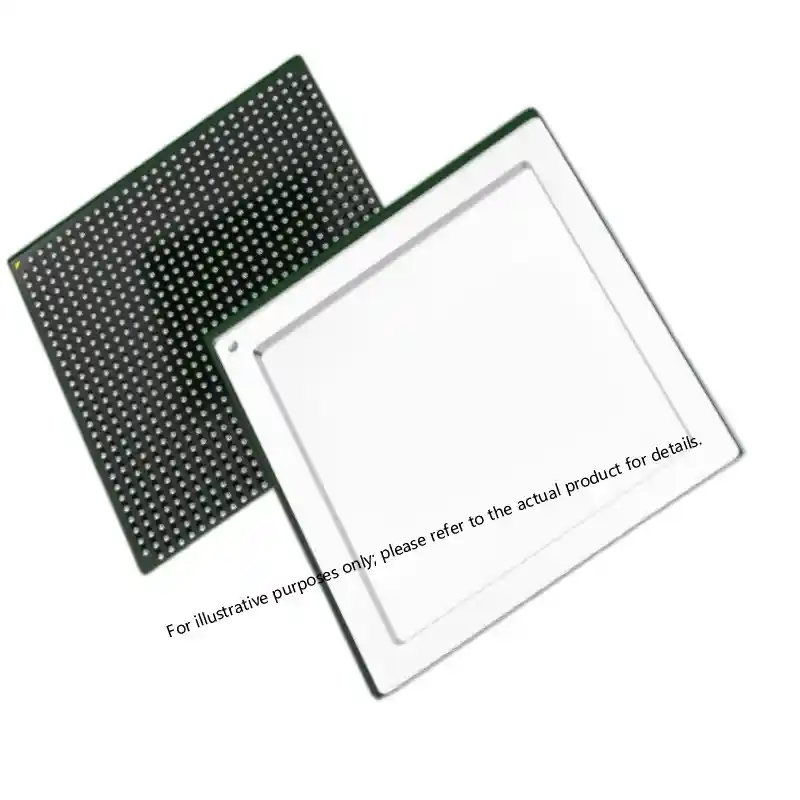
The “ZU28DR” identifies the device family, indicating a Zynq UltraScale+ RFSoC with integrated RF data converters. The “-2” signifies a speed grade, which directly impacts the maximum operating frequency of the FPGA fabric and the ARM Cortex-A53 processors. This higher performance tier provides additional headroom for signal processing tasks that require sustained throughput. The “FFVG1517I” refers to the package type and temperature grade. The FFVG1517 is a flip-chip BGA package with 1517 pins, designed to handle the extensive I/O and power requirements of such a complex device. The “I” suffix confirms an industrial temperature range, typically from -40°C to +100°C, making it suitable for military-grade components and other harsh environments.
Careful consideration of power consumption is paramount during design, as these devices offer substantial processing power that translates directly to thermal management requirements.
| Feature | XCZU28DR-2FFVG1517I Detail |
|---|---|
| Device Family | Zynq UltraScale+ RFSoC |
| Speed Grade | -2 (High Performance) |
| Package Type | FFVG1517 (1517-pin BGA) |
| Temp. Grade | Industrial (-40°C to +100°C) |
| RF-ADCs | Multiple channels |
| RF-DACs | Multiple channels |
How does the -2 speed grade impact RFSoC performance?
The -2 speed grade indicates a higher performance bin for the XCZU28DR, allowing the programmable logic and processing system to operate at faster clock frequencies. This directly translates to increased computational throughput for complex signal processing algorithms, higher data conversion rates for the integrated RF-ADCs/DACs, and reduced latency in real-time applications. For defense systems, this means more rapid target acquisition, faster data analysis, and quicker response times.
Where the XCZU28DR Fits in Mission-Critical Defense Applications
The XCZU28DR is specifically designed for environments requiring robust, real-time signal processing, making it indispensable for advanced radar, electronic warfare, and secure communication systems. Its ability to handle high-speed data conversion and complex algorithms on a single chip is critical for modern defense applications where size, weight, and power (SWaP) constraints are increasingly stringent.
In radar systems, the RFSoC enables direct digital beamforming and high-resolution imaging, improving detection and tracking capabilities. The integrated architecture allows designers to implement adaptive algorithms that can respond to changing threat environments without the latency penalties associated with discrete converter interfaces. For electronic warfare, it facilitates rapid spectrum sensing, jamming, and deception techniques with minimal latency. The ability to process wide instantaneous bandwidths on-chip is particularly valuable when threat signals must be characterized and countered within microseconds.
Secure communications benefit from its high-bandwidth processing for advanced encryption and decryption, ensuring data integrity and confidentiality. The programmable logic fabric can implement custom cryptographic algorithms alongside standard protocols, providing flexibility for classified applications. Furthermore, its architecture supports software-defined radio (SDR) platforms, offering flexibility and reconfigurability for various military communication standards. Beyond defense, these devices are finding use in test and measurement equipment, high-performance computing, and other areas demanding low latency and high bandwidth.
What are the primary applications of the XCZU28DR-2FFVG1517I?
The XCZU28DR-2FFVG1517I is ideally suited for applications that require high-performance, real-time RF signal processing and robust operation in challenging environments. Its primary applications include advanced phased array radar systems, electronic warfare countermeasures, secure satellite and terrestrial communication systems, and high-channel-count software-defined radios. It also serves critical roles in aerospace systems and specialized test and measurement instrumentation where precision and reliability are paramount.
Design Considerations When Integrating the Zynq RFSoC
Successful deployment of the XCZU28DR requires careful attention to power management, thermal design, and leveraging the extensive development tools and IP cores available for the UltraScale+ platform. Integrating such a sophisticated system-on-chip demands a thorough understanding of its power delivery network. Designers must ensure stable voltage rails and efficient heat dissipation to maintain performance and reliability, especially within MIL-SPEC operational parameters.
The power delivery network for an RFSoC of this complexity typically requires multiple voltage rails with tight regulation tolerances. The RF-ADC and RF-DAC subsystems are particularly sensitive to power supply noise, which can degrade signal-to-noise ratio and spurious-free dynamic range. Designers must also consider the complexities of high-speed data interfaces and clocking schemes to fully capitalize on the device’s high bandwidth capabilities. Clock jitter directly affects converter performance, so low-phase-noise clock sources and careful distribution network design are essential.
The security features embedded within the Zynq UltraScale+ architecture, such as hardware root of trust and secure boot, are crucial for defense applications and must be properly configured. These features protect against unauthorized firmware modification and intellectual property extraction, both of which are significant concerns in military systems.
Navigating these design complexities can be challenging, particularly for teams new to the RFSoC architecture. SPARKLE ELECTRONICS CO., LIMITED offers expert guidance and supply chain support, assisting engineers in selecting appropriate development tools and IP cores to accelerate their design cycles and optimize system integration.
Why Authentic XCZU28DR Components Matter for Defense Programs
The integrity of defense systems relies on authentic, traceable, and MIL-SPEC compliant components, necessitating a trusted supply chain to mitigate risks of counterfeit parts and ensure operational reliability. For critical devices like the XCZU28DR RFSoC, authenticity is not merely preferred; it is a requirement that affects both system performance and program compliance.
The consequences of compromised supply chains can be severe. In a recent project involving an airborne radar system upgrade, a contractor had unknowingly procured what appeared to be genuine components from an unauthorized source. Upon independent testing and verification, the parts were found to be substandard and non-compliant with MIL-SPEC requirements. The intervention, which involved facilitating the sourcing of traceable, authentic XCZU28DR-2FFVG1517I devices directly from authorized channels, prevented a potential system failure that could have cost millions and jeopardized mission success.
This experience reinforced the absolute necessity of rigorous supply chain management and compliance demands for obsolescence management. Counterfeit components may exhibit degraded performance under stress, inconsistent behavior across temperature ranges, or premature failure. Any of these outcomes in a defense application could have consequences far beyond the cost of the component itself.
SPARKLE ELECTRONICS CO., LIMITED provides authentic, MIL-SPEC compliant components, ensuring full traceability and supporting critical defense programs with confidence.
Frequently Asked Questions
What distinguishes the XCZU28DR from other Zynq UltraScale+ devices?
The XCZU28DR uniquely integrates high-performance RF-ADC/DACs directly into the Zynq UltraScale+ programmable logic, providing a single-chip solution for advanced signal processing. Other Zynq devices typically require external components for data conversion, which adds board space, power consumption, and potential signal integrity issues. The XCZU28DR is superior for applications demanding compact, low-latency RF signal chains, especially in defense and aerospace where SWaP constraints are critical.
Is the XCZU28DR-2FFVG1517I suitable for extreme temperature environments?
Yes, the “I” in the part number (XCZU28DR-2FFVG1517I) indicates an industrial temperature grade, making it suitable for extended operating temperature ranges from -40°C to +100°C. This specification is critical for deployment in harsh environments, such as those encountered in military and aerospace applications, where consistent performance across wide temperature variations is essential. Systems operating in desert, arctic, or high-altitude conditions benefit from this extended range.
What are the typical power consumption considerations for the ZU28DR?
While specific power consumption varies with application and operating frequency, the ZU28DR, as a high-performance RFSoC, requires careful power management design. Its integrated RF data converters and large programmable logic consume significant power, often in the range of tens of watts depending on utilization. Designers must utilize power estimation tools and implement robust power delivery networks and thermal solutions to ensure stable and efficient operation. Early power budgeting during the system architecture phase helps avoid thermal management challenges later in development.
How does the FFVG1517 package type benefit system integration?
The FFVG1517 is a large BGA package designed to accommodate the extensive I/O and power requirements of the ZU28DR, facilitating robust physical system integration for complex, high-density board designs. Its numerous pins allow for high-bandwidth interfaces and flexible connectivity, which are vital for integrating the RFSoC into sophisticated defense and aerospace systems. The flip-chip construction also provides improved thermal performance compared to wire-bond packages, which helps manage the heat generated by high-speed operation. If your design requires specific pinout configurations or thermal interface guidance, contact us at xuansc2144@gmail.com or by phone.
If you’re interested, check out these related articles:
Virtex-7 690T FPGA: Performance for Mission-Critical Systems
XC7VX485T Virtex-7 FPGA: Performance and Sourcing for Defense
Virtex-7 690T FPGA: Performance, Packaging, and Reliability Insights
XCKU115 UltraScale FPGA: Powering Critical Defense Systems
XCKU085 UltraScale FPGA: Performance for Critical Systems