
Xilinx Military-Grade FPGAs for Aerospace and Defense: Key Part Numbers and Sourcing Tips
Table of Contents
- Xilinx Military-Grade FPGA Families for Aerospace and Defense
- Decoding Xilinx Part Numbers, Grade Suffixes, and Qualification Levels
- Application-Driven Selection: Radar, EW, Avionics, and Space
- Sourcing and Authentication Requirements for Defense Programs
- Long-Term Procurement and Obsolescence Planning
- Xilinx FPGA Sourcing Support and BOM Review
- FAQ
- What is the difference between commercial and military-grade Xilinx FPGAs?
- Which Xilinx FPGA families are most used in aerospace and defense?
- What does QML Class Q versus Class V mean for Xilinx devices?
- How can defense buyers verify authenticity of Xilinx FPGAs?
- What documentation is required for military FPGA procurement?
- How should programs handle obsolete Xilinx military FPGAs?
- References
Xilinx FPGA families appear throughout aerospace and defense electronics because they provide the dense programmable logic, high-speed transceivers, and adaptable signal processing that radar, electronic warfare, avionics, and secure communications systems require. For defense programs, however, selecting a “military-grade” FPGA means more than choosing a high-performance device. It means verifying qualification level, temperature range, traceability, documentation, and long-term supply support before the part ever reaches the production line.
Xilinx Military-Grade FPGA Families for Aerospace and Defense
Defense-oriented Xilinx FPGAs span several process nodes and performance classes. The most common families used in mission-critical designs include:
| FPGA Family | Typical Strengths | Representative Defense-Oriented Parts |
|---|---|---|
| Virtex-4QV | Space-qualified fabric, proven QV screening | XQ4VLX200-class devices |
| Virtex-5QV | Radiation-tolerant QML flow, high DSP performance | XQ5VFX130T-class devices |
| Virtex-7 | High logic density and serial bandwidth | XC7VX485T, XC7VX690T |
| Kintex UltraScale | Balanced power and signal processing | XCKU085, XCKU115 |
Part numbers such as XQ5VFX130T, XC7VX485T, XCKU085, and XCKU115 are representative of devices evaluated for high-reliability aerospace and defense processing. The XQ or XQ-prefix parts generally follow formal military or space-level flows, while defense programs also use extended-temperature industrial devices where the system specification permits. In either case, the qualification label must be confirmed from the manufacturer lot documentation, not inferred from the package marking alone.
Decoding Xilinx Part Numbers, Grade Suffixes, and Qualification Levels
Xilinx part numbers encode family, device resources, speed grade, package type, and temperature or grade information. A part such as XC7VX485T-2FFG1761I communicates the family, device size, speed grade, package, and operating range. Defense buyers should read each field carefully because the same base FPGA can exist in commercial, extended-temperature, and qualified versions.
The military qualification distinction is more important than the commercial naming convention. DoD microcircuit manufacturing requirements are defined in MIL-PRF-38535 [1], with qualified devices listed on the DLA Qualified Manufacturers List [2]. Devices built under this system may be identified as QML Class Q, QML Class V, or space-level equivalents. MIL-STD-883 helps define screening and test methods commonly referenced in hi-rel flows [3].
For aerospace and defense selection, confirm:
- QML Class Q or Class V status where the contract requires it.
- Full temperature range, typically from -55°C to +125°C for military temperature classifications.
- Package and die revision against the controlled bill of materials.
- Burn-in, electrical screening, and conformance data for the specific date/lot codes.
- Whether the device is radiation-hardened, radiation-tolerant, or merely extended-temperature.
Virtex-7 devices such as the XC7VX690T deliver high logic density and DSP resources for demanding aerospace payload processing. <Virtex-7 690T FPGA: Performance for Mission-Critical Systems> covers performance and reliability considerations for mission-critical systems.
Application-Driven Selection: Radar, EW, Avionics, and Space
Different defense applications stress different FPGA resources. Radar and electronic warfare systems prioritize high-speed ADC/DAC interfaces, large DSP blocks, and wideband signal processing. Avionics designs often emphasize deterministic processing, packaging robustness, and long-term reliability. Space and satellite systems add radiation tolerance, thermal qualification, and vacuum-related material constraints.
Xilinx Virtex-7 and Kintex UltraScale families are common choices for radar, EW, SIGINT, and secure communications processing because they balance serial transceiver bandwidth with programmable logic capacity. For avionics and mission processors, smaller but qualification-critical devices may be preferred when power dissipation and package size are constrained.
Radar, electronic warfare, and SIGINT channels need UltraScale-class fabric performance under extended temperature and reliability constraints. <XCKU085 UltraScale FPGA: Performance for Critical Systems> covers UltraScale device selection for critical defense processing.
Sourcing and Authentication Requirements for Defense Programs
Military FPGA procurement is not only a price and availability decision. It is a documentation and risk-management decision. Defense buyers should request the following before accepting a quote:
- Complete part number with package, speed grade, and qualification suffix.
- Manufacturer or authorized source evidence, lot/date codes, and certificate of conformance.
- QML listing reference or manufacturer qualification summary where applicable.
- Test reports for burn-in, electrical screening, or temperature cycling if program-mandated.
- Chain-of-custody information and evidence of counterfeit avoidance controls.
DFARS counterfeit avoidance requirements and SAE AS5553 practices apply to many military electronics procurements [4][5]. A distributor that cannot produce traceability records, lot documentation, or a clear escalation path to the manufacturer increases program risk.
Long-Term Procurement and Obsolescence Planning
Defense programs often outlast the production run of a specific FPGA speed grade or package. Buyers should plan for last-time buy decisions, die bank options, and alternate qualified sources early enough to avoid redesign. A part number that is available today may become constrained over a multi-year delivery schedule.
Long-duration programs benefit from:
- Confirming lifecycle status with the manufacturer before design freeze.
- Holding controlled inventory for high-risk or single-source devices.
- Documenting pin-out, configuration memory, and boot compatibility.
- Evaluating package and temperature-grade alternatives before they become obsolete.
- Keeping serial configuration devices and power-management components in the same lifecycle plan.
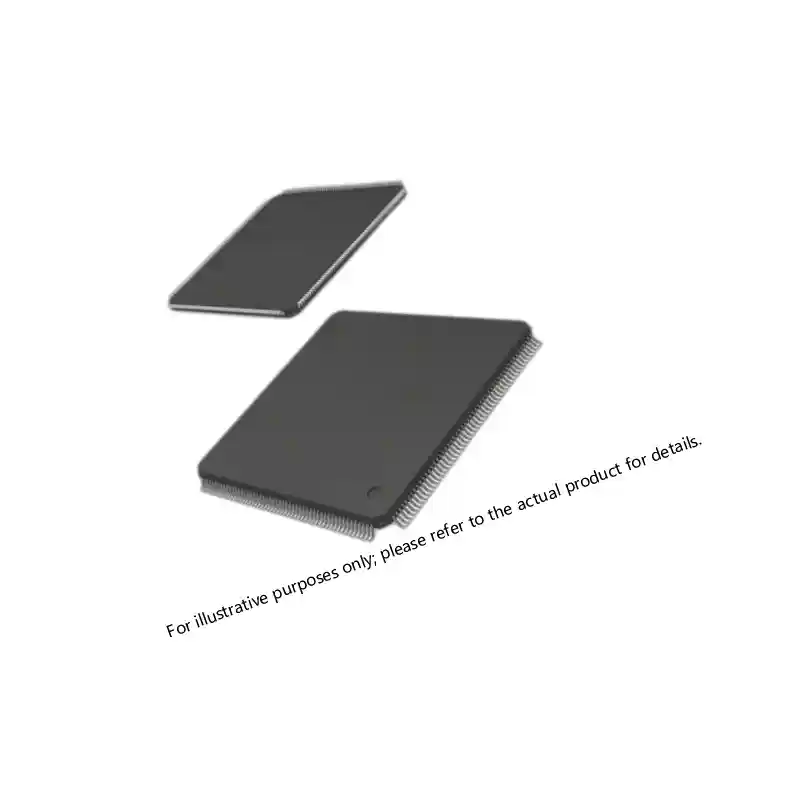
Programs managing long-duration defense designs should validate package, speed grade, and second-source options before committing to a single FPGA line. <XC7VX485T Virtex-7 FPGA: Performance and Sourcing for Defense> covers sourcing and qualification considerations for the XC7VX485T.
Xilinx FPGA Sourcing Support and BOM Review
For aerospace and defense procurement teams, a complete Xilinx FPGA sourcing package should include part-number verification, qualification review, traceability documentation, and long-term supply planning. Sparkle Electronics supplies military-grade and high-reliability electronic components to defense contractors, integrators, and research institutions worldwide.
When submitting an Xilinx military-grade FPGA inquiry, include:
- Full part number, package, speed grade, and temperature/qualification suffix.
- Required quantity and program delivery dates.
- Contractual compliance requirements, including QML Class Q/V, DFARS, or export-control conditions.
- Whether configuration memory, power modules, or related hi-rel components are also required.
Contact Sparkle Electronics at xuansc2144@gmail.com with your BOM or part-number list for sourcing and documentation support.
FAQ
What is the difference between commercial and military-grade Xilinx FPGAs?
Military-grade Xilinx FPGAs are procured against defense or high-reliability qualification flows, with defined temperature ranges, screening, traceability, and conformance documentation. Commercial parts may be electrically identical in some cases but lack the required qualification evidence, lot control, and configuration management for defense use.
Which Xilinx FPGA families are most used in aerospace and defense?
Virtex-4QV, Virtex-5QV, Virtex-7, Kintex UltraScale, and related extended-temperature or QML-qualified variants are common in aerospace and defense. Selection depends on processing performance, radiation tolerance, power, package, and contract qualification requirements.
What does QML Class Q versus Class V mean for Xilinx devices?
QML Class Q and Class V are qualified manufacturing levels defined under MIL-PRF-38535. Class V is generally associated with space-level or high-reliability application flows. The specific meaning for a given part number should be confirmed against the manufacturer qualification summary and lot documentation.
How can defense buyers verify authenticity of Xilinx FPGAs?
Buyers verify authenticity through authorized chain of custody, lot/date code matching, certificate of conformance, test reports, and visual or electrical inspection. DFARS counterfeit avoidance requirements and SAE AS5553 practices provide a structured framework for detection and avoidance [4][5].
What documentation is required for military FPGA procurement?
Typical documentation includes a certificate of conformance, lot traceability records, qualification evidence such as QML listing references, electrical test or screening reports, and export or compliance statements where required. Required documentation should be defined before order placement.
How should programs handle obsolete Xilinx military FPGAs?
Programs should use last-time buys, controlled inventory, die banking, and early alternate-source evaluation to manage obsolescence. Lifecycle status should be reviewed before design freeze, and long-duration programs should plan for configuration memory and power components in parallel.
References
[1] U.S. Department of Defense, MIL-PRF-38535, General Specification for Integrated Circuits (Microcircuits) Manufacturing.
[2] Defense Logistics Agency, Qualified Manufacturers List for MIL-PRF-38535 Microcircuits.
[3] U.S. Department of Defense, MIL-STD-883, Test Method Standard: Microcircuits.
[4] U.S. Department of Defense, DFARS 252.246-7007, Contractor Counterfeit Electronic Part Detection and Avoidance.
[5] SAE International, AS5553, Counterfeit Electronic Parts: Avoidance, Detection, Mitigation, and Disposition.
If you’re interested, check out these related articles:
UltraScale KU085 FPGA Specifications for Defense Systems
Virtex-7 690T FPGA: Performance, Packaging, and Reliability Insights
Virtex-7 690T FPGA: Performance for Mission-Critical Systems
XC7VX485T FPGA: Virtex-7 Performance for Defense
XCKU085 UltraScale FPGA: Performance for Critical Systems