Analog Devices AD9681 Military ADC: Defense Communications
Table of Contents
The Analog Devices AD9681 dual 14-bit, 1 GSPS ADC is a cornerstone of modern defense communications. Phased array radars, EW receivers, and software-defined radios depend on its bandwidth and low power. Yet securing military-grade AD9681s with proper certifications, traceability, and long-term availability often stalls programs. In our experience, the procurement strategy determines whether your timeline holds, not just the part’s datasheet. This article examines the AD9681’s performance advantages and the supply chain diligence needed to obtain compliant, authentic components.
Key Specifications of the AD9681 High-Speed ADC
The AD9681 is a dual-channel, pipelined ADC that integrates two 14-bit cores, each capable of sampling at 1 GSPS. Its 1.5 GHz full-power input bandwidth supports direct IF sampling in defense receiver architectures, reducing the need for multiple downconversion stages. Low power consumption of approximately 1.1 W per channel helps manage thermal budgets in sealed avionics and ground-mobile enclosures.
| Parameter | Military-Grade Value |
|---|---|
| Resolution | 14 bits |
| Maximum Sample Rate | 1 GSPS per channel |
| Full-Power Bandwidth | 1.5 GHz |
| SFDR (1 GHz input) | 79 dBc |
| SNR | 65 dBFS |
| Power per Channel | 1.1 W |
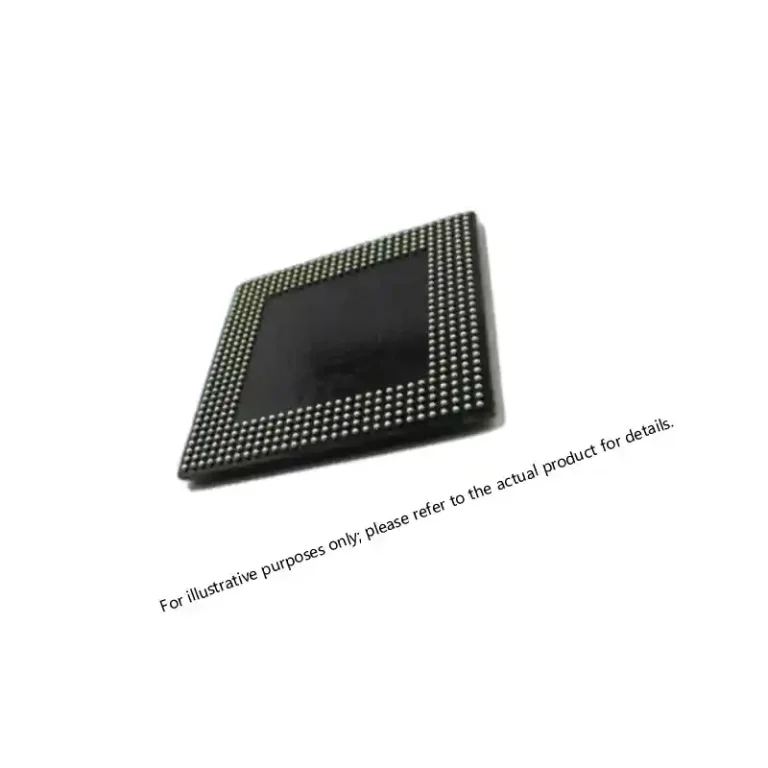
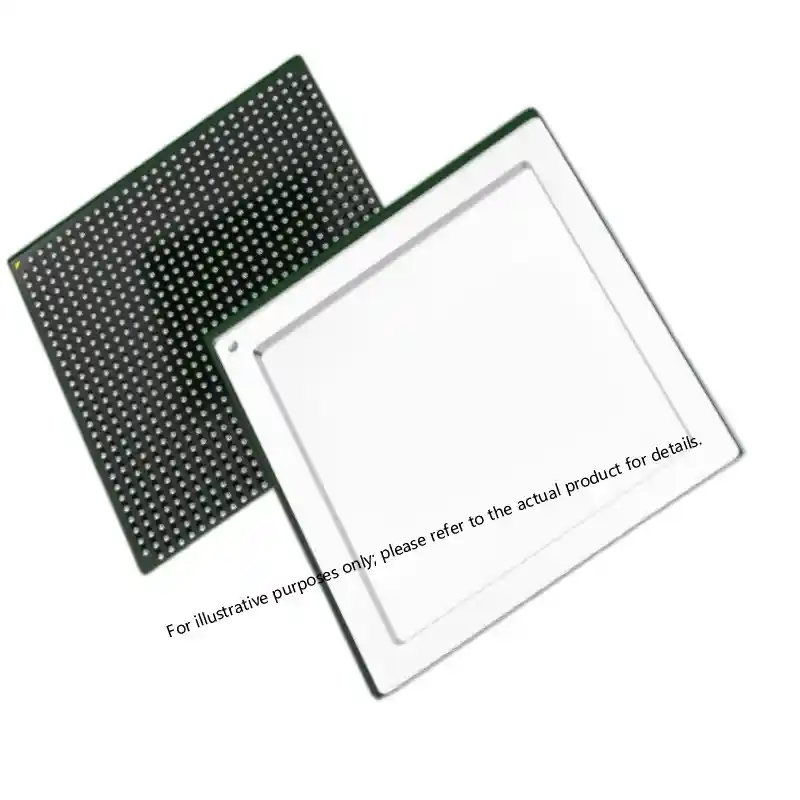
| Package | 144-ball CSP BGA |
| Temperature Range | -55°C to +125°C |
| Screening Options | MIL-STD-883, QML (contact for availability) |
The military temperature range of -55°C to +125°C and the availability of additional screening make this converter suitable for harsh environments. For programs that require formal QML qualification or group A/B/C testing, we coordinate directly with Analog Devices and our approved test partners to deliver the documentation your quality team expects.
The AD9681 in Defense Communications Systems
In active electronically scanned array radars, multiple AD9681 devices are often synchronized to digitize wideband returns across hundreds of channels. The device’s low latency and consistent channel-to-channel matching simplify the digital beamforming processing that follows. For electronic warfare applications, the wide bandwidth captures complex, frequency-agile signals without gaps. We have seen programs use the AD9681 in spectrum monitoring and COMINT receivers where the full Nyquist band must be captured continuously.
Software-defined radio platforms benefit from the ADC’s high sample rate by moving the digital conversion closer to the antenna. Direct RF or direct IF sampling eliminates analog mixers, saving board space and reducing non-linearity concerns. When building wideband SDRs for tactical communications, the AD9681’s performance envelope aligns directly with the frequency plans of MANET radios and satellite ground terminals.
Sourcing Compliant Military-Grade AD9681s
Procurement teams must verify more than the datasheet. For military programs, every AD9681 shipment should be accompanied by a Certificate of Conformance (C of C) that traces back to the Analog Devices lot and certifies the temperature grade. Additional requirements, such as Source Control Drawings, MIL-PRF-38535 QML acknowledgment, or test reports for burn-in, can vary by program. We recommend building a documentation checklist early in the design phase so that certifications do not become a last-minute blocker.
Counterfeit risk is a serious concern when sourcing high-performance ADCs from the open market. Unauthorized resellers may strip packaging and resell parts with incorrect batch codes or, worse, re-marked commercial-grade devices. Incoming inspection procedures that include decapsulation and lot code verification can prevent field failures. We maintain full traceability on every AD9681 we ship, from the manufacturer’s original shipping documents to the final delivery.
If your program involves JESD204B subclass 1 deterministic latency or requires a specific sample rate variant, the exact configuration should be confirmed before releasing the BOM. Reach us at xuansc2144@gmail.com and we can validate availability and lead time against your revision.
Supply Chain Continuity for Long-Duration Programs
Defense programs often span ten years or more, well beyond the lifecycle of a commercial ADC. The AD9681 is still in production, but Analog Devices’ product roadmaps can shift. Maintaining a buffer stock of military-grade AD9681s hedges against unexpected allocation changes or fab line adjustments. We assist customers by holding inventory in our facility so that ongoing production requirements are met without delays.
Lead times for military-grade converters can extend beyond 20 weeks during periods of high industry demand. Strategic inventory planning, rather than just-in-time ordering, is the approach that has worked best for the programs we support. By forecasting annual usage and securing stock early, defense contractors can decouple their production schedules from the commodity semiconductor cycle.
Choosing a Distributor for Analog Devices Military ADCs
A distributor who simply resells is not enough. The partner should demonstrate experience with military component traceability, export compliance, and rigorous incoming inspection. Ask for sample C of C documents before committing. Verify that the distributor has a documented counterfeit mitigation plan and that they can provide lot-specific test data when required.
Sparkle Electronics maintains a dedicated inventory of Analog Devices high-speed converters, including the AD9681, ready for immediate shipment. We have supported defense contractors in over 30 countries, handling the logistics, ITAR-free documentation, and rapid RFQ responses that programs need when schedules are tight. Whether you are ordering prototypes for a development lab or ramping production quantities, a responsive, compliance-first supply partner eliminates one variable from a complex equation.
Common Questions About Sourcing Analog Devices High-Speed ADCs
Is the AD9681 available in a true military temperature range?
Yes. Analog Devices produces the AD9681 in an extended range from -55°C to +125°C. These devices are typically marked with an “M” temperature code. Depending on your program’s qualification plan, additional MIL-STD-883 screening such as burn-in, temperature cycling, and hermeticity testing can be arranged through the manufacturer or a certified test house.
What documentation should I expect with a military-grade AD9681?
At a minimum, every shipment should include a Certificate of Conformance with lot traceability back to the Analog Devices factory. For programs that require it, we also provide Source Control Drawing certifications, group test reports, and export compliance statements. Documentation that arrives incomplete is a warning sign that the supply chain has gaps.
How does the AD9681 compare to the AD9680 for defense use?
The AD9680 is a dual 14-bit, 1 GSPS ADC as well, but it uses a different analog front-end and offers slightly higher SFDR in some configurations. The decision often comes down to availability and existing design files. In the programs we support, the AD9681 remains widely preferred for its proven performance in wideband receivers and because the pin-out is familiar across multiple defense reference designs.
Can I get the AD9681 if my program has an urgent need?
Yes, if you work with a distributor that holds stock. Sparkle Electronics keeps high-speed military ADCs in inventory and can ship within days for most quantities. If your requirement is for a specific temperature grade or screening level, we can confirm the matching stock within a few hours. Share your part number and quantity at xuansc2144@gmail.com and we will provide a same-day quote with availability.
If you’re interested, check out these related articles:
A1020B-PG84B ACT2 FPGA: Specs, Sourcing, and Availability
XCKU085 UltraScale FPGA: Performance for Critical Systems
UltraScale KU085 FPGA Specifications for Defense Systems
XC7VX485T Virtex-7 FPGA: Performance and Sourcing for Defense
Virtex-7 690T FPGA: Performance for Mission-Critical Systems