Analog Devices Military Op Amps: Defense Signal Conditioning
Table of Contents
- Military-Grade Op Amp Requirements for Defense Signal Conditioning
- Critical Parameters for Selecting Military Op Amps
- Analog Devices Military Op Amp Product Families
- Supply Chain Risks and Authenticity Verification for Hi-Rel Op Amps
- Documentation and Compliance Requirements for ADI Military Op Amps
- Sourcing Authentic ADI Military Op Amps for Your Next Program
- Common Questions About Sourcing ADI Military Op Amps
- What is the difference between QML-Q and /883B qualified op amps?
- How can I verify the authenticity of ADI military op amps?
- What documentation is typically required for defense procurement of op amps?
- Do distributor stocking programs reduce lead times for military op amps?
- How do I get an accurate BOM quote for military op amps?
Analog Devices military op amps are the backbone of precision signal conditioning in defense systems—from radar front-ends to guidance electronics. Yet the real challenge isn’t selecting the right part number; it’s sourcing those op amps with verifiable authenticity, lot-level traceability, and full MIL-SPEC compliance. As a defense electronics supply chain specialist, I’ve seen programs stalled for months because a single missing certificate of conformance flagged a supply audit. The difference between a seamless procurement and a compliance nightmare often comes down to the distributor you trust. This guide covers what defense procurement engineers need to know about ADI military op amp selection, sourcing risks, and the documentation that keeps programs audit-ready.
Military-Grade Op Amp Requirements for Defense Signal Conditioning
Signal conditioning in defense electronics demands op amps that perform reliably across extreme temperature ranges, vibration profiles, and radiation environments. Standard commercial-grade amplifiers fail to meet the reliability expectations of a missile guidance system or an electronic warfare node. That’s why MIL-PRF-38535 QML-Q and /883B qualified devices are specified—they undergo rigorous electrical screening, burn-in, and traceability manufacturing controls.
For most defense signal chains, the op amp must operate from -55°C to +125°C, often with a single supply voltage and low power consumption. Many airborne and man-portable systems push for low quiescent current, so a part like the ADA4077-2 with its 45µV max offset and wide supply range is a common starting point. The key standard is QML-Q per MIL-PRF-38535, which locks in the wafer fabrication, assembly, and testing locations—creating a closed chain of accountability that commercial parts lack. This is the foundation for any defense signal conditioning design that will later need to pass a supply chain audit.
Critical Parameters for Selecting Military Op Amps
Once the basic compliance requirements are met, electrical parameters dictate the signal integrity. The table below outlines the critical specifications and the typical values that defense designers evaluate when choosing an ADI military op amp.
| Parameter | Typical Defense Requirement | Example ADI Military Op Amp |
|---|---|---|
| Input Offset Voltage (Vos) | < 100 µV over temperature | ADA4077-2 (45 µV max) |
| Voltage Noise Density (en) | < 5 nV/√Hz for low-noise front-ends | AD829SQ/883B (1.7 nV/√Hz) |
| Gain-Bandwidth Product (GBW) | > 10 MHz for high-speed signal chains | AD829 (120 MHz) |
| Supply Voltage Range | Single-supply 5V to ±15V dual | AD620SQ (instrumentation amp, wide supply) |
| Slew Rate | > 20 V/µs for fast signals | ADA4891 (230 V/µs) |
Low offset drift is non-negotiable for sensor interfaces that must remain accurate during a long flight. In my experience, a 0.1 µV/°C drift spec separates a part that works on paper from one that works in practice. Along with noise, these two parameters often determine whether a design will pass its final qualification test without rework.
Analog Devices Military Op Amp Product Families
ADI organizes its military op amps into several families that map to defense application needs. The high-speed portfolio—parts like the AD829 and AD8519—serves radar pulse processing and high-frequency analog front-ends. The precision amplifier line, including the ADA4077-2, ADA4610, and AD867x series, targets sensor signal conditioning where microvolt-level accuracy is mandatory. For instrumentation applications, the AD620SQ and AD8221 provide high common-mode rejection in bridge circuits and thermocouple interfaces.
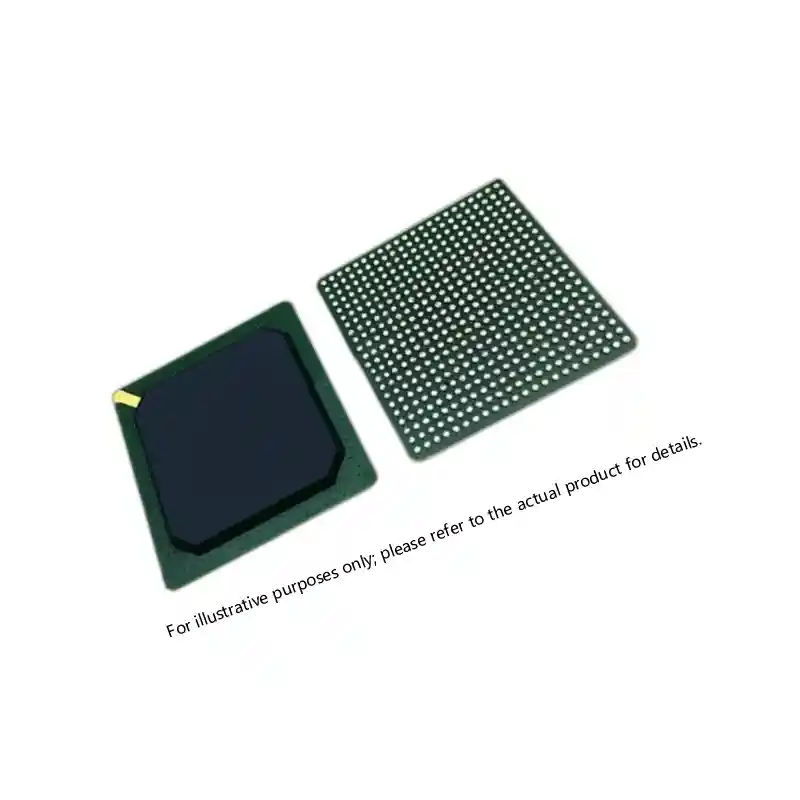
Most of these devices are available with /883B screening or QML-Q certification. When I source for defense programs, I prefer QML-Q parts because the manufacturer has already locked the production flow, eliminating the risk of unauthorized process changes. For legacy programs, the 5962-series compliance path—where parts are marked under the Standard Microcircuit Drawing (SMD) system—remains valid and often the only option for older op amp models that are no longer in active production but still required for sustainment.
If your program requires matching a specific 5962-series op amp to current ADI production lots, it’s worth discussing the part number and quantity with a specialist—reach out at xuansc2144@gmail.com to confirm traceability before finalizing the BOM.
Supply Chain Risks and Authenticity Verification for Hi-Rel Op Amps
The greatest vulnerability in defense op amp procurement isn’t an electrical overstress—it’s counterfeit components slipping into the supply chain. The high markup on military-grade parts and the complexity of distribution channels make ADI military op amps a prime target. Counterfeiters can sand off markings, re-package commercial parts, or mix rejects into a lot. Without a disciplined verification process, a procurement team may not discover a fake until after board-level testing, when rework costs are highest.
I’ve seen cases where parts with identical date codes and lot numbers failed incoming inspection because they came from different wafer origins—a clear sign of part mixing. The only defense is to source from distributors that maintain full chain of custody documentation, perform lot-level electrical testing, and are willing to share their source inspection records. Sparkle Electronics, for instance, authenticates every ADI op amp lot through direct manufacturer relationships and provides a scanned certificate of conformance before shipment. If your internal procurement procedures require verification of a specific assembly lot, providing the part number early allows us to lock in that lot before it is committed elsewhere.
Documentation and Compliance Requirements for ADI Military Op Amps
A clean purchase order for military op amps isn’t complete without the supporting paperwork. Defense contractors routinely demand:
- Certificate of Conformance (C of C) per MIL-PRF-38535
- Test data summaries (lot acceptance test results)
- Date/trace code records linking each device to its manufacturing batch
- NDAA Section 889 compliance statement for trustworthiness
- DFARS 252.225-7014 compliant documentation for premium-grade items
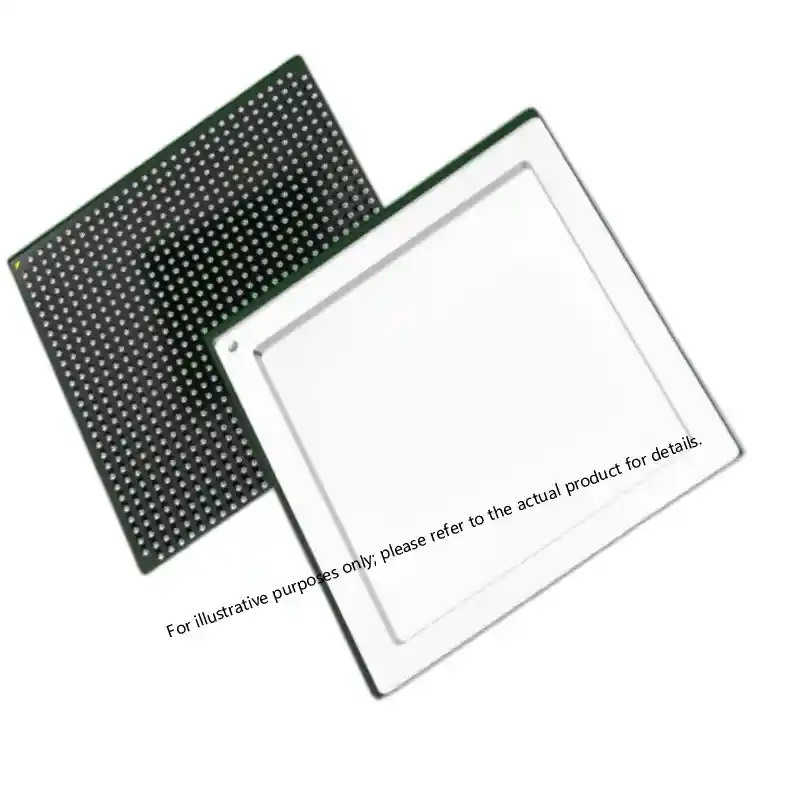
A distributor that understands these requirements can assemble the documentation package before shipping, which avoids the delay of post-receipt document requests. For long-running defense programs, it’s also worth establishing a dedicated stock program with agreed lot consistency, so that qualification testing performed once remains valid for subsequent deliveries. Working with a distributor that has years of experience supporting defense contractors means your procurement team doesn’t have to educate a new supplier on every order—the compliance framework is already in place.
Sourcing Authentic ADI Military Op Amps for Your Next Program
The margin between a successful defense program and a costly re-spin often comes down to the authenticity of a single op amp lot that slipped through a loose procurement process. By working with a distributor that treats traceability as a core requirement, you eliminate that variable. For your next procurement of Analog Devices military op amps, send your part numbers and quantity to xuansc2144@gmail.com. We’ll respond with a detailed quote that includes confirmed lot traceability, lead time, and documentation status within one business day.
Common Questions About Sourcing ADI Military Op Amps
What is the difference between QML-Q and /883B qualified op amps?
QML-Q is a manufacturer qualification program under MIL-PRF-38535 that certifies the entire production line and process flow; /883B is a component-level screening specification that applies additional electrical testing and burn-in to standard parts. QML-Q parts benefit from built-in traceability and change control, while /883B screening can be applied by third-party test houses, which introduces variability. For new designs, I recommend QML-Q whenever the part number is available, because it reduces supply chain risk and aligns with long-term program sustainment strategies.
How can I verify the authenticity of ADI military op amps?
Start with the packaging—authentic military parts arrive in vacuum-sealed, ESD-protective packaging with manufacturer labels intact. Compare the marking format and date code against the manufacturer’s standard. Request a lot-level test report and cross-reference the wafer lot with the assembly history. If any doubt remains, a third-party test lab can perform decapsulation and die inspection to confirm the die markings match ADI’s known designs. However, the most practical step is to buy only from distributors who provide a full documentation package upfront and are willing to disclose their supply source.
What documentation is typically required for defense procurement of op amps?
At minimum, a certificate of conformance (C of C) per MIL-PRF-38535 and a packing slip with the exact part number, quantity, and date codes. For higher-criticality programs, add lot acceptance test data, a statement of compliance with NDAA Section 889, and for procured items under DFARS, the appropriate quality certifications. I’ve also seen defense primes ask for a supplier’s AS9120 registration certificate to verify the distributor’s own quality management system. When in doubt, ask your program’s quality assurance team for the complete document checklist before issuing the RFQ.
Do distributor stocking programs reduce lead times for military op amps?
Yes, but only if the distributor stocks the exact dash number and screening level you need. ADI military op amp lead times can stretch to 20 weeks or more, especially for QML-Q variants. Distributors that maintain a dedicated defense inventory can often ship immediately from stock, cutting lead times to days. The trade-off is that stock is finite and allocated on a first-come basis. If your program can forecast yearly usage, a consignment stock agreement with a distributor can lock in availability and also stabilize pricing across multiple deliveries.
How do I get an accurate BOM quote for military op amps?
Send your bill of materials with the exact part numbers, including any suffix that defines screening level (e.g., /883B, QML-Q) and package type. Specify the required quantity and any compliance documentation you need. A responsive distributor will return a quote that not only lists unit pricing and availability but also flags potential supply concerns, such as a lack of current lot data or a part nearing obsolescence. For a rapid BOM review, email your part numbers and requirements to xuansc2144@gmail.com—we’ll confirm stock, traceability, and compliance status within one business day.
If you’re interested, check out these related articles:
Virtex-7 690T FPGA: Performance, Packaging, and Reliability Insights
XCKU085 UltraScale FPGA: Performance for Critical Systems
UltraScale KU085 FPGA Specifications for Defense Systems
Virtex-7 XC7VX690T: Performance and Reliability Insights