Counter-Drone (C-UAS) Electronic Components: Sourcing Guide
Table of Contents
- Core Electronic Component Categories for Counter-Drone Platforms
- Performance Requirements That Drive Component Selection
- Sourcing Challenges for Counter-Drone Components
- Ensuring Traceability and Compliance in C-UAS Procurement
- Building a Reliable Supply Chain for Long-Term C-UAS Programs
- Components That Determine C-UAS Mission Effectiveness
- Questions C-UAS Programs Ask About Component Sourcing
- Why do some GaN power amplifiers specify a minimum VSWR rating, and does it matter for a C-UAS transmitter?
- If my program uses an older Actel FPGA like the A54SX72A, can I still source genuine parts in 2025?
- How do I shorten lead times for high-speed ADCs without accepting lower-grade parts?
- Do I really need MIL-SPEC memory ICs for a ground-based C-UAS system that stays in a shelter?
For defense programs fielding counter-unmanned aerial systems (C-UAS), a detection and defeat architecture is only as reliable as the electronic components that drive it. A C-UAS platform combines radar, signal intelligence, electro-optical sensors, and electronic attack payloads, and each of these subsystems demands high-speed data conversion, real-time processing, and sustained RF output under unpredictable field conditions. Components that fall short of MIL-SPEC environmental qualification or lack traceable provenance will degrade system readiness on day one. This article maps the core electronic building blocks of modern C-UAS architectures and examines the procurement requirements that defense teams need to address when building or sustaining these systems.
Core Electronic Component Categories for Counter-Drone Platforms
C-UAS systems place intensive demands on three electronic domains: sensing, processing, and defeat. Within each domain, a small number of component types determine the platform’s effective range, response time, and discrimination accuracy.
Sensing front ends rely on high-speed analog-to-digital converters (ADCs) capable of capturing wideband radar returns with minimal latency. GaN-based RF power amplifiers are increasingly preferred for the defeat side because they combine high drain efficiency with wide instantaneous bandwidth. Between the front end and the transmitter, FPGAs provide the reconfigurable processing fabric that differentiates threat signatures from background clutter and coordinates jamming waveforms.
| Component Category | Representative Part Types | Primary C-UAS Role |
|---|---|---|
| Wideband ADCs | 12-bit 1GSPS and above, such as the ADC12D1000 family | Radar and SDR digitization |
| High-speed DACs | Quad 16-bit 2.4GSPS devices, e.g., AD9154 | Arbitrary waveform generation for jamming |
| GaN RF power amps | 100W+ S-band and C-band devices | Transmit power for electronic attack |
| FPGAs | Microsemi SmartFusion2, Xilinx Kintex-7 families | Real-time signal processing and beamforming |
| Hi-rel memory | 512Kx32 SRAM, QDR SRAM | Pattern storage and look-up tables |
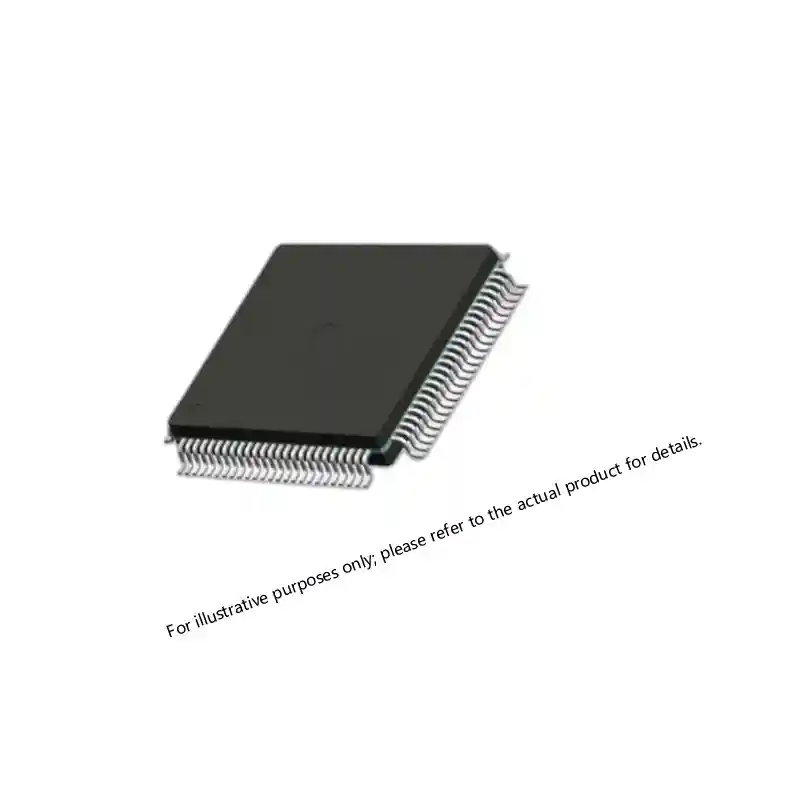
Many C-UAS designs also incorporate radiation-tolerant FPGAs for the control plane and hardened power management modules to survive high-energy RF environments, where electromagnetic self-interference is a constant design constraint. These are not commercial-grade sockets. Programs that attempt to substitute industrial-temperature parts into C-UAS transmit paths typically encounter reliability failures within the first hundred operational hours.
Performance Requirements That Drive Component Selection
Counter-drone systems operate in contested electromagnetic environments. An ADC downstream of a wideband receiver must maintain spurious-free dynamic range (SFDR) above 70dB while digitizing signals that span several gigahertz of instantaneous bandwidth. I have seen programs, particularly those developing software-defined C-UAS radios, underestimate the impact of clock jitter on target discrimination, only to find that a marginally specified ADC introduced false detections at field trials. The lesson is straightforward: the ADC sampling clock must exhibit phase noise of -150dBc/Hz or better at a 10kHz offset to preserve the signal integrity needed for micro-Doppler classification.
Power amplifier selection is equally unforgiving. GaN devices operating in C-band must deliver at least 60W of saturated output power with power-added efficiency above 40%. Lower efficiency translates into increased thermal management burden, which adds weight and volume to man-portable or vehicle-mounted C-UAS systems. When evaluating GaN PAs, our team prioritizes devices that can survive a 10:1 VSWR mismatch without damage, a requirement that stems directly from field experience with antenna mismatch during rapid deployment.
Sourcing Challenges for Counter-Drone Components
Procuring the components identified above for a C-UAS program involves four persistent challenges that are less pronounced in other defense electronics categories.
First, wideband GaN power amplifiers and high-speed ADCs frequently carry lead times exceeding 26 weeks. C-UAS programs often operate on compressed schedules because the threat evolves faster than traditional acquisition cycles. Our team regularly helps programs identify alternate-source ADCs with compatible footprint and interface, especially for sockets where the original ADC was designed in several years earlier. For example, when a 12-bit 1.5GSPS ADC from one vendor becomes allocation-constrained, a pin-compatible 12-bit 1.6GSPS ADC from another line may fill the gap provided the JESD204B lane configuration remains consistent.
Second, counter-drone electronic components attract counterfeit risk disproportionate to their unit cost. A GaN PA or FPGA that fails a C-UAS transmitter is not merely a field replacement expense; it represents a mission gap that cannot be scheduled. We verify every incoming lot against the original manufacturer’s C of C and, for QML devices, confirm the DLA Land and Maritime qualification status before the parts enter our inventory. This step is not optional, and we have rejected shipments that carried plausible paperwork but failed X-ray inspection on internal bonding wire uniformity.
Third, many C-UAS programs in development use FPGA families that were qualified a decade ago, such as the Microsemi ProASIC3 or Axcelerator series. These FPGAs are now approaching end-of-life, yet the hardware architecture cannot be re-qualified on a newer device within the remaining program timeline. In these cases, we work with authorized aftermarket sources that maintain die banks for long-term supply, and we recommend that programs place last-time-buy orders for the full projected lifecycle quantity plus 15% margin.
Fourth, the need for export-controlled components under ITAR or EAR adds a layer of compliance verification that many distributors cannot satisfy. Every RF power amplifier and high-speed DAC shipped to international C-UAS programs must be classified under the correct ECCN, and the end-use statement must align with the specific C-UAS platform. This is not a paperwork exercise; incorrect classification can delay shipment by weeks and, in some jurisdictions, result in severe penalties.
Ensuring Traceability and Compliance in C-UAS Procurement
For a C-UAS system that will be fielded by a NATO member or allied partner, component traceability is a non-negotiable condition of the contract. We maintain a chain-of-custody record for every lot, from the original manufacturer’s wafer fabrication batch through incoming inspection at our facility. For 5962-series and QML devices, we supply the original test reports, along with our own visual inspection and X-ray records for each unique date code.
A practical step I recommend to every C-UAS program office: when you release an RFQ for BOM procurement, specify that the distributor must provide the manufacturer’s certificate of conformance for each line item, not a single consolidated document. A blanket C of C that lists 50 part numbers together does not allow you to verify that each lot was tested independently, and this creates a latent risk that will surface during a post-award audit.
Building a Reliable Supply Chain for Long-Term C-UAS Programs
C-UAS programs that are intended to remain operational for a decade or longer require more than transactional procurement. They need a partner who holds strategic inventory of the exact FPGA, ADC, and GaN devices specified in the original design, and who can confirm availability before a design review commits the hardware to a component that will be unavailable in two years.
We have supported C-UAS integrators by pre-purchasing critical FPGAs in industrial-temperature and military-temperature grades, holding them in humidity-controlled storage, and releasing them in small batches against forecasted production cycles. This approach reduces the program’s working capital burden and eliminates the risk of a single allocation cycle disrupting a multi-year fielding plan.
On the component selection side, we often advise C-UAS teams to avoid single-source components in the defeat chain wherever possible. For a GaN PA, this means identifying at least two suppliers with comparable P1dB and efficiency specifications, and qualifying both at the prototype stage. The cost of qualifying a second source is small compared to the cost of a production halt caused by a sole-source component shortage.
Components That Determine C-UAS Mission Effectiveness
The component categories discussed above do not merely enable a C-UAS system; they define its performance envelope. An ADC with insufficient sample rate limits the range at which a micro-drone can be classified. A power amplifier that cannot sustain full output across the entire temperature range of a desert deployment leaves a gap in the system’s defeat coverage. For defense contractors and integrators, the supplier that can provide these components with full traceability and tested compliance is an essential part of the C-UAS program’s foundation.
Share your C-UAS component requirements with us at Sparkle Electronics. We will confirm availability, lead time, and compliance documentation for the specific ADCs, FPGAs, and GaN devices your design requires. Reach out at xuansc2144@gmail.com or call our support desk for a technical sourcing discussion.
Questions C-UAS Programs Ask About Component Sourcing
Why do some GaN power amplifiers specify a minimum VSWR rating, and does it matter for a C-UAS transmitter?
The VSWR rating indicates how well the amplifier tolerates impedance mismatch at the antenna interface. In C-UAS systems, where antennas are often mounted on vehicle roofs or collapsible masts, the impedance can shift significantly during movement or redeployment. A GaN PA rated to survive 10:1 VSWR will continue operating through these mismatch events, while a device rated only for 5:1 VSWR may fail without warning. We have replaced PAs in fielded C-UAS units where the original supplier’s device failed VSWR stress testing during integration, confirming that this parameter is a reliability requirement, not a data sheet footnote.
If my program uses an older Actel FPGA like the A54SX72A, can I still source genuine parts in 2025?
Yes, but not from standard distributors. The A54SX72A-1CQ208B is no longer in active production, yet many C-UAS programs rely on it because the firmware was qualified years ago. We source these FPGAs from authorized aftermarket channels that maintain original manufacturer wafer stock and conduct full visual and X-ray inspection before shipment. The key is to buy from a supplier that provides lot-specific test reports, not just a generic statement of conformity. Without that documentation, the FPGA cannot pass a customer’s incoming inspection for a military program.
How do I shorten lead times for high-speed ADCs without accepting lower-grade parts?
The most effective approach is to build a pre-qualified list of alternate ADCs that share the same package footprint and JESD204 interface lane count as your primary design. When the lead time for one ADC stretches, you can release a purchase order for the alternate ADC without re-laying out the board. Our team maintains such alternate-source lists for the most common C-UAS ADC sockets, and we can often ship within four weeks by drawing from pre-stocked inventory of these qualified alternates.
Do I really need MIL-SPEC memory ICs for a ground-based C-UAS system that stays in a shelter?
For the look-up tables and waveform storage that feed the jamming engine, the memory must meet the same temperature and shock requirements as the signal processing chain. A commercial-grade flash device that corrupts a DDS waveform table at -30°C will disable the jammer. We recommend MIL-SPEC or high-industrial-grade SRAM and flash for any C-UAS processing path that directly affects the defeat function. Auxiliary storage, such as logging memory, can tolerate wider commercial specifications, but the defense chain memory should not be the weak link. Share your specific operating environment and our team can identify memory parts rated for your temperature extremes and shock profile.
If you’re interested, check out these related articles:
XC7VX485T FPGA: Virtex-7 Performance for Defense
XCKU115 UltraScale FPGA: Powering Critical Defense Systems
UltraScale KU085 FPGA Specifications for Defense Systems
Virtex-7 XC7VX690T: Performance and Reliability Insights
Virtex-7 XC7VX690T: Performance, Reliability, and Integration