
Military Spectrum Management Components: Sourcing Guide
Table of Contents
- Core Component Categories for Spectrum Management Systems
- Key Specifications That Drive Component Selection
- Challenges in Sourcing MIL-SPEC Spectrum Components
- Supply Chain Assurance for Mission-Critical Spectrum Electronics
- Common Questions About Spectrum Component Procurement
- How do I choose between a direct-sampling receiver and a superheterodyne architecture for spectrum management?
- What is the recommended screening level for ADCs in airborne spectrum monitoring pods?
- Can I use commercial-grade FPGAs for a military spectrum management ground station?
- How do I manage the lead time for ADCs that are on allocation?
- What documentation should I expect with a MIL-SPEC component shipment for a spectrum program?
Spectrum management systems form the operational backbone of modern defense electromagnetic operations, and the electronic components inside them determine whether a platform can detect, classify, and respond to signals across an increasingly dense and contested radio frequency environment. Military spectrum management electronic components are not interchangeable with commercial off-the-shelf parts. They must deliver wide instantaneous bandwidth, low noise floor, and real-time processing while maintaining performance over temperature extremes and under vibration. In more than twelve years of sourcing MIL-SPEC ICs for defense programs, I have seen too many project delays trace back to a single overlooked specification or a sourcing decision that prioritized unit price over supply chain integrity. The right component choice—especially in ADCs, FPGAs, and RF front-end ICs—is the difference between a system that meets its electromagnetic spectrum operations (EMSO) requirements and one that fails qualification.
Core Component Categories for Spectrum Management Systems
A military spectrum management and monitoring system typically integrates a signal acquisition chain that begins at the antenna and ends with processed data sent to a decision engine. The core electronic components fall into four functional blocks, each with its own sourcing profile and set of military performance requirements.
The RF and microwave front-end handles the analog signal before digitization. This block includes low-noise amplifiers (LNAs) such as Analog Devices HMC-ALH369, programmable attenuators, preselector filters, and mixers or direct sampling front-ends for wideband architectures. For systems that must cover 2 MHz to 18 GHz or beyond, the front-end determines the instantaneous bandwidth and noise figure that set the system’s sensitivity floor.
High-speed data converters, primarily analog-to-digital converters (ADCs) and digital-to-analog converters (DACs), digitize the received spectrum and generate test or jamming waveforms. Devices like the AD9625 (12-bit, 2.5 GSPS), AD9208 (14-bit, 3 GSPS), and AD9213 (12-bit, 6 GSPS) are commonly used. For waveform generation, DACs such as the AD9164 (16-bit, 12 GSPS) provide the direct RF synthesis capability needed for modern electronic warfare and spectrum dominance applications. The critical parameter is not just sample rate but spurious-free dynamic range (SFDR) across the entire Nyquist zone, because a spur can mask a real signal.
FPGAs and digital signal processing ICs perform real-time spectral analysis, channelization, and pulse descriptor word (PDW) generation. Microchip’s PolarFire MPF300T and SmartFusion2 families, as well as Xilinx Virtex-7 and Kintex-7 devices, are widely adopted for their balance of DSP slices, logic density, and I/O bandwidth. In spectrum management, the FPGA must ingest multiple lanes of JESD204B/C serial data from ADCs, run fast Fourier transforms (FFTs) with sample rates in the gigasample-per-second range, and output processed results with deterministic latency. TI’s TMS320C6678 multicore DSP or NXP QorIQ processors often handle higher-level protocol and decision logic.
Timing and clock distribution ensures that every converter and processing element is synchronized to a common reference. Ultra-low-jitter clock generators and fanout buffers—such as the LMX2592 wideband PLL and CDCLVD1204 or CDCLVD1208 clock buffers—maintain the phase noise budget across the system. A 100 fs jitter clock tree can be the difference between a clean spectrum and one where phase noise elevates the noise floor enough to miss a low-probability-of-intercept signal.
Power management completes the picture. Vicor DCM and V24/V28 series DC-DC converters deliver the tightly regulated, low-noise rails required by gigasample converters and large FPGAs. In a military environment, power modules must survive input transients per MIL-STD-704 and maintain output regulation without introducing switching noise into sensitive analog stages.
Key Specifications That Drive Component Selection
When evaluating electronic components for spectrum management applications, the benchmark is not the datasheet front page. The real selection work happens in the fine-print specifications that define performance under realistic signal conditions.
SFDR and noise spectral density are the first filter. For a wideband monitoring receiver attempting to detect a -100 dBm signal in the presence of a +10 dBm jammer, the ADC’s SFDR must exceed 80 dBc within the band of interest. Devices like the ADC12DJ3200 (dual 12-bit, 3.2 GSPS) specify a typical SFDR of 75 dBc at 1 GHz input, which may require front-end preselectors to relax the dynamic range requirement.
Instantaneous bandwidth is not the same as the sample rate. A 6 GSPS ADC does not provide 3 GHz of usable bandwidth if the front-end balun, clock jitter, or digital interface limits the flat response to 2 GHz. The full signal chain must be modeled, and converters like the AD9213 with a -3 dB input bandwidth of 6.5 GHz at 6 GSPS are specified with a flatness of ±0.5 dB over the passband—these are the numbers that matter.
Environmental ratings and MIL-SPEC compliance become mandatory. The component must operate across the full -55°C to +125°C range when specified, and for airborne or shipboard installations, humidity, salt fog, and vibration per MIL-STD-810 and MIL-STD-883 become part of the acceptance criteria. QML-Q or QML-V certification provides a recognized baseline for reliability.
If your program requires extended temperature range or radiation tolerance beyond standard industrial grades, it is worth confirming the exact screening level and lot acceptance test data with your supplier before locking the BOM. Many military-grade converters are available in both enhanced plastic and hermetically sealed ceramic packages, and the cost and lead time difference can be a factor of three or more.
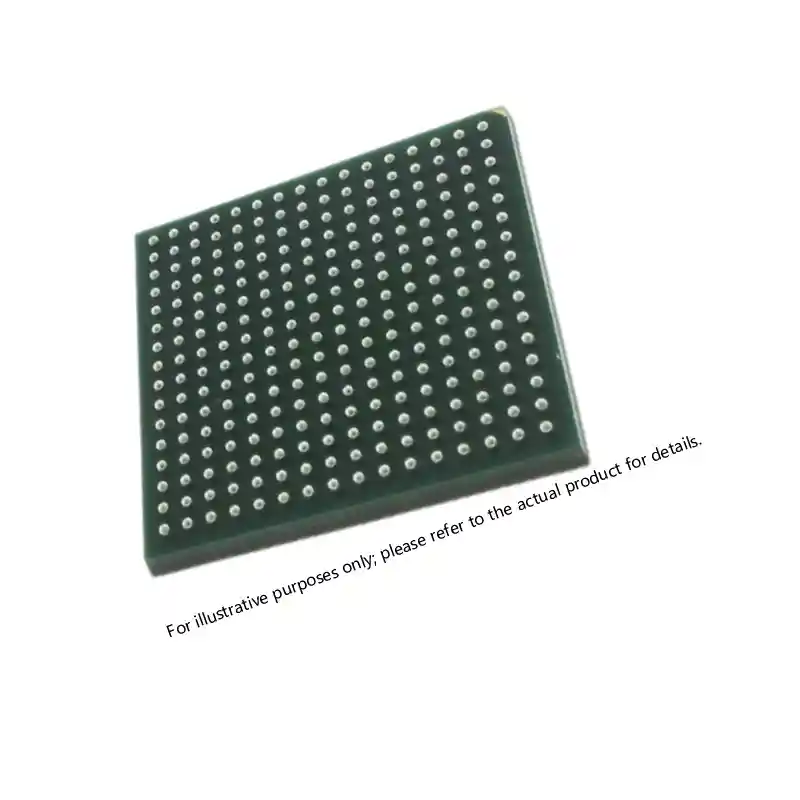
The digital interface also dictates system architecture. JESD204B/C serial links reduce pin count and simplify layout, but they introduce deterministic latency and require careful FPGA transceiver configuration. For legacy or lower-sample-rate designs, parallel LVDS interfaces still appear, and maintaining second-source availability for interface-compatible parts becomes a supply chain consideration.
| Parameter | Example ADC (AD9625) | Example DAC (AD9164) | Example FPGA (PolarFire MPF300T) |
|---|---|---|---|
| Resolution / LEs | 12-bit | 16-bit | 300K LEs |
| Sample / Data Rate | 2.5 GSPS | 12 GSPS (update rate) | Up to 1.6 Gbps transceivers |
| SFDR (typ) | 79 dBc at 1 GHz | 70 dBc at 2.5 GHz output | N/A (digital) |
| Interface | JESD204B, 4 lanes | JESD204B, 8 lanes | 24× SerDes lanes |
| Package | 196-Ball BGA | 169-Ball BGA | 536-Ball BGA |
Challenges in Sourcing MIL-SPEC Spectrum Components
Procurement teams facing a spectrum management system design quickly discover that the same part number can exist in multiple screening levels, package options, and lead time profiles. The part that a design engineer selected from a datasheet may not be the one that actually ships on time with full traceability.
Long lead times and allocation constraints hit high-speed converters and radiation-hardened FPGAs particularly hard. We have supported programs where a 52-week lead time on an ADC became the pacing item for the entire system integration schedule. Establishing a relationship with a distributor that holds buffer stock of popular military ADCs, FPGAs, and power modules can shrink that timeline from months to days if the right part is on the shelf.
Authentication and counterfeit risk escalate when components are sourced from unauthorized channels. A spectrum management system’s performance depends on every amplifier and converter meeting its published specifications. A remarked or reconditioned part that passes visual inspection but fails SFDR at temperature can waste weeks of integration time. Requiring full chain-of-custody documentation, lot traceability back to the original manufacturer, and an AS6081-compliant inspection process from the distributor is not optional—it is the minimum standard for a program that will undergo Defense Contract Management Agency (DCMA) review.
Component obsolescence is a persistent concern because military spectrum systems often have fielded lifetimes of 15 to 25 years. FPGAs based on older process nodes, such as the Xilinx Virtex-5 SXT series or Actel ProASIC3/ProASICPLUS families, may no longer be in active production. A distributor that manages die banking, last-time-buy coordination, and technology refresh planning can prevent a form-fit-function replacement crisis when the foundry ceases support for a legacy process.
Supply Chain Assurance for Mission-Critical Spectrum Electronics
The procurement process for spectrum management components requires more than a purchase order. It demands a documented, auditable chain of custody that begins with the original component manufacturer (OCM) or an authorized aftermarket supplier and extends through every handling step.
MIL-PRF-38535 QML certification and MIL-STD-883 screening represent the recognized quality baselines for military ICs. When a part is ordered to a 5962-series drawing number, the lot acceptance test results, burn-in data, and group A/B electrical test summaries should be provided with shipment. We routinely work with customers who require that these reports be catalogued against the receiving inspection record for later DCMA audit.
DFARS compliance and NDAA Section 889 restrictions add a sourcing layer that filter out parts from non-compliant foundries or prohibited entities. For systems that fall under U.S. defense acquisition regulations, the component must be sourced from a trusted foundry accredited under the DMEA Trusted Access Program Office (TAPO) when required, and the distributor must be able to provide a compliance certificate that names the country of origin and assembly.
Export controls also impact procurement. Components such as wideband ADCs with sample rates above 10 GSPS or FPGAs with large DSP arrays may fall under ITAR or EAR Category XI controls. The distributor must be capable of managing export licenses, end-use statements, and re-export restrictions, particularly when the end system is for a multinational program.
Common Questions About Spectrum Component Procurement
How do I choose between a direct-sampling receiver and a superheterodyne architecture for spectrum management?
The decision hinges on the required instantaneous bandwidth and sensitivity. A direct-sampling architecture using a wideband ADC such as the AD9213 digitizes the entire band of interest without analog mixing stages, which reduces component count and eliminates mixer spurs, but it demands a very high sample rate ADC and a low-jitter clock tree. Superheterodyne architectures relax the ADC requirements but add mixers, local oscillators, and image-reject filters. In programs we have supported, the trend for new wideband monitoring systems is toward direct RF sampling, with the ADC positioned directly after the LNA and preselector, provided the SFDR budget can be met. If your system must cover bands above 18 GHz, a downconversion stage is still necessary.
What is the recommended screening level for ADCs in airborne spectrum monitoring pods?
For an airborne pod that experiences rapid temperature cycling, vibration, and altitude-related pressure changes, we typically recommend MIL-STD-883 Class B screening as a minimum, with Class S for space-equivalent reliability. The enhanced plastic (EP) flow can reduce cost while providing -55°C to +125°C operation, but the packaging must survive the thermal expansion mismatch over thousands of flight hours. Hermetic ceramic packages are preferred when the pod lifecycle exceeds 10 years or when condensation and salt fog exposure are expected.
Can I use commercial-grade FPGAs for a military spectrum management ground station?
In fixed-site ground installations with controlled temperature and humidity, commercial or industrial-grade FPGAs can sometimes be used if the program accepts the associated risk. However, the traceability and long-term availability become the main concern. Commercial parts do not carry the same lot traceability as QML devices, and if the program must eventually transition to a qualified configuration, the requalification cost can be significant. I have seen programs start with commercial FPGAs for prototyping only to find that the production version requires a pin-compatible military-grade part that was not part of the original footprint plan. If there is any chance of fielding or NATO interoperability requirements, we advise designing with a military-grade option in mind from the start.
How do I manage the lead time for ADCs that are on allocation?
Allocation is a fact of life for high-speed military ADCs. The most effective approach is to maintain an open purchase order with a distributor that stocks buffer inventory of the exact part numbers you consume. We keep inventory of commonly used devices like the AD9268, AD9680, and ADC12DJ3200 in military temperature range precisely to provide a bridge while the factory allocation window is open. Submitting a forecast 12 to 18 months out allows the distributor to reserve allocation and avoids line-down situations. If your program is already in the integration phase and a critical ADC is showing a 52-week quoted lead time, share your part number and required quantity with us at xuansc2144@gmail.com to check immediate availability from buffer stock.
What documentation should I expect with a MIL-SPEC component shipment for a spectrum program?
At a minimum, the shipment should include a Certificate of Conformance (C of C) that references the manufacturer’s original certification, the applicable 5962 drawing number, date code and lot code traceability, electrostatic discharge (ESD) packaging certification, and evidence of inspection per AS6081 or AS9120 when sourced through an independent distributor. For QML devices, the full lot acceptance test summary, including Group A electrical test data, should be available on request. We recommend that receiving inspection verify the component marking, date code, and package integrity against the C of C before the parts are released to inventory, and retain the documentation for the life of the program. If your next spectrum system build requires full traceability documentation before acceptance, reach out to us and we will confirm the documentation package available for each line item.
If you’re interested, check out these related articles:
XC7VX485T FPGA: Virtex-7 Performance for Defense
XC7VX485T Virtex-7 FPGA: Performance and Sourcing for Defense
Virtex-7 XC7VX690T: Performance, Reliability, and Integration
A1020B-PG84B ACT2 FPGA: Specs, Sourcing, and Availability