Defense Electronics Test Lab Setup: Components and Standards
Table of Contents
- What a Defense Electronics Test Lab Must Prove
- Core Instrumentation Categories and Standards Mapping
- Sourcing Components That Carry the Test
- Calibration and the Documented Audit Trail
- Building a Supplier Network That Supports Lab Operations
- Common Questions About Defense Electronics Test Labs
- Do I need MIL-SPEC equipment for every test, or can I use commercial-grade instruments with calibration?
- How do I verify that the test connectors and cables are genuine MIL-PRC compliant and not counterfeit?
- What’s the most common documentation gap during a lab audit?
- Is it cost-effective to outsource environmental testing rather than building an in-house lab?
- How do I handle obsolescence of test equipment components during a long-running defense program?
Setting up a defense electronics testing lab means selecting test equipment and reference standards that hold up under audit scrutiny. But the supply chain surrounding that equipment—the cables, calibration standards, and modular interface boards—can fail compliance just as easily as an uncalibrated oscilloscope. Most guides stop at listing equipment types and MIL-SPEC numbers. This article focuses on the procurement, traceability, and supplier qualification decisions that separate a lab that passes a DCMA review from one that generates non-conformance reports.
What a Defense Electronics Test Lab Must Prove
A military electronics testing facility exists to produce objective evidence that hardware meets its procurement specification. That evidence chain starts with defining test parameters against standards such as MIL-STD-810 (environmental), MIL-STD-461 (EMI/EMC), MIL-STD-883 (microcircuit screening), and, for avionics, DO-160. The lab must be able to demonstrate that every measurement trace is unbroken from the unit under test back to a NIST-recognized calibration source.
Two realities cause programs to stumble early. First, procurement teams often underestimate the volume of ancillary components needed to complete a single test setup: RF cables, phase-matched adapters, precision terminations, and hardened connectors that themselves must meet minimum frequency and impedance ratings. Second, the documentation requirement is not a one-time event. Each test asset—including a humble SMA torque wrench used in an RF path—enters a calibration schedule. When a component drifts outside its rated tolerance, the lab must be able to identify every test result that used it and reassess validity. That demands lot-level traceability from the moment a part enters inventory.
Core Instrumentation Categories and Standards Mapping
Instrument selection is the most visible part of lab planning, and it follows a predictable structure. The table below maps major instrument classes to the standards they typically support.
| Instrument Category | Primary MIL Standards Supported | Key Selection Considerations |
|---|---|---|
| Environmental chambers | MIL-STD-810, MIL-STD-202 | Temperature range, ramp rate, interior volume |
| Vibration/shock tables | MIL-STD-810, MIL-STD-202 | Force rating, frequency range, control software |
| Spectrum analyzers | MIL-STD-461, EMC testing | Frequency range, DANL, real-time bandwidth |
| Signal generators | EMI/EMC, radar waveform testing | Phase noise, modulation bandwidth |
| Digital oscilloscopes | Signal integrity, jitter analysis | Bandwidth, sample rate, memory depth |
| Programmable power supplies | Functional test, burn-in | Voltage/current range, transient response |
Beyond the big-ticket items, every test bench accumulates specialized modules: LISN networks for conducted emissions, bulk current injection probes, near-field probes, and pulse generators. I’ve seen labs buy a $120,000 EMI receiver and then fail a pre-compliance check because someone substituted a generic BNC cable with marginal shielding. That single substitution introduces 2-3 dB of uncertainty at 1 GHz—enough to make a marginal design look compliant or a compliant design look marginal.
Sourcing Components That Carry the Test
This is where the procurement function directly determines test integrity. Every component that touches the signal path or the environmental control loop must itself comply with the same level of traceability you require from the equipment under test.
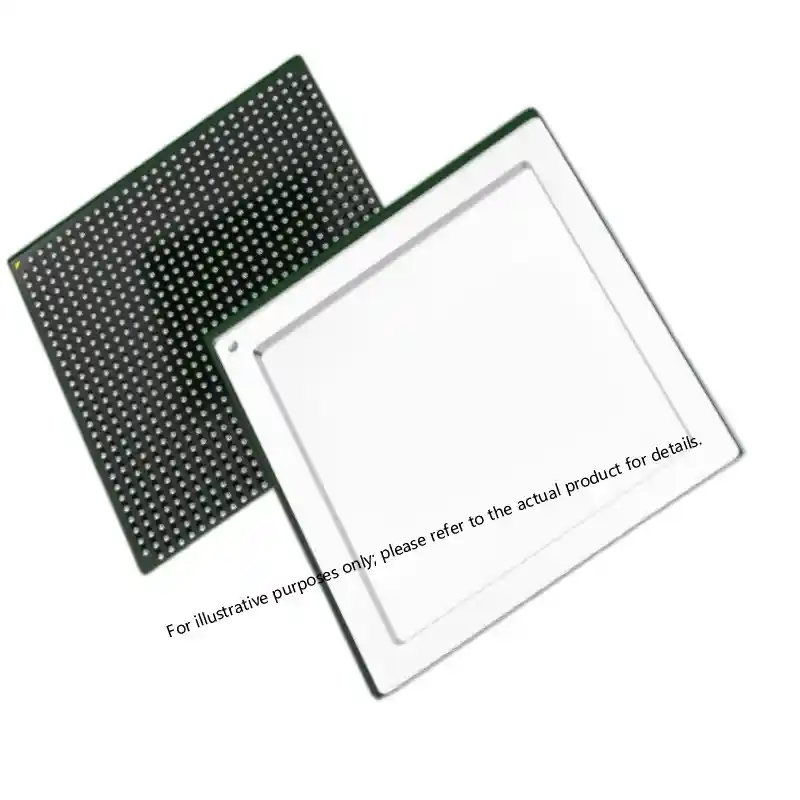
We source a significant volume of MIL-SPEC connectors, RF adapters, backshells, and test board modules for labs that cannot afford to stock hundreds of ancillary part numbers. In many cases, the test engineer specifies a connector series—MIL-DTL-38999, for example—and the procurement team must match it to a compatible shell size, insert arrangement, and plating code that survives the chamber’s humidity and salt fog profile. That matching is not a simple line item when lead times for authentic circular connectors from reputable manufacturers routinely exceed 20 weeks. We maintain stock of common hi-rel connector variants from Aero, AirBorn, and other MIL-DTL-qualified sources to keep lab commissioning timelines moving without forcing teams to accept unknown brokerage parts.
If your lab’s test plan involves high-frequency RF testing above 6 GHz, the sourcing challenge sharpens. Phase-stable cable assemblies rated to 40 GHz with documented insertion loss data become part of the calibration chain. A cable assembly without a manufacturer’s test data sheet becomes an unknown variable. We advise labs to treat every RF component in the signal path as a metrology asset, not a consumable.
Calibration and the Documented Audit Trail
Calibration is the mechanism that ties each measurement to a known standard, but audits examine the paper trail more closely than the calibration sticker. A lab’s quality management system must record not only when an asset was last calibrated, but the specific reference standards used, their current calibration status, and the environmental conditions during calibration. For MIL-PRF-38535-related testing, the documentation package grows to include the test technician’s identification, lot and date codes of any consumable components used, and a signed statement of conformance.
One practical issue that surfaces repeatedly is the calibration of modular instruments and plug-in cards. A VXI or PXI chassis may hold multiple measurement cards, each with its own calibration interval. When a card fails or drifts, the paper trail must link that failure to the test results of every unit that passed through that slot. Procurement and lab management should agree on a replacement strategy before commissioning—stock spares of critical measurement cards and ensure the replacement cards come from the same manufacturer with current calibration certificates. Waiting until a failure occurs to source a replacement often means accepting a card with an unknown calibration history.
Building a Supplier Network That Supports Lab Operations
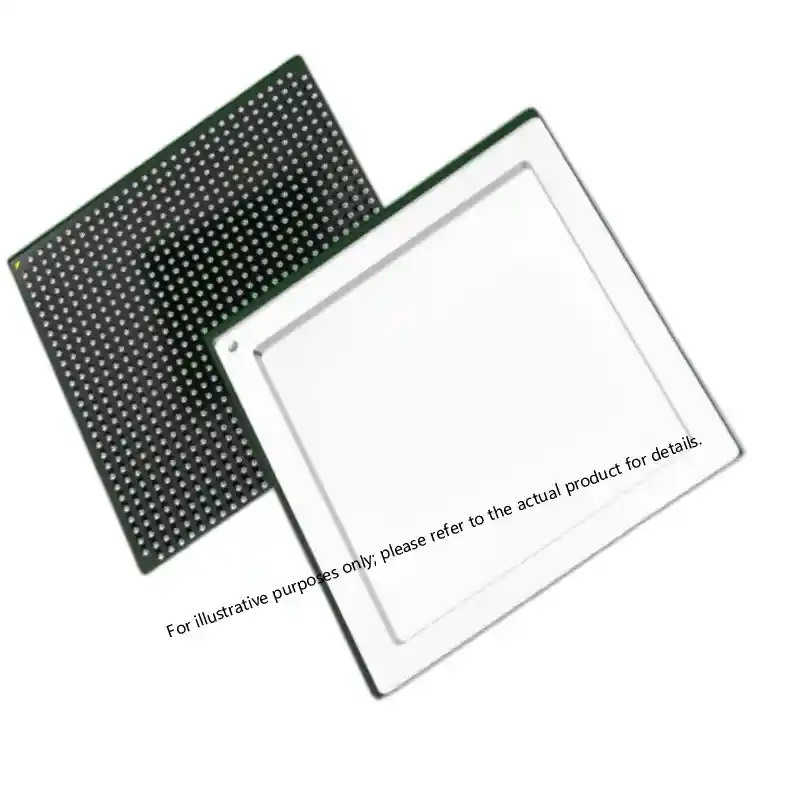
A defense test lab is a capital asset, but its operating budget lives in the spare parts and consumables line. Over a 10-year lab lifecycle, the cost of test leads, precision terminations, and calibration-grade attenuators can exceed the original instrument purchase. That makes it essential to qualify a supplier base for these recurring lower-value items with the same rigor applied to prime mission components.
We recommend that labs develop an approved vendor list that includes distributors capable of providing full lot traceability on connectors, EMI filters, and power supply modules. Certificates of Conformance are necessary but not sufficient—ask for the original manufacturer’s test data and a statement that the parts were stored in accordance with MIL-SPEC packaging requirements (MIL-PRF-81705 for barrier materials, for example). For labs performing environmental stress screening (ESS), the thermal wire, thermocouple connectors, and insulation materials must be rated for the chamber’s temperature range. Using standard lab-grade wire in a profile that swings from -65°C to +150°C can degrade the insulation within a few cycles, producing intermittent faults that waste engineering time.
Common Questions About Defense Electronics Test Labs
Do I need MIL-SPEC equipment for every test, or can I use commercial-grade instruments with calibration?
You can use commercial-grade instruments for many measurements if the accuracy, bandwidth, and environmental ratings meet the test specification’s requirements. The deciding factor is the calibration chain and documentation: the instrument must have a current calibration certificate traceable to NIST, and the uncertainty analysis must demonstrate that the measurement system meets the required test accuracy ratio (TAR) of 4:1 or better. A commercial oscilloscope calibrated annually, with the calibration standards listed, satisfies most internal verification needs. However, for final acceptance testing where the contract invokes MIL-PRF-38535 or similar quality clauses, the instrument’s manufacturer may need to be on the test plan as part of the approved equipment list. Check the specific contract quality requirements before purchasing.
How do I verify that the test connectors and cables are genuine MIL-PRC compliant and not counterfeit?
Counterfeit connectors are a persistent problem because they function electrically at low frequency but fail mechanical integrity or EMI shielding tests. Genuine MIL-DTL-38999 connectors come with manufacturer packaging marked with a lot code and a Certificate of Conformance traceable to the qualified product listing (QPL). Cross-reference the lot code with the manufacturer’s database. For RF connectors, request insertion loss and VSWR data over the frequency range of interest. A simple low-cost test: weigh the connector—counterfeit units often use lower-density alloys that are visibly lighter. We recommend sourcing connectors and adapters only through authorized or QPL-listed distributors who can supply full documentation packages.
What’s the most common documentation gap during a lab audit?
The most common gap is incomplete traceability of the measurement chain. An auditor will ask for the calibration certificate of the signal analyzer, then the certificate for the reference standard that calibrated it, then the standard that calibrated that reference—and so on back to the national metrology institute. If any link is missing, the measurement’s validity is compromised. Labs that rely on equipment rental or shared assets often fail to collect the full calibration chain before the equipment is returned. Another frequent gap: test consumables like torque wrenches and thermal probes lack calibration records because they are treated as tools rather than measurement assets. If your lab uses a torque wrench to set connector torque to a specified value, that torque wrench belongs in the calibration schedule with a defined interval and a documented procedure.
Is it cost-effective to outsource environmental testing rather than building an in-house lab?
It depends on volume and test repeatability. For programs that require one-time qualification of a single design, outsourcing to an accredited test house is almost always more economical. The breakeven point shifts when a program must perform production lot acceptance testing on every deliverable unit. For example, a MIL-STD-810 temperature cycling test on each production lot of an electronic assembly justifies a dedicated chamber if the program runs for more than three years. Factor in the cost of recalibration, chamber maintenance, compressed air or LN2 supply, and the labor of trained operators. We’ve seen programs build labs for recurring tests and outsource specialized requirements like HALT (Highly Accelerated Life Test) or full-scale EMI to facilities with the exact chamber and antenna set. If your component sourcing partner understands the test plan early, they can help structure procurement to match both in-house and outsourced test phases without redundant inventory.
How do I handle obsolescence of test equipment components during a long-running defense program?
Start by identifying all active electronic components within the test system that have commercial lifecycles—FPGAs, ADCs, DACs, memory modules, and specialty interface ICs on modular cards. If your test system uses a specific MIL-grade FPGA (e.g., an Actel ProASIC3 or Microsemi SmartFusion), add that part number to your program’s component obsolescence watch list alongside the mission hardware. We support several labs that maintain a safety stock of critical test-card components to avoid the situation where a $200 FPGA replacement becomes unavailable and forces a $15,000 card redesign. When a key component reaches end-of-life, our team can help identify form-fit-function replacements or facilitate a last-time buy. The earlier the procurement team puts test equipment BOMs into the obsolescence management system, the fewer emergency redesigns the program absorbs.
For component-level obsolescence support, including hard-to-find MIL-SPEC replacement parts for test instrumentation, share your part numbers and quantities with our team at xuansc2144@gmail.com and we will confirm stock availability and documentation status.
If you’re interested, check out these related articles:
Virtex-7 XC7VX690T: Performance and Reliability Insights
Virtex-7 690T FPGA: Performance, Packaging, and Reliability Insights
UltraScale KU085 FPGA Specifications for Defense Systems
XCKU115 UltraScale FPGA: Powering Critical Defense Systems