Military DAC Waveform Generation for Defense: Key Sourcing Factors
Table of Contents
- What Makes a DAC Suitable for Arbitrary Waveform Generation in Defense
- Key Performance Parameters That Drive DAC Selection
- Sourcing Hi-Rel DACs When Lead Times Stretch and Allocations Are Tight
- Verifying Authenticity and Traceability for Military DACs
- Building a Long-Term Supply Strategy with a MIL-SPEC DAC Distributor
- Frequently Asked Questions About Military DAC Sourcing
- Are RF DACs the same as high-speed DACs for waveform generation?
- What is the difference between a QML-Q DAC and an upscreened commercial DAC?
- How do I handle a DAC that goes end-of-life during a long program?
- What documentation do I need when buying military DACs for a waveform generator?
- Can I get samples of a military DAC before committing to a volume order?
A procurement engineer tasked with building an arbitrary waveform generator for a defense program quickly discovers that the DAC at its core is not a catalog part. The part number exists, but the gap between datasheet specifications and field-ready performance can halt a project. Military DAC waveform generation demands components that deliver high dynamic range, precise timing, and repeatability across temperature extremes, while every device must be traceable to certified test reports. Yet sourcing these DACs, especially for programs with low volume or urgent timelines, introduces risks that a specification sheet alone cannot resolve.
What Makes a DAC Suitable for Arbitrary Waveform Generation in Defense
Arbitrary waveform generation in defense systems covers a wide span: radar pulse shaping, electronic warfare (EW) jamming patterns, and communications waveforms that must hop between frequencies with minimal latency. The DAC turns a digital sequence into the analog signal that defines the radiated spectrum. For these applications, a DAC that looks adequate on paper can fail in practice if its spurious-free dynamic range (SFDR) collapses at the output frequency of interest or if its clock-to-output latency is inconsistent.
Defense programs typically demand DACs with resolutions of 14 to 16 bits, sample rates in the multi-GSPS range, and direct RF synthesis capability up to several GHz. A 12-bit device operating at 3.2 GSPS, like the ADC12DJ3200, can synthesize signals directly at S-band without external upconversion, reducing both board space and potential phase noise sources. But the specification that separates a general-purpose DAC from a defense-grade one is often the single-tone SFDR measured at the highest Nyquist zone where the waveform will actually reside. A datasheet that reports 65 dBc SFDR at 100 MHz output may drop to 52 dBc at 1.8 GHz, a degradation that must be factored into the link budget before procurement.
The jitter specification of the DAC clock input is equally decisive. Military waveform generators frequently synchronize multiple channels with phased-array timing, so sub-picosecond integrated clock jitter becomes a hard requirement. We have seen projects where the choice of clock distribution IC, not the DAC itself, became the limiting factor in achieving coherent beamforming accuracy. This interplay means that selecting a DAC for arbitrary waveform generation is not a standalone exercise; it is a signal-chain decision that reaches into the clocking, FPGA interface, and output filtering.
Key Performance Parameters That Drive DAC Selection
When comparing DACs for defense waveform generation, procurement teams should focus on a core set of parameters that determine whether a device can meet mission waveforms without excessive margin padding. The table below summarizes the critical specifications and their typical defense application impact.
| Parameter | Typical Defense Requirement | Impact on Waveform Generation |
|---|---|---|
| Resolution | 14–16 bits | Defines amplitude quantization; insufficient bits create spurs that limit EVM |
| Sample rate | 1.5–12 GSPS | Sets the directly synthesizable bandwidth; higher rates enable wideband EW signals |
| SFDR (single-tone) | ≥65 dBc at target output frequency | Determines the spectral purity; low SFDR masks weak returns in radar |
| Phase noise | -140 dBc/Hz at 10 kHz offset (clock) | Critical for Doppler discrimination in radar and coherent communications |
| Latency | Deterministic, <100 ns variation | Essential for real-time jamming and closed-loop radar |
| JESD204B/C lane rate | 12.5–15 Gbps per lane | Supports high sample rates with minimal FPGA I/O; simplifies board routing |
Beyond these, the interface standard matters for long-term program support. JESD204B and JESD204C interfaces have become dominant in high-speed defense DACs because they reduce the pin count and allow deterministic latency calibration. A design using a parallel LVDS interface may be simpler for prototyping but becomes a liability when the FPGA pin budget is constrained or when the system must be upgraded to higher sample rates later. We advise customers to lock in the interface choice early and verify that the selected DAC and FPGA pair have production-tested reference designs, not just evaluation-board examples.
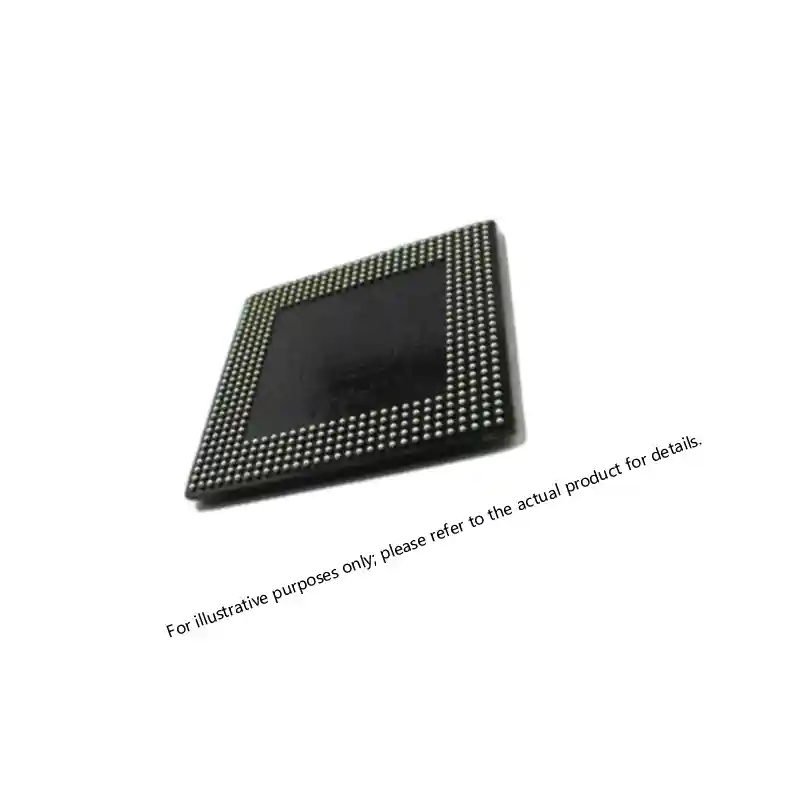
Supply voltage and power consumption also intersect with ruggedization. A DAC that dissipates 2.5 W in free air may need significant derating when it must operate at +125°C case temperature in a conduction-cooled chassis. The MIL-PRF-38535 Class Q or QML-Q qualified devices typically include guaranteed performance over the full -55°C to +125°C military temperature range, but not every high-speed RF DAC is available in a MIL-grade package. Programs that require these extreme temperature ratings often face a choice between a non-qualified commercial DAC with upscreening or a fully qualified part with limited speed options.
Sourcing Hi-Rel DACs When Lead Times Stretch and Allocations Are Tight
The high-speed DACs used in defense arbitrary waveform generators come primarily from a few suppliers. Lead times for non-stocked parts can extend beyond 40 weeks, a duration that breaks most integration schedules. When a program needs five units of a specific DAC variant for a prototype build, the factory allocation may have been consumed by a large prime contractor. This is where a specialized distributor with existing inventory becomes essential.
A defense-focused distributor that maintains a shelf stock of military-grade ADCs and DACs can bridge the gap. For example, when a customer required the AD9162BBCAZ for an EW waveform generator, the factory lead time was quoted at 32 weeks, but we were able to supply the same parts from our buffer stock within three days because we had forecasted demand for that 16-bit 12 GSPS DAC. Such inventory positions are not accidental; they are built by tracking program lifecycles and predicting which DAC series will enter critical demand phases.
For procurement teams, the key practice is to include the DAC in the bill of materials (BOM) as early as possible and to share forecasted quantities with the distributor, even if the contract is not yet awarded. This allows the distributor to hold stock or secure allocation. It is also prudent to identify a pin-compatible alternate DAC early in the design, because waveform generator architectures often have flexibility in sample rate if the digital backend can be adjusted.
Verifying Authenticity and Traceability for Military DACs
Any DAC that enters a defense assembly must be accompanied by a verifiable chain of custody. The Certificate of Conformance (C of C) is the starting point, but it only declares that the parts meet the stated specifications; it does not prove that the parts in the shipment are the same as those tested. Lot traceability back to the wafer batch and test records under MIL-STD-883 or equivalent is what separates compliant supply from risky supply.
We perform incoming inspection that includes external visual inspection under 40× magnification, resistance to soldering heat sample testing, and, for critical devices, third-party electrical verification using automated test equipment programmed to match the manufacturer’s test limits. For DACs, a quick functional check of the JESD204B link establishment and a sample SFDR measurement at a mid-band frequency can catch re-marked commercial parts that cannot meet the military temperature or performance margins. When the program documentation requires full lot testing, we coordinate with accredited test labs to perform Group A, B, C, and D inspections per MIL-PRF-38535, with all reports supplied to the end customer.
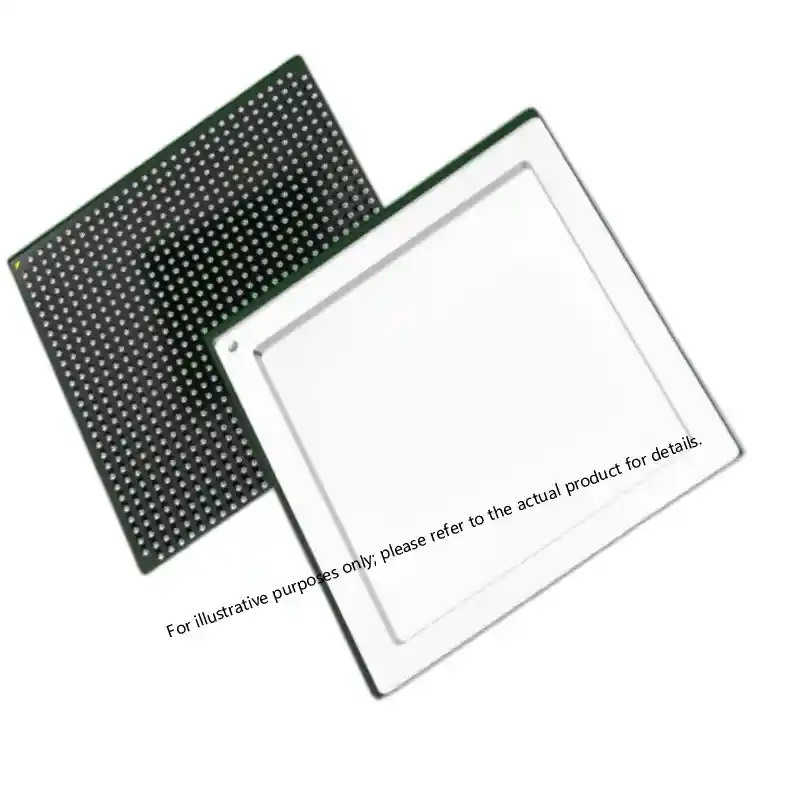
The question of counterfeit risk is especially acute for high-value DACs with long factory lead times. The counterfeit part may be a functionally similar commercial device that has been re-marked with a military part number. Unless the incoming inspection includes electrical testing at the extremes of the specified operating range, the substitution can go undetected until the system fails during qualification testing. A trusted distributor that sources only from authorized channels and maintains its own authenticated inventory is the strongest defense against this risk.
Building a Long-Term Supply Strategy with a MIL-SPEC DAC Distributor
Programs that span a decade or more need more than spot buys. They need a supply partner that can provide last-time-buy (LTB) support, manage die banking for critical DACs that may be discontinued, and offer technology refresh recommendations when a DAC series goes end-of-life. We have supported programs that originally designed in a 1.5 GSPS DAC and later migrated to a 3.2 GSPS variant without changing the FPGA pin-out because we helped the design team identify a drop-in replacement with the same JESD204B lane mapping.
A proactive supply strategy includes:
– Registering the BOM with the distributor so that stock is monitored and flagged when inventory falls below a threshold.
– Agreeing on safety stock levels for long-lead DACs, with floor replenishment triggered by forecasted consumption.
– Planning technology refresh cycles to coincide with the availability of next-generation DACs that offer higher sample rates at equivalent power, thereby extending the operational life of the waveform generator without requalifying the entire system.
When procurement teams treat the DAC distributor as an extension of their supply chain, the recurring pain of allocation, counterfeit verification, and end-of-life transitions becomes manageable. The result is a steady flow of authentic, traceable DACs that meet the exacting requirements of military arbitrary waveform generation.
Frequently Asked Questions About Military DAC Sourcing
Are RF DACs the same as high-speed DACs for waveform generation?
RF DACs are a subset of high-speed DACs that can directly synthesize signals in the RF frequency range, typically above 1 GHz, without external analog upconversion. For arbitrary waveform generation in defense, RF DACs are preferred because they simplify the signal chain and reduce phase noise contributors. However, not all high-speed DACs can operate as RF DACs; the key differentiator is the output bandwidth and the ability to maintain SFDR at high output frequencies.
What is the difference between a QML-Q DAC and an upscreened commercial DAC?
A QML-Q DAC has been qualified to MIL-PRF-38535 Class Q by the manufacturer, which means every device undergoes full temperature testing, burn-in, and serialization with traceable test data. An upscreened commercial DAC is a standard part that has been subjected to additional testing, often by a third-party lab, to verify performance over a subset of military requirements. The upscreened approach can reduce cost and lead time, but it does not carry the same guarantee of wafer-level traceability and may not be accepted by all military program authorities.
How do I handle a DAC that goes end-of-life during a long program?
First, confirm the last-time-buy (LTB) date with the manufacturer, then immediately place a purchase order for enough devices to cover the remaining production plus spares. If the quantity needed exceeds available supply, consult with a distributor that has access to after-market inventory or can locate compatible die for custom packaging. It is also worth checking whether a next-generation DAC in the same family offers a migration path that avoids a full redesign.
What documentation do I need when buying military DACs for a waveform generator?
At minimum, you need the manufacturer’s Certificate of Conformance, a detailed packing list with date codes and lot numbers, and the test summary reports if the devices were procured as QML-qualified. For programs requiring flight or mission-critical qualification, you should also obtain the full lot test reports showing Group A, B, C, and D results, along with the electrostatic discharge (ESD) sensitivity classification and the moisture sensitivity level (MSL) documentation for proper board assembly handling.
Can I get samples of a military DAC before committing to a volume order?
Most manufacturers restrict sample distribution of military-grade DACs, especially those subject to export controls. However, a distributor that stocks the parts can often provide a commercial-temperature equivalent for prototyping, while holding the military version in reserve for the production build. If your application requires exact military temperature parts for prototyping, share your project timeline and forecast so we can allocate a small quantity from our buffer stock. Reach us at xuansc2144@gmail.com with your part number and required quantity, and we will confirm availability and lead time.
If you’re interested, check out these related articles:
XC7VX485T FPGA: Virtex-7 Performance for Defense
XC7VX485T Virtex-7 FPGA: Performance and Sourcing for Defense
Virtex-7 690T FPGA: Performance, Packaging, and Reliability Insights