Military Digital Signal Processing Components and Sourcing
Table of Contents
- Military Digital Signal Processing Starts With the Data Converter Chain
- Processor Selection Defines the Signal Processing Architecture
- Screening and Documentation Requirements Determine What You Can Actually Procure
- Long-Term Supply Planning Begins With Obsolescence Review
- Sourcing Military DSP Components Without Counterfeit Risk
- Common Questions About Military Digital Signal Processing Components
- Can a commercial ADC be up-screened for military digital signal processing?
- Does a higher sample-rate ADC always improve a military receiver?
- When does a program need QML Class V instead of Class Q?
- How do I confirm a distributor stocks genuine military DSP components?
Military digital signal processing programs fail more often from documentation gaps than from silicon limitations. A radar or electronic warfare chain built around a high-sample-rate ADC and a capable FPGA still stops in production if the parts cannot be traced to a qualified source. That reality drives my position on sourcing: for defense signal processing, traceable MIL-SPEC components from a disciplined distributor beat cut-price parts with incomplete paperwork, because counterfeit and verification failures become program-level risks instead of isolated purchasing issues.
Military Digital Signal Processing Starts With the Data Converter Chain
The first component decisions in a military DSP chain usually settle on the data converter. For radar, electronic warfare, and SIGINT, the ADC sets the instantaneous bandwidth, and the DAC defines what the transmitter or jammer can synthesize. A 12-bit ADC running at 3 GSPS with a JESD204B interface is not interchangeable with a 14-bit device at 500 MSPS just because both are called high speed. The selection changes the analog front end, the clocking tree, and the FPGA fabric required to capture the lanes.
At Sparkle Electronics, we have watched programs stall because a converter was chosen for its datasheet ENOB without confirming whether the QML variant was actually stocked. Commercial-grade converters are easier to find, but they do not carry the screening documentation required on a 5962 drawing. For a military digital signal processing board, the first filter is not performance; it is part qualification status.
Clock quality also limits converter performance before the digital processing begins. Jitter in the sample clock translates directly into noise in the sampled signal, and a wideband converter with a poor reference will not meet its datasheet dynamic range. The clocking PLL and distribution buffer deserve the same qualification scrutiny as the ADC itself. A converter that needs a 100 MHz reference and four JESD204B lanes also needs a traceable clock source whose phase noise is specified at the operating offset.
Processor Selection Defines the Signal Processing Architecture
The processor decision determines where the signal processing algorithms live. Some programs place the workload in a high-performance DSP such as a Texas Instruments C66x or a legacy SMJ320C40, while others consolidate the processing in an FPGA with DSP slices. There is no single correct answer. The choice follows the algorithm: floating-point adaptive filtering, pulse compression, and beamforming favor different structures than fixed-point channelization or FFT engines.
A DSP is easier for teams that need to iterate quickly on software-defined functions. An FPGA gives the hardware-level control that wideband channelizers and low-latency electronic warfare responses often require. Many military digital signal processing boards use both, with the FPGA handling the front-end data reduction and the DSP managing the application layer. The cost of the split is board area, power, and two separate software flows.
| Function | Typical Device Class | Key Selection Parameter | Sourcing Consideration |
| Data acquisition | High-speed ADC | Sample rate, ENOB, SFDR | QML or 5962 availability |
| Waveform generation | High-speed DAC | Update rate, SFDR, output bandwidth | JESD204B/C lane count compatibility |
| Core processing | FPGA or DSP | Logic cells, DSP slices, floating-point capability | Package, speed grade, obsolescence status |
| Configuration memory | Parallel NOR or configuration PROM | Density, access time | Preprogrammed or blank, tamper risk |
| Subsystem timing | Clock synthesizer or PLL | Phase noise, jitter, output count | Radiation rating if spacebound |
Selecting the processor family before checking package and speed grade availability can delay a program by months. A military plastic package is not the same as a hermetic ceramic package, and not every device on a manufacturer’s product page appears in the qualified distributor network. I confirm the exact orderable part number, package, and screening level before a design review, not after.
Screening and Documentation Requirements Determine What You Can Actually Procure
The second hard filter is documentation. A military DSP component without an unbroken chain of custody is a risk that no test program can fully retire. For QML devices, MIL-PRF-38535 defines the screening and qualification. For 5962 parts, the standard microcircuit drawing acts as the governing specification. Buyers should know which class applies to each line item before they compare prices.
Class Q and Class V QML devices carry different levels of wafer lot and serialization traceability. A Class V converter destined for a satellite payload has different documentation than a Class Q part for a ground vehicle. If a distributor cannot say which class a part belongs to before quoting, stop and verify. MIL-STD-883 is not the same as QML either. It is a screening and test method baseline, while QML is a qualification and listing system that depends on the manufacturer’s certified line.
If your BOM mixes 5962 and QML devices with export-controlled IP, confirm traceability documentation before locking the bill of materials. Send the part numbers and quantities to xuansc2144@gmail.com. That single check often separates parts that will pass a government source inspection from parts that will not.
The documentation also affects delivery. A JANTX diode or JANTXV transistor may carry different paperwork than a QML FPGA, and the export classification under ITAR or EAR can change the shipping timeline. I treat documentation as a lead-time factor, not as a back-office form. A part that cannot be shipped with the right certificates is not available, even if it sits on a shelf.
Long-Term Supply Planning Begins With Obsolescence Review
Defense DSP boards often outlive the commercial lifecycle of their processors by a decade or more. An FPGA that was current during development may be obsolete before the first production article is qualified. Teams that avoid pain treat obsolescence as a component parameter, not as a procurement surprise. They ask for lifecycle status with the first quote and do not wait for the last-time buy notice.
One pattern I follow is to identify the single-sourced component in a signal chain and plan its replacement path before the schematic is frozen. If the board uses a DSP with a unique package or a converter with no pin-compatible alternative, the program carries locked-in risk. In some cases, holding strategic inventory of the exact date code already qualified costs less than a mid-program requalification. The inventory decision should be made while the part is still available at a normal lead time.
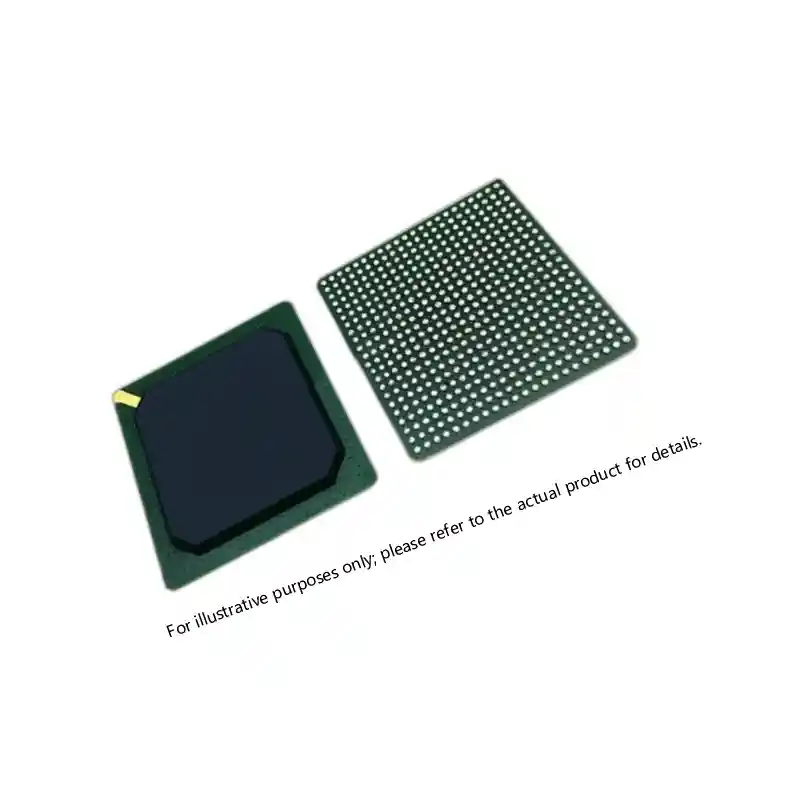
Fab transitions and mask changes matter too. A converter that moves to a different process node may keep the same part number but not the same electrical behavior. Buyers who ask for wafer lot and assembly site data can spot these changes early. For military digital signal processing programs, a stable lot is often worth more than a lower price from a mixed lot because qualification effort is not free.
Sourcing Military DSP Components Without Counterfeit Risk
Counterfeit components enter the defense supply chain through the gray market, often from brokers who acquire parts with no original paperwork and resell them as new. The risk is not limited to low-value passives. High-value DSP, FPGA, and ADC parts are prime targets because the margin can be large. A part that fails incoming inspection may be caught, but a better part that passes electrical test while carrying a false date code can survive for years.
Incoming inspection should include visual checks, marking verification, and X-ray comparison against known-good reference images. For older ceramic packages, solder dipping and lead re-tinning are common red flags. AS6081 specifies a structured counterfeit mitigation procedure for independent distributors, and AS9120 addresses broader aerospace distribution quality. I look for documented inspection data, not a verbal promise.
Choosing a military digital signal processing component source comes down to whether the paperwork can survive an audit. If your program is sourcing FPGAs, DSPs, high-speed ADCs, or mixed-signal parts with 5962 or QML requirements, send your part numbers and quantities to xuansc2144@gmail.com. I will confirm stock, screening level, and documentation status before you commit the BOM.
Common Questions About Military Digital Signal Processing Components
Can a commercial ADC be up-screened for military digital signal processing?
Up-screening commercial parts is possible, but it does not turn a commercial device into a QML or 5962 part. A distributor or test house can perform temperature cycling, burn-in, and electrical testing to remove early failures, but the original wafer lot and assembly lot may not have the same documentation a defense buyer needs. If the program permits COTS with additional screening, this route works when the end application does not require full MIL-PRF-38535 compliance. In most aerospace and missile programs, up-screened commercial parts will not satisfy the qualification requirements. Confirm the exact drawing before choosing this path.
Does a higher sample-rate ADC always improve a military receiver?
A common assumption is that more megasamples per second means better receiver performance. That is not always true. As sample rate increases, instantaneous bandwidth increases, but power consumption rises and effective resolution often drops. A 12-bit 3 GSPS converter may have a lower effective number of bits than a 16-bit 250 MSPS converter, so a narrowband HF receiver can perform better with the slower part. The right choice matches the signal bandwidth and dynamic range requirement, not the highest number on the datasheet.
When does a program need QML Class V instead of Class Q?
It depends on the end environment and program risk. QML Class Q suits most military avionics and ground equipment where high reliability is required but the radiation and temperature excursions are less severe. QML Class V is specified for space and launch applications, where single-event effects, vacuum outgassing, and wider temperature swings dominate. If the system operates in low Earth orbit or beyond, Class V is the safer default. If it stays in a ground shelter, Class Q usually carries enough margin and costs less.
How do I confirm a distributor stocks genuine military DSP components?
In programs our team has handled, the fastest filter is to ask for documentation before samples. A qualified distributor will supply the manufacturer’s certificate of conformance, date and lot codes, and evidence of AS6081 or AS9120 process controls without resistance. If the answer is “we will check after you order,” treat that as a risk signal. Request photos of the actual parts, not stock images, and verify that the label matches the order. Small checks like these have caught mismatched date codes before they entered the build. Share your part numbers and requirements at xuansc2144@gmail.com and we will confirm screening levels, availability, and compliance documentation before any commitment.
If you’re interested, check out these related articles:
XC7VX485T FPGA: Virtex-7 Performance for Defense
A1020B-PG84B ACT2 FPGA: Specs, Sourcing, and Availability
XC7VX485T Virtex-7 FPGA: Performance and Sourcing for Defense
Virtex-7 690T FPGA: Performance, Packaging, and Reliability Insights