
ALTERA EP4CE15U14I7N
- 15,408 logic elements for compact signal processing tasks
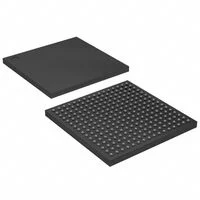
- 256-pin ultra-fine ball grid array package
- 512 Kbits of embedded block RAM for data storage
- Extended temperature range operation (-40°C to +100°C)
- Low-power architecture for battery-powered defense platforms
In small-form-factor defense systems like portable radar and unmanned aerial vehicle payloads, space and power efficiency are critical. The ALTERA EP4CE15U14I7N delivers optimized logic density in a compact package, making it ideal for lightweight electronic warfare and surveillance applications.
As part of the Cyclone IV E series, this FPGA balances performance with low power consumption, extending operational life in battery-dependent systems. Its flexible I/O configuration supports integration with a wide range of sensors and communication modules, while its robust design ensures reliable operation in harsh environmental conditions.
Related Products For Your Business
The Altera EP4CE15U14I7N is a compact Cyclone IV E device — 15,408 LEs, 56 M9K blocks (504 Kbit), 56 18×18 multipliers, 4 PLLs — in the ultra-compact 164-pin MBGA (micro BGA) package, industrial speed grade I7. The U14 package is the smallest footprint option for Cyclone IV E devices, making this OPN the correct choice when PCB real estate is the binding constraint in portable defense electronics, space-constrained avionics modules, or small-form-factor embedded computing cards where a larger FBGA package cannot be accommodated.
EP4CE15 Package Options — I/O vs. Footprint Trade-Off
| Package | Pins | Type | Max User I/Os | Footprint |
|---|---|---|---|---|
| U14 (this OPN) | 164 | MBGA | 78 | Smallest |
| M164 | 164 | MBGA (alt) | 78 | Compact |
| F256 | 256 | FBGA | 148 | Standard |
| F484 | 484 | FBGA | 166 | Larger |
The U14 micro BGA package places the EP4CE15 logic resources in the smallest possible footprint, enabling dense PCB layouts in space-constrained applications. The tradeoff is a reduced I/O count of 78 pins — sufficient for many embedded control, interface bridging, and moderate signal processing functions. The I7 industrial grade covers −40°C to +100°C, making it suitable for airborne and shipboard embedded modules. For designs requiring more I/Os at the same logic density, the F256 package (148 I/Os) or F484 (166 I/Os) provides additional routing flexibility without changing the FPGA die.
FAQ
What does EP4CE15U14I7N decode to?
EP4 = Cyclone IV; CE = E variant (no transceivers); 15 = 15,408 LE class; U14 = 164-pin MBGA micro BGA package; I7 = industrial temperature grade; N = lead-free.
What is the U14 package and why is it specified?
U14 is a 164-pin micro BGA (MBGA) package — the smallest available for Cyclone IV E. It is specified when PCB space is the primary design constraint and 78 user I/Os are sufficient for the application.
Is the EP4CE15 available in larger packages with more I/Os?
Yes — F256 (148 I/Os), F324 (166 I/Os), and F484 (166 I/Os) FBGA packages are available for EP4CE15. All share the same die and logic resources; package selection is driven by I/O count and PCB footprint requirements.
Does EP4CE15 include transceivers?
No. Cyclone IV E devices have no transceivers. For transceiver capability at comparable logic density, specify Cyclone IV GX (EP4CGX22 or EP4CGX30).
What DSP capability does EP4CE15 provide?
56 18×18 embedded multipliers and 56 M9K memory blocks. Suitable for small FIR filters, IIR filters, and PID controllers. For larger DSP workloads, evaluate EP4CE30 (116 multipliers) or EP4CE55 (154 multipliers).
What configuration device is recommended for EP4CE15U14I7N?
EPCS16 or EPCS64 serial flash in AS mode for space-constrained production designs. JTAG is available for programming and debug.