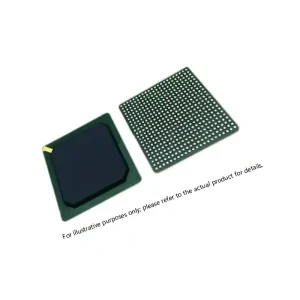
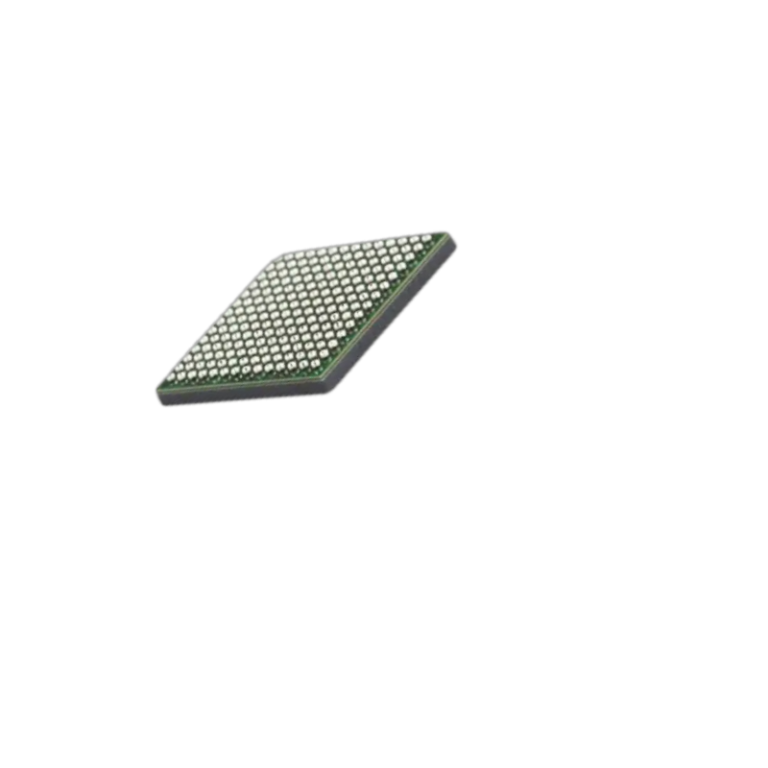

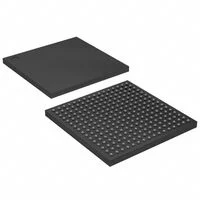
ALTERA EPM2210F256I5N
- 2210 logic elements and 1700 macrocells for complex logic implementation
- 1.88GHz maximum operating frequency for high-speed signal processing
- 256-pin fine-pitch BGA package for compact system integration
- 3.0V to 3.6V wide supply voltage range for versatile compatibility
- -40°C to +100°C extended operating temperature range for harsh environments
Related Products For Your Business
The Altera EPM2210F256I5N is the highest-density MAX II CPLD — 2,210 LEs (≈1,700 equivalent macrocells), 8,192-bit UFM, up to 204 user I/Os, 304 MHz maximum counter frequency — in the 256-pin FineLine BGA package, industrial speed grade −5. As the largest MAX II device, the EPM2210 targets complex glue logic, multi-protocol bus bridging, power management sequencing, and system controller applications where the EPM1270’s ~980 macrocells are insufficient, without requiring a full FPGA solution. It is pin-compatible in the F256 package with the EPM1270F256I5N, enabling density upgrade without PCB redesign.
EPM1270 vs. EPM2210 — When to Choose Each
| Parameter | EPM1270F256I5N | EPM2210F256I5N (this) |
|---|---|---|
| LEs | 1,270 | 2,210 |
| Equiv. Macrocells | ~980 | ~1,700 |
| Max User I/Os (F256) | 212 | 204 |
| tPD (−5 grade) | 6.2 ns | 7.0 ns |
| UFM | 8,192 bits | 8,192 bits |
| Package | F256 FBGA | F256 FBGA |
| PCB Compatible | Yes (vertical migration) | Yes (vertical migration) |
Note that EPM2210 provides slightly fewer user I/Os (204) than EPM1270 (212) in the same F256 package, because the larger die requires more power pins. Specify EPM2210 when logic utilization of the EPM1270 exceeds ~70–75% — the practical ceiling before fitting becomes difficult. The −5 industrial speed grade is the slowest MAX II grade, covering −40°C to +100°C at the most conservative timing margin — appropriate for non-timing-critical control and management applications where the −3 or −4 speed grades provide no additional benefit.
FAQ
What does EPM2210F256I5N decode to?
EPM = MAX II CPLD; 2210 = 2,210 LEs / ~1,700 macrocells; F256 = 256-pin FBGA; I5 = industrial, speed grade 5; N = lead-free.
Why does EPM2210 have fewer user I/Os than EPM1270 in the same F256 package?
The larger EPM2210 die requires more VCC and GND power pins in the 256-ball BGA package, leaving fewer balls available for user I/Os (204 vs. 212 for EPM1270). If I/O count is the binding constraint and 212 pins are required, EPM1270 in F256 provides more I/Os.
Is EPM2210F256I5N pin-compatible with EPM1270F256I5N?
Yes for dedicated pins, JTAG, and power/ground — vertical migration is supported within the F256 package. User I/O assignments may change; use the Quartus Prime Pin Migration Viewer to verify I/O compatibility before upgrading.
What is the maximum propagation delay for EPM2210 at speed grade −5?
7.0 ns (tPD1, worst-case pin-to-pin combinational delay). For faster timing, specify speed grade −4 (faster) or −3 (fastest). All grades cover the same industrial temperature range.
Can EPM2210 be used as a configuration controller for Altera FPGAs?
Yes — MAX II CPLDs are commonly used to control FPGA configuration sequencing, drive MSEL pins, monitor configuration-done signals, and manage power supply sequencing. The UFM block can store FPGA configuration control parameters non-volatilely.
What design tool supports EPM2210F256I5N?
Intel Quartus Prime (all editions). MAX II devices are supported in Quartus Prime Standard and Lite (free) editions, enabling zero-cost toolchain for CPLD design entry, synthesis, fitting, and programming file generation.