Securing Military Electronics Procurement: Risk Management
Table of Contents
- What Makes Defense Electronics Procurement Different from Commercial Sourcing
- Where Procurement Risks Emerge in Military Component Programs
- How Diversified Sourcing and Quality Control Reduce Supply Chain Exposure
- Why MIL-SPEC, QML, and Traceability Requirements Cannot Be Compromised
- Building a Procurement Framework That Survives Component Lifecycle Changes
- Frequently Asked Questions
The procurement of electronic components for military applications requires a structured approach to risk management that differs fundamentally from commercial sourcing. Defense electronics face challenges that commercial sectors rarely encounter: performance requirements that leave no margin for degradation, product lifecycles measured in decades rather than years, and failure consequences that extend beyond financial loss to operational readiness and national security. Managing these risks effectively determines whether systems perform when called upon.
What Makes Defense Electronics Procurement Different from Commercial Sourcing
The defense electronics sector operates within constraints that reshape every procurement decision. Geopolitical factors, technology cycles, and evolving threat profiles continuously shift what components are available, where they can be sourced, and how quickly they can be delivered. Component lifecycle management becomes particularly complex when systems must remain operational for twenty or thirty years, far outliving the typical commercial availability of their constituent parts.
Lead time volatility compounds these challenges. Global events—whether manufacturing disruptions, trade policy changes, or raw material shortages—can extend delivery schedules from weeks to months without warning. I have seen production lines halt because a single passive component became unavailable after a factory closure in Southeast Asia. The supplier had no qualified alternative, and the qualification process for a replacement took fourteen months. That experience reinforced why the military component supply chain requires contingency strategies that commercial procurement rarely considers.
Where Procurement Risks Emerge in Military Component Programs
A systematic approach to risk assessment begins with identifying where vulnerabilities actually occur in defense programs. Three categories account for most procurement failures: counterfeit components entering the supply chain, obsolescence outpacing system lifecycles, and single-source dependencies creating chokepoints.
Counterfeit components represent the most immediate threat to system integrity. These are not always obvious knockoffs; some are remarked parts from lower-grade bins, recycled components from scrapped equipment, or genuine parts that have been improperly stored or handled. Any of these can cause intermittent failures that are difficult to diagnose and impossible to predict.
Obsolescence operates on a longer timeline but creates equally serious problems. When a component reaches end-of-life, programs face a choice between costly redesigns, last-time buys that may not cover the system’s remaining service life, or sourcing from the aftermarket with all the authentication challenges that entails.
Single-source dependencies create leverage problems. When only one supplier can provide a critical component, that supplier controls pricing, delivery schedules, and allocation priorities. A production issue at that single source becomes a production issue for every program that depends on it.
The following table outlines common risk types and their potential impact on military electronics procurement:
| Risk Type | Description | Potential Impact |
|---|---|---|
| Counterfeit Components | Unauthorized, substandard, or misrepresented parts. | System failure, security breaches, mission compromise. |
| Obsolescence | Components reaching end-of-life or no longer manufactured. | Production halts, costly redesigns, long-term support issues. |
| Single-Source Dependency | Reliance on one supplier for a critical component. | Supply chain disruptions, price volatility, production delays. |
| Lead Time Volatility | Unpredictable changes in component delivery schedules. | Project delays, increased inventory costs, missed deadlines. |
| Geopolitical Risks | Trade restrictions, conflicts, or political instability. | Supply route disruptions, export control challenges. |
How Diversified Sourcing and Quality Control Reduce Supply Chain Exposure
Mitigation strategies for military-grade electronic components work best when they address multiple failure modes simultaneously. Diversified sourcing reduces reliance on single points of failure, but only if the alternative sources are genuinely qualified and can deliver equivalent parts. Adding a second supplier who cannot meet MIL-SPEC requirements does not reduce risk; it introduces new failure modes.
Quality control in defense procurement operates at a different level than commercial inspection. Standards like AS9120 establish baseline requirements for aerospace and defense distributors, but the actual testing protocols—MIL-STD-883 for microcircuits, MIL-STD-750 for semiconductors—define what “qualified” means in practice. A component that passes commercial incoming inspection may still fail military qualification testing.
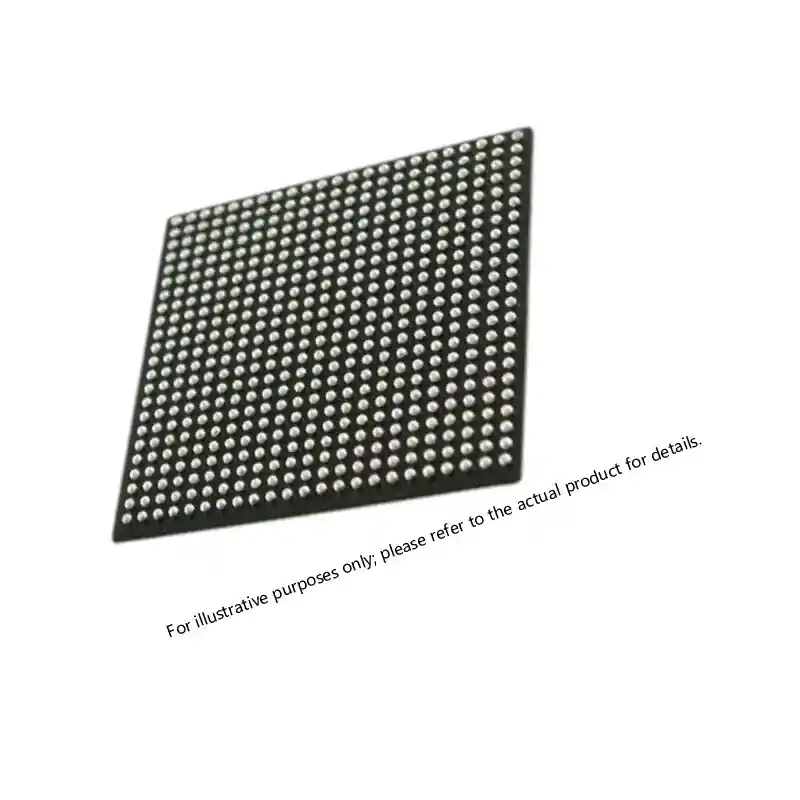
I recall a specific project where a critical FPGA component for a secure communications system was suddenly obsoleted by the original manufacturer. The program had eighteen months of production remaining and no qualified alternative. Our team located stock from a trusted source, but the parts had been in storage for several years. We coordinated MIL-STD-883 testing to verify the devices still met specification, including burn-in and temperature cycling that commercial testing would not require. The parts passed, the program continued on schedule, and the client avoided what would have been a six-month delay while qualifying a redesign.
If your program involves components with uncertain long-term availability, it is worth discussing obsolescence monitoring and alternative sourcing strategies before a last-time-buy notice arrives.
Why MIL-SPEC, QML, and Traceability Requirements Cannot Be Compromised
Adherence to MIL-SPEC, QML, and traceability protocols is not bureaucratic overhead; these standards exist because defense applications have failure consequences that commercial products do not. MIL-SPEC defines technical requirements that ensure components perform under conditions—temperature extremes, vibration, radiation, humidity—that commercial parts are never designed to withstand. QML identifies manufacturers whose processes have been audited and qualified to produce parts for military and aerospace applications.
Traceability connects a component to its origin, manufacturing lot, test results, and chain of custody. When a failure occurs in the field, traceability allows investigators to determine whether other units contain parts from the same lot, whether the failure represents a systemic manufacturing issue or an isolated defect, and whether the component was genuine or counterfeit. Without traceability, a single failure can trigger fleet-wide groundings or system shutdowns because there is no way to bound the problem.
Export controls add another layer of compliance requirements. ITAR and EAR govern which components can be shipped where, to whom, and for what end use. A component that is freely available for commercial applications may require an export license when destined for a defense program, and the penalties for violations extend beyond fines to criminal liability and debarment from government contracting.
Building a Procurement Framework That Survives Component Lifecycle Changes
A procurement framework for defense applications must anticipate that components will become unavailable, suppliers will exit markets, and requirements will evolve over system lifecycles measured in decades. This means building mechanisms for continuous monitoring, rapid response, and adaptation into the procurement process itself.
Long-term support planning starts at design, not at obsolescence. When engineers select components, they should consider not just current availability but projected lifecycle, second-source options, and the feasibility of future redesigns. A component that is sole-sourced today may be acceptable if the supplier has a strong track record and the component is used in a non-critical function. The same component in a mission-critical application with a twenty-year service life represents a different risk profile entirely.
Supplier relationships in defense procurement function differently than transactional commercial purchasing. A trusted supplier understands the program’s requirements, monitors component availability proactively, and alerts the program when risks emerge. This relationship takes time to develop and requires the supplier to have genuine expertise in defense applications, not just access to inventory.
Cost control matters, but it must be balanced against the cost of failure. The cheapest component that meets specification today may be the most expensive choice over a twenty-year lifecycle if it comes from a supplier who cannot provide traceability, support obsolescence management, or respond when problems arise.
Frequently Asked Questions
How do defense contractors verify that components are genuine and not counterfeit?
Verification requires multiple layers of protection. Contractors vet suppliers through audits and qualification processes, require full traceability documentation from manufacturer through distribution, and conduct independent third-party testing on incoming parts. Standards like AS6081 provide frameworks for counterfeit detection and avoidance. Visual inspection catches obvious counterfeits, but sophisticated fakes require electrical testing, X-ray inspection, or decapsulation to identify. No single method catches everything, which is why the layered approach matters.
What regulations govern military electronic component procurement?
MIL-SPEC defines technical requirements for component performance and qualification. QML identifies manufacturers qualified to produce parts for military and aerospace applications. Export controls, primarily ITAR for defense articles and EAR for dual-use items, govern the transfer of sensitive technology and restrict which components can be shipped to which destinations. Additional requirements may apply depending on the specific program, including DFARS clauses for Department of Defense contracts and agency-specific procurement regulations.
What happens when a critical component becomes obsolete during a system’s service life?
Obsolescence forces programs into one of several responses: last-time buys to stock sufficient inventory for remaining service life, qualification of alternative components that may require design changes, or aftermarket sourcing with rigorous authentication to verify part authenticity and condition. Each option carries costs and risks. Last-time buys tie up capital and require storage that maintains component viability. Redesigns consume engineering resources and may require recertification. Aftermarket sourcing introduces authentication challenges and potential quality variations. Effective obsolescence management monitors component lifecycles continuously and initiates response planning before the last-time-buy window closes. To discuss specific obsolescence challenges or sourcing requirements, contact us at xuansc2144@gmail.com or call directly.
If you’re interested, check out these related articles:
Virtex-7 690T FPGA: Performance, Packaging, and Reliability Insights
XC7VX485T FPGA: Virtex-7 Performance for Defense
Virtex-7 690T FPGA: Performance for Mission-Critical Systems