
TMS320F2812PGFA: F2812 150 MHz DSP/MCU Flash Sourcing Guide
Table of Contents
- TMS320F2812PGFA Architecture and Key Specifications
- Memory, Boot, ADC, PWM, and Control Integration
- Applications and System Integration
- High-Reliability Sourcing and Compliance Considerations
- Companion FPGA and Mixed-Processing Support
- Request a Quote and Documentation Review
- Frequently Asked Questions
- What is the TMS320F2812PGFA?
- What package does the PGFA suffix indicate?
- How much on-chip flash does the TMS320F2812 have?
- Is the TMS320F2812PGFA a military-qualified device?
- What documentation should accompany a hi-rel F2812 purchase?
- Can Sparkle support long-lead or sustainment requirements for the F2812?
- References
TMS320F2812PGFA Architecture and Key Specifications
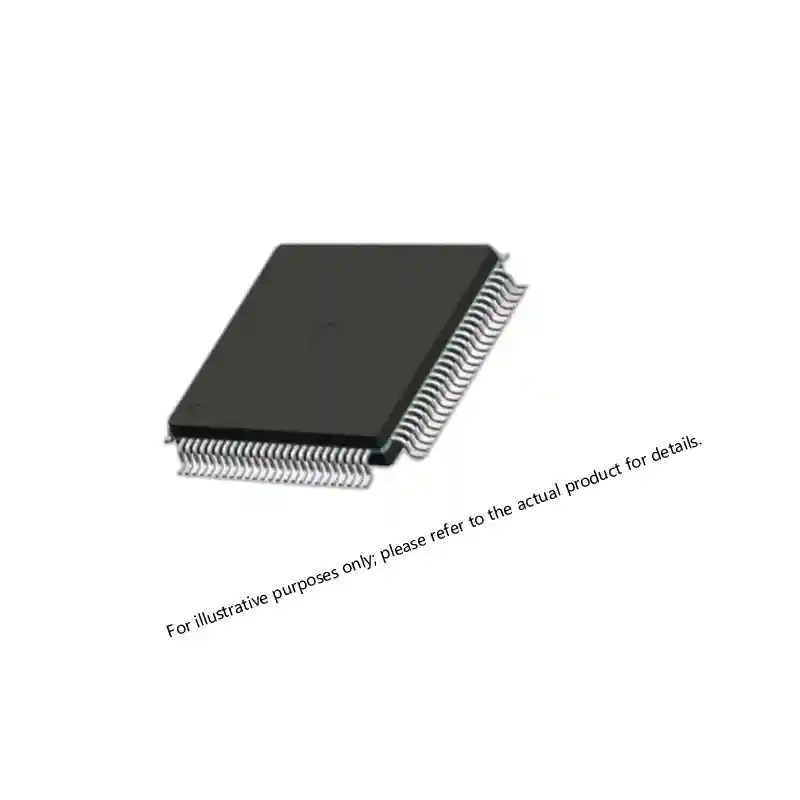
The TMS320F2812PGFA is a 32-bit fixed-point digital signal processor/microcontroller from the Texas Instruments C2000 family. It combines the C28x core running at 150 MHz with embedded flash, a 12-bit analog-to-digital converter, dual event managers, and control-oriented serial interfaces. The PGFA designation identifies the 176-pin low-profile quad flat pack, a board-friendly package for compact motor-control, digital power, and defense actuator electronics [1].
The device is positioned as a real-time control processor rather than a general-purpose applications processor. Its C28x instruction set supports efficient math for proportional-integral control loops, field-oriented control, and signal conversion, while the integrated flash removes the need for an external code store in many designs [2].
| Parameter | TMS320F2812PGFA Specification |
|---|---|
| CPU core | TI C28x 32-bit fixed-point DSP |
| CPU frequency | 150 MHz (6.67 ns instruction cycle) |
| On-chip Flash | 128K × 16 |
| SARAM | 18K × 16 |
| Boot ROM / OTP | 4K × 16 / 1K × 16 |
| ADC | 12-bit, 16-channel, up to 12.5 MSPS |
| Control peripherals | Dual event managers with compare, capture, and dead-band logic |
| Serial interfaces | 2× SCI, SPI, eCAN, McBSP |
| Supply / package | 1.8 V core, 3.3 V I/O; 176-pin LQFP (PGFA) |
The 150 MHz core provides a 6.67 ns instruction cycle, which is useful for high-bandwidth current or position loops. The flash is organized in sectors and supports in-system programming through the device bootloader and TI toolchain. The 3.3 V I/O level is consistent with common C2000 family practice; board designers should verify power sequencing and decoupling against the data manual [1].
Memory, Boot, ADC, PWM, and Control Integration
The TMS320F2812 uses a unified memory map with program and data access across flash, single-access RAM, boot ROM, and OTP memory. The 128K × 16 flash holds the application image without external memory in most control designs. The 18K × 16 SARAM is divided into blocks that support instruction execution, data storage, and stack operations during high-frequency control loops [1].
Boot operation is configurable, with the internal boot ROM selecting the startup source based on GPIO state or programmed settings. A code security module protects proprietary control algorithms from unauthorized readout, which is relevant for fielded defense and commercial motion-control systems.
The analog section includes a 12-bit, 16-channel ADC with two sample-and-hold units and sequencer-based conversion control. In closed-loop servo applications, the converter can sample motor phase currents and resolver or hall feedback channels with enough throughput for tight loop rates [1].
The dual event managers provide pulse-width modulation generation, capture inputs, quadrature encoder interfaces, and dead-band insertion. Those resources make the device suitable for three-phase inverter control, brushless DC drives, permanent-magnet synchronous motor drives, and other power-stage control tasks.
Applications and System Integration
The TMS320F2812PGFA appears most often in embedded control systems that require deterministic execution and integrated analog capability. Typical application areas include industrial servo amplifiers, robotics, digital power supplies, UPS inverters, military ground-vehicle actuator control, avionics motor controllers, and test instrumentation.
In defense-oriented designs, the device is frequently used at the system edge rather than as the central processing engine. It handles current loops, speed loops, actuator sequencing, and sensor conversion while a host processor or larger DSP manages higher-level mission functions. This partitioning helps isolate real-time control from less deterministic application software.
For designs moving from prototyping toward hi-rel or MIL-SPEC qualification, it is prudent to lock the bill of materials early and confirm whether the commercial TMS version or a QML-classified variant is required. Sparkle Electronics can review part numbers, date-code availability, and documentation needs at xuansc2144@gmail.com.
High-Reliability Sourcing and Compliance Considerations
Sourcing the TMS320F2812PGFA for defense or long-life industrial programs requires more than a standard parts search. Buyers should verify manufacturer origin, lot traceability, date code consistency, lead condition, and packaging integrity before accepting parts into an incoming inspection flow. For aerospace and defense programs, the supplier should also provide C of C or equivalent documentation and be able to support counterfeit-part mitigation processes such as AS6081 [5].
It is important to distinguish between the commercial TMS part number and military-qualified TI C2000 variants. The TMS320F2812PGFA is not automatically a QML-qualified device; programs that require QML or SMD compliance should verify the applicable military part number, such as a SMJ320F2812 variant, against the current DLA SMD and MIL-PRF-38535 requirements [3]. Quality management expectations for aerospace suppliers are commonly structured around AS9100D [4].
Procurement risk increases when parts are sourced from unverified channels. Mixed date codes, reworked leads, blacktopped markings, or missing documentation may indicate higher counterfeit or degradation risk. For program use, the safest practice is to consolidate supply through a distributor that can confirm traceability and provide condition reports before shipment.
For a current TMS320F2812PGFA quote or to review available date codes, packaging, and C of C documentation, email xuansc2144@gmail.com with the required part number, quantity, and incoming inspection criteria.
Companion FPGA and Mixed-Processing Support
Many TMS320F2812-based boards are not processor-only designs. A companion nonvolatile FPGA or CPLD often handles glue logic, custom I/O, sequencing, or hardware interlocks that are awkward to implement in firmware. In those architectures, the DSP manages the time-critical control loops while the FPGA absorbs high-speed or irregular logic functions.
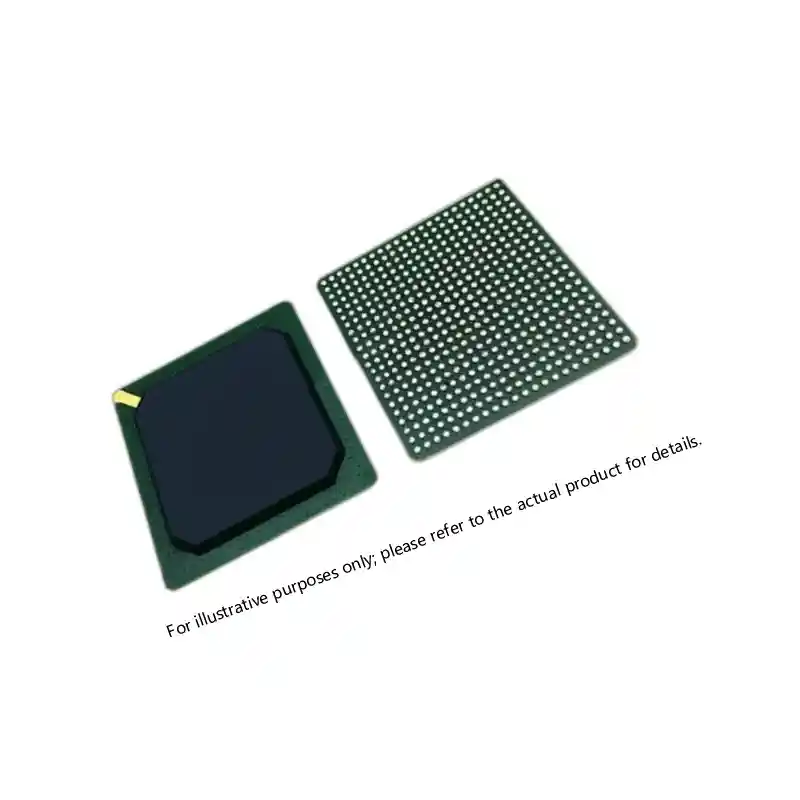
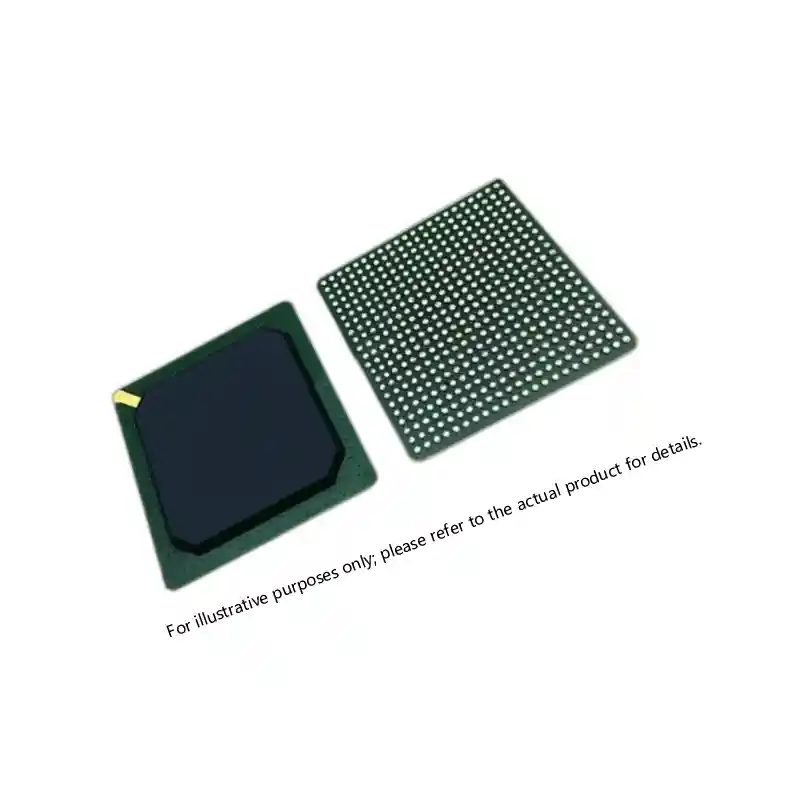
Many defense signal processors pair a control-oriented DSP like the TMS320F2812PGFA with a larger FPGA for custom timing, waveform processing, or high-speed I/O. <XCKU115 UltraScale FPGA: Powering Critical Defense Systems> covers the platform-level requirements for a comparable defense processing role.
Packaging, speed-grade matching, and life-cycle continuity are common to both legacy DSP and FPGA sustainment decisions. <Virtex-7 XC7VX690T: Performance, Reliability, and Integration> covers evaluation of performance, reliability, and integration for a related hi-rel device.
For mixed DSP/FPGA boards, procurement teams face the same traceability, authentication, and compliance questions across both device families. <Virtex-7 690T FPGA: Performance, Packaging, and Reliability Insights> covers packaging and long-term sourcing considerations in that adjacent component class.
Request a Quote and Documentation Review
To request a TMS320F2812PGFA quote or a compliance review for your program, contact Sparkle Electronics at xuansc2144@gmail.com with the following:
- Exact part number: TMS320F2812PGFA
- Required quantity and acceptable date-code range
- Packaging or condition requirements, including lead finish and environmental handling
- Traceability documentation needs: C of C, lot records, or incoming inspection support
- Program context: QML/military variant required, upscreening evaluation, or commercial hi-rel build
Sparkle Electronics supports defense contractors, systems integrators, and research institutions in qualifying, sourcing, and sustaining high-reliability DSP and mixed-signal component supply.
Frequently Asked Questions
What is the TMS320F2812PGFA?
The TMS320F2812PGFA is a TMS320C2000 digital signal processor/microcontroller with a 32-bit C28x fixed-point core operating at 150 MHz. It integrates flash memory, a 12-bit ADC, and control peripherals for real-time embedded applications.
What package does the PGFA suffix indicate?
The PGFA suffix identifies the 176-pin low-profile quad flat pack package. This package variant is commonly used for compact board designs where direct solder inspection and board-level rework are part of the production process.
How much on-chip flash does the TMS320F2812 have?
The TMS320F2812 has 128K × 16 of on-chip flash memory. It also includes 18K × 16 of SARAM, 4K × 16 of boot ROM, and 1K × 16 of OTP memory according to the Texas Instruments data manual [1].
Is the TMS320F2812PGFA a military-qualified device?
Not automatically. The TMS320F2812PGFA is a commercial/industrial TMS part. Programs requiring QML or SMD compliance should verify the applicable military variant, such as a SMJ320F2812 part, against the appropriate DLA SMD and MIL-PRF-38535 requirements [3].
What documentation should accompany a hi-rel F2812 purchase?
At minimum, the purchasing organization should receive a manufacturer C of C or equivalent, lot traceability records, date-code confirmation, and evidence of incoming inspection or anti-counterfeit controls consistent with AS6081 [5].
Can Sparkle support long-lead or sustainment requirements for the F2812?
Yes. Sparkle Electronics supports long-running defense and industrial programs with component sourcing, documentation, and supply-continuity planning. Contact xuansc2144@gmail.com with the required part number, quantity, and program schedule.
References
[1] Texas Instruments, “TMS320F2810, TMS320F2811, TMS320F2812 Digital Signal Processors Data Manual,” SPRS174.
[2] Texas Instruments, “TMS320C28x DSP CPU and Instruction Set Reference Guide,” SPRU430.
[3] U.S. Department of Defense, “General Specification for Integrated Circuits (Microcircuits) Manufacturing,” MIL-PRF-38535.
[4] SAE International, “Quality Management Systems — Requirements for Aviation, Space, and Defense Organizations,” AS9100D.
[5] Aerospace Industries Association, “Counterfeit Electronic Parts; Avoidance, Detection, Mitigation, and Disposition,” AS6081.
If you’re interested, check out these related articles:
Virtex-7 XC7VX690T: Performance and Reliability Insights
Virtex-7 690T FPGA: Performance, Packaging, and Reliability Insights
XC7VX485T FPGA: Virtex-7 Performance for Defense
XCKU115 UltraScale FPGA: Powering Critical Defense Systems
XC7VX485T Virtex-7 FPGA: Performance and Sourcing for Defense