V300B5T200BL: 300 V to 5 V/200 W DC-DC Module
Table of Contents
- Reading the V300B5T200BL Part Number Before You Source
- Why the 300 V Bus Changes the Sourcing Decision
- Thermal and Mechanical Checks for 200 W in a BL Package
- Incoming Inspection and Traceability for Power Modules
- What to Put in the RFQ for V300B5T200BL
- Sourcing Support for V300B5T200BL
- FAQ
- Is the V300B5T200BL a drop-in replacement for other 300 V modules?
- Can the module deliver 200 W at any temperature?
- What documentation should I require with the parts?
- What if the load draws less than the full 200 W?
- How do I avoid confusing similar V300B part numbers?
The V300B5T200BL is a board-mount DC-DC converter identified by a 300 V nominal input family, a 5 V output, and a 200 W output rating in a BL package. For defense and high-reliability programs, that part number is only the first filter. The real sourcing decision depends on bus voltage range, baseplate cooling, mechanical fit, and the documentation trail behind the parts. A module can match on output power and still fail an incoming inspection if the suffix, date code, or compliance record does not match the intended application. This article walks through the checks buyers should make before approving the V300B5T200BL for a bill of materials.
Reading the V300B5T200BL Part Number Before You Source
The part number encodes the main electrical and mechanical identity, but some fields are easier to misread than they appear. The V300 segment points to a 300 V nominal input family. The 5 and 200 segments point to a 5 V output and 200 W output power. The B and T segments are the ones most likely to vary by revision, screening, temperature grade, or package option, so they should be confirmed against the manufacturer part-number decoder rather than assumed.
| Part number segment | What it indicates | Verification required |
|---|---|---|
| V300 | 300 V nominal input family | Confirm minimum and maximum input range, not only nominal voltage |
| 5 | 5 V output | Confirm setpoint, trim range, regulation, ripple, and load response |
| 200 | 200 W output power | Confirm rated power at the actual input voltage and baseplate temperature |
| B | Family or package identifier | Confirm the mechanical drawing, pinout, and mounting pattern |
| T | Grade or option code | Confirm temperature rating, screening, or other suffix-specific requirement |
| BL | Package and termination style | Confirm baseplate dimensions, pin length, and mating footprint |
A similar part number with a different suffix can have a different pin length, baseplate surface, or input transient rating. Request the official decoder and the complete manufacturer drawing before freezing the board layout.
Why the 300 V Bus Changes the Sourcing Decision
A 300 V input module operates on a high-voltage distribution bus, which changes the emphasis of the review. Higher input voltage reduces current for the same power, so input cabling and connector heating are lower than they would be on a 28 V bus. At the same time, the input section must tolerate greater clearance requirements, inrush limiting, fusing coordination, and line transients. A 5 V output rail in this architecture is often a distribution rail for downstream point-of-load regulators, not the only supply directly responsible for every logic device.
The main condition to confirm is the actual input range under operating and transient conditions. A nominal 300 V bus can sag during load changes or spike during switching events. If the program specification allows wide input deviations, the module must be rated for the full envelope, not only the nominal point. Isolation between input and output also matters because the low-voltage side may be connected to sensitive digital circuits. The mounting method and input filter placement affect clearance, creepage, and service access.
Once the 5 V rail is stable, the next system risk on many defense boards is the logic device that consumes it. > Powered loads such as FPGAs require the same care as the power module when the bill of materials is reviewed. <Virtex-7 XC7VX690T: Performance and Reliability Insights> covers high-reliability FPGA selection and sourcing considerations that often sit beside the power stage in the same program.
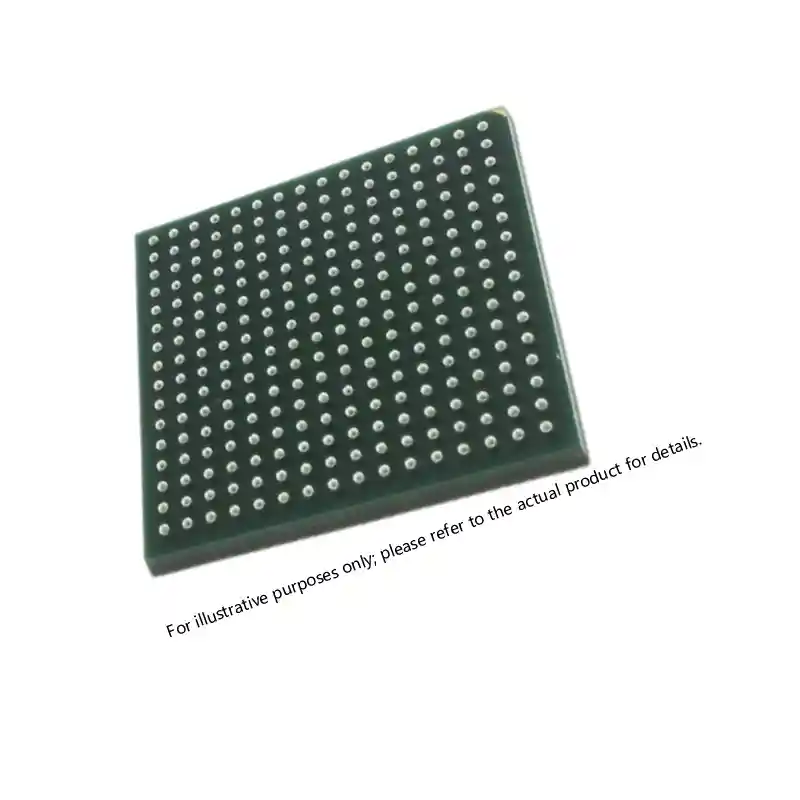
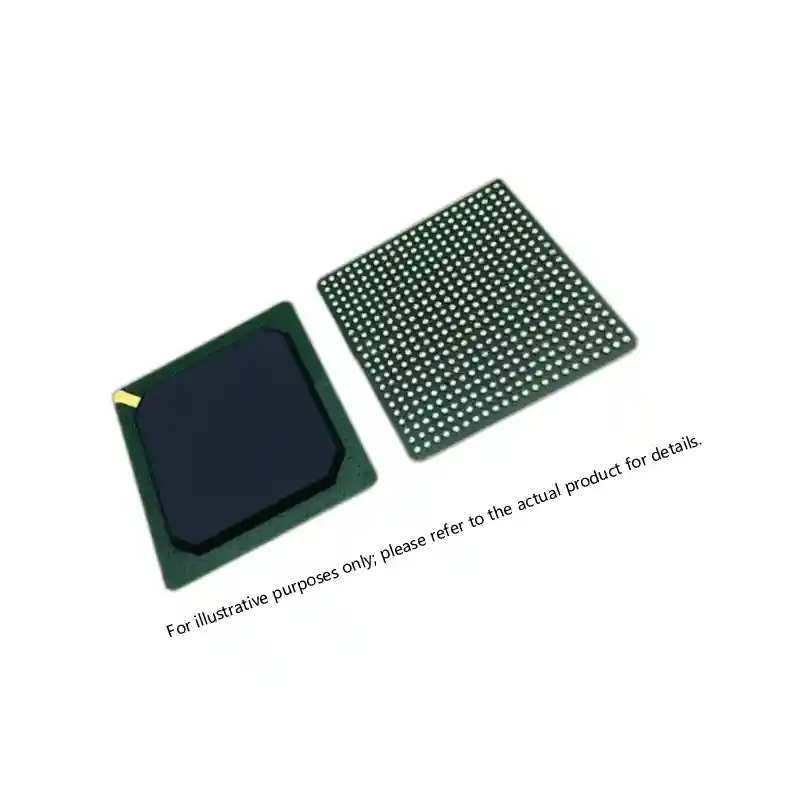
In a typical defense board, the 5 V module feeds downstream regulators and logic rails rather than operating alone. The following images show representative high-reliability logic devices that may share the same supply base or bill of materials. They are not the V300B5T200BL module itself and should be reviewed against their own specifications.
Thermal and Mechanical Checks for 200 W in a BL Package
A 200 W power rating does not mean the module can deliver 200 W in every mounting condition. The available output is limited by baseplate temperature, airflow, thermal interface quality, and nearby heat sources. In a convection-cooled enclosure, the module may require derating. On a cold-plate or conduction-cooled assembly, the baseplate contact area and flatness become the limiting factors.
Before committing the part, check the mounting surface, thermal interface material, pin length, and clearance to input capacitors. A BL package designation must be confirmed against the manufacturer drawing because package suffixes can affect the heat transfer path. Record the maximum baseplate temperature expected in the system and compare it with the module derating curve. If the cooling approach is still under development, treat the thermal interface as an open risk rather than assuming the full rating is available.
The tradeoff is direct: conduction cooling can support higher output power, but it requires tighter mechanical tolerances and a defined baseplate interface. Air cooling is simpler to service but may force a derating or require reserved airflow. Confirm which condition applies to your design before the first article is built.
Incoming Inspection and Traceability for Power Modules
For high-reliability programs, the incoming inspection is the last practical gate before parts enter the controlled stockroom. A certificate of conformance is useful, but it is a document, not a substitute for physical and electrical verification. The inspection should record enough information to trace the parts back to the lot and to detect obvious handling or remarking risks.
| Check | Why it matters | What to record |
|---|---|---|
| Date code and lot code | Confirms batch identity and supports lot control | Lot number, date code, and received quantity |
| Certificate of conformance | Ties the shipment to declared specifications | Certificate number and issue date |
| Moisture and ESD packaging | Reduces damage before assembly | Sealed bag condition and ESD shielding |
| Visual inspection | Detects lead damage, baseplate scratches, or re-marking | Photographs and inspection notes |
| Output or sample test | Confirms the module operates as received | Test conditions, measured result, and sample plan |
A CoC should match the actual part number and lot. If the document contains a different suffix or does not identify the quantity, quarantine the parts until the supplier corrects the record. The inspection result should be kept with the receiving records so the same lot can be traced later if a field failure occurs.
What to Put in the RFQ for V300B5T200BL
A complete RFQ removes the most common avoidable mismatches. Send the full part number exactly as written, including the B, T, and BL suffix fields. Then add the application conditions: minimum and maximum input voltage, expected transients, output setpoint and trim requirements, load range, baseplate temperature, and mounting method. If the program requires date-code control, lot restriction, or specific packaging, state it before quotation.
Also request the documentation your incoming inspection must see. That normally includes a certificate of conformance, date and lot identification, packaging condition, and any available test or retest report. Export classification and origin information may be separate requirements, so list them in the RFQ if they affect the program. A clear RFQ helps the supplier confirm whether the offered stock is the correct revision or a close part number that should not be substituted.
Sourcing Support for V300B5T200BL
Send the following to the Sparkle Electronics team: the full part number and suffix, input voltage range, output load, package and pin style, date or lot restrictions, and the compliance documents your incoming inspection requires. Include the required delivery date and destination. Contact David Lin at xuansc2144@gmail.com for a quote, document review, or stock confirmation.
FAQ
Is the V300B5T200BL a drop-in replacement for other 300 V modules?
Not automatically. Package dimensions, pin length, baseplate interface, input range, output trim, and isolation can differ even when the output power looks similar. Match the full suffix and compare the manufacturer drawing before substituting.
Can the module deliver 200 W at any temperature?
The 200 W rating is tied to defined thermal conditions. At higher baseplate temperatures or reduced airflow, the available output may be lower. Request the derating curve and compare it with the expected mounting and cooling condition.
What documentation should I require with the parts?
At minimum, require a certificate of conformance, date and lot identification, and acceptable ESD and moisture packaging. Add output or sample test data when the program requires it. The CoC alone does not prove the parts are authentic or electrically intact.
What if the load draws less than the full 200 W?
A lower load is usually acceptable, but confirm regulation and any minimum load requirement at the specified input voltage. A higher load should not exceed the rated output, and transient loads should be checked against the module response rather than assumed safe.
How do I avoid confusing similar V300B part numbers?
Record the complete part number, including suffix fields, and compare the official decoder and drawing before ordering. Do not let a matching input, output, and power rating override a difference in package, grade, or screening that may affect the program.
If you’re interested, check out these related articles:
XC7VX485T FPGA: Virtex-7 Performance for Defense
XCKU115 UltraScale FPGA: Powering Critical Defense Systems
A1020B-PG84B ACT2 FPGA: Specs, Sourcing, and Availability
Virtex-7 XC7VX690T: Performance, Reliability, and Integration