XC3S700AN-4FGG484I Spartan-3AN Specs and Sourcing Guide
Table of Contents
- What the XC3S700AN-4FGG484I Order Code Actually Specifies
- Where 13,248 Logic Cells Still Earns Its Place
- Speed Grade, Package, and Timing Margin in Practice
- What the Industrial Suffix Does Not Prove
- Configuration, Bitstream Custody, and Design Security
- What Belongs in the RFQ and What to Verify on Receipt
- Lifecycle Risk and Second-Source Planning for a Legacy FPGA
- Send the Order Code, the Quantity, and the Acceptance Basis
- FAQ
- Is the XC3S700AN-4FGG484I rated for -55 °C to +125 °C?
- Can an industrial Spartan-3AN be upscreened for defence use?
- What is the difference between the C and I versions of this device?
- What can replace this device if it becomes unavailable?
- What documentation should accompany a shipment?
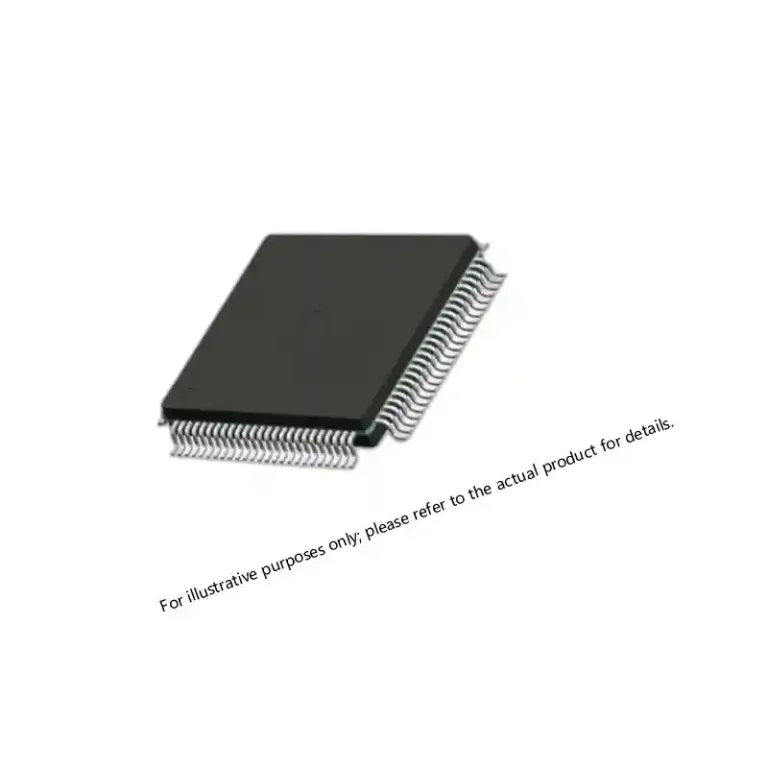
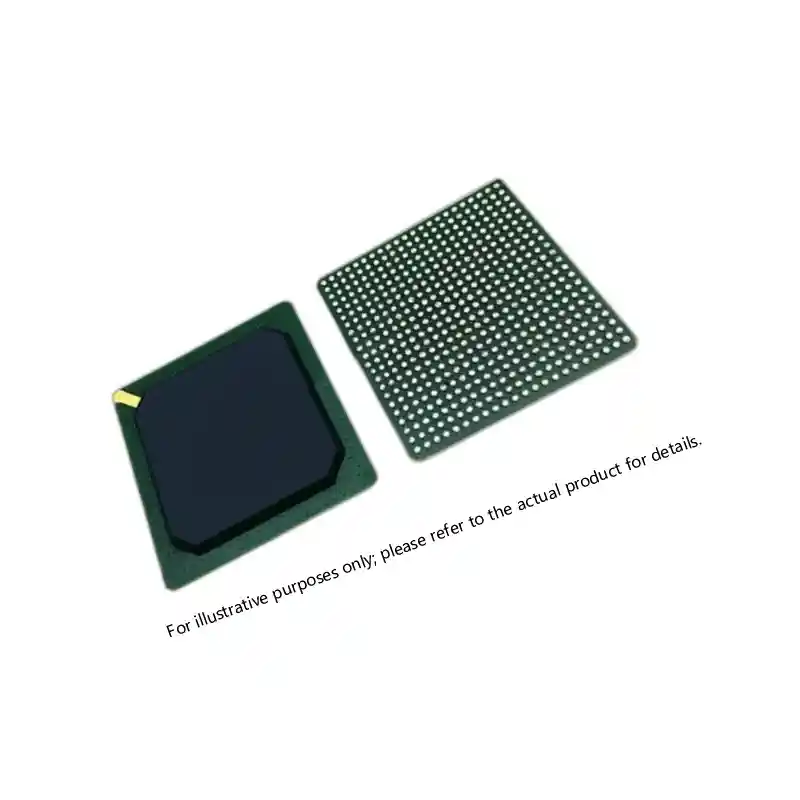
The XC3S700AN-4FGG484I is the industrial-temperature, 700,000-system-gate member of the Spartan-3AN family in a 484-ball lead-free fine-pitch BGA, and the decision that matters is not whether the device works but whether its grade fits the program. Most pages on this part stop at the logic cell count and a package drawing. This one starts with the boundary that decides acceptance. The trailing I establishes an industrial temperature envelope and a plastic BGA body. It does not establish QML qualification, a 5962 standard microcircuit drawing, or a military temperature guarantee. Programs that miss that distinction buy a part their environmental requirements cannot accept, and they usually discover it during qualification rather than at the quote stage.
What the XC3S700AN-4FGG484I Order Code Actually Specifies
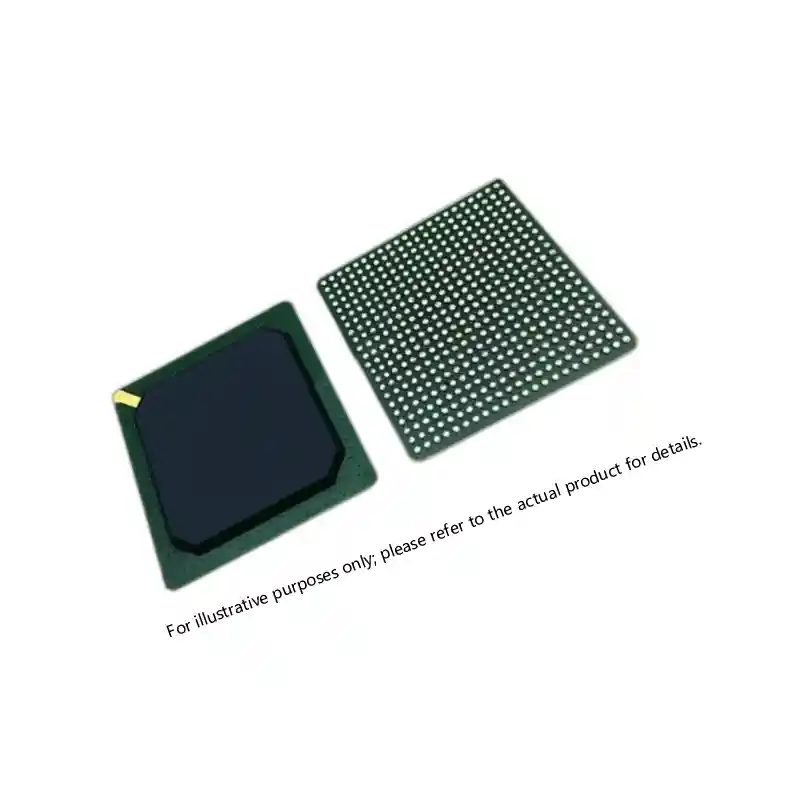
An order code is a specification compressed into a few characters, and every field removes a freedom a buyer might otherwise assume. XC3S700AN names the Spartan-3AN family and the 700,000-system-gate density. The 4 is the speed grade used for static timing. FGG484 is the 484-ball lead-free fine-pitch BGA. The trailing I is the temperature grade. Remove any one of those fields and you are no longer describing this device.
The density figure needs a warning attached. System gate counts are an equivalence inherited from ASIC comparisons, not a synthesis capacity. The number to design against is 13,248 logic cells arranged in 5,888 slices. Two programs that both call their design a 700K-gate load can consume very different fractions of that budget depending on how much of the work is buffering, arithmetic, and routing congestion rather than raw logic.
| Field | Value | What it fixes in a procurement file |
| Device family | Spartan-3AN, 90 nm non-volatile FPGA | Field-programmable device with on-chip configuration memory |
| Density | 700,000 system gates, 13,248 logic cells, 5,888 slices | The usable logic budget the design was closed against |
| Speed grade | -4 | The timing limits used in static analysis |
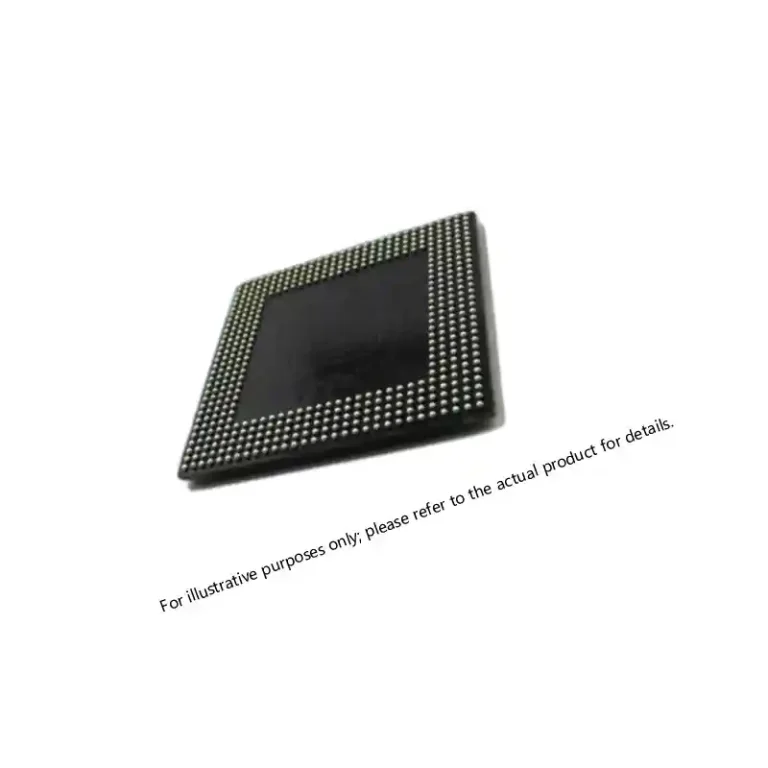
| Package | FGG484, 484-ball lead-free fine-pitch BGA | Footprint, assembly method, inspection method |
| Temperature grade | Industrial, -40 °C to +100 °C junction | The environmental envelope the order code guarantees |
| Supply rails | 1.2 V core, 2.5 V auxiliary, VCCO set per bank | Board power design and I/O level compatibility |
What the table does not contain matters as much as what it does. There is no qualification level, no radiation tolerance statement, no screening class, and no lifecycle status in those six rows. Those four questions are answered by documents outside the order code, and a supplier who answers them from the order code alone is guessing.
Where 13,248 Logic Cells Still Earns Its Place
This density sits in the range where interface work dominates the logic budget. Bus bridging between legacy parallel interfaces, protocol engines for avionics and tactical databuses, address decoding, timing generation, and the glue logic that used to occupy a board of 74-series devices all fit comfortably. Sustaining an existing board through a component replacement is another common case, because the alternative is a redesign of a qualified assembly.
There are hard capability limits to check before the density conversation starts. The Spartan-3A architecture has no multi-gigabit serial transceivers, so it cannot act as a serial-link aggregator no matter how much fabric is left over. It also has no embedded processor, which means control-plane functions must be built in logic or handled by a separate device. Programs that need either capability are not short of logic cells; they are in the wrong family.
Memory and arithmetic capacity follow the same pattern. Block RAM and 18×18 hardware multipliers handle FIFO buffering, coefficient storage, and moderate filtering. They do not handle wideband channelized processing, large correlation buffers, or the throughput of a modern radar back end. Distinguishing those two workloads early prevents a density estimate from being mistaken for a feasibility study.
A design that needs dedicated multipliers at scale, deep sample buffering, or multi-gigabit serial links is outside what this family provides, and the answer is a different device rather than a larger Spartan-3AN. <Virtex-7 690T FPGA: Performance for Mission-Critical Systems> covers how a high-density Virtex-7 device is positioned for mission-critical processing.
Speed Grade, Package, and Timing Margin in Practice
The -4 suffix is the lower of the standard speed grades offered for this family, which means a design closed at -4 was closed with the least timing margin available. That is a procurement fact, not a design flaw. It becomes a procurement problem when someone proposes a substitute grade to solve an availability issue.
Substituting a faster grade is not automatically safe. Faster edges change output slew rates, simultaneous switching noise, and I/O timing relative to the clock, and a design that closed at -4 with comfortable hold margins can develop different behaviour at the I/O boundary. Any grade substitution needs the static timing analysis re-run at both temperature corners, plus a signal integrity check on the affected interfaces. A supplier cannot make that judgement, and a buyer should not accept it verbally.
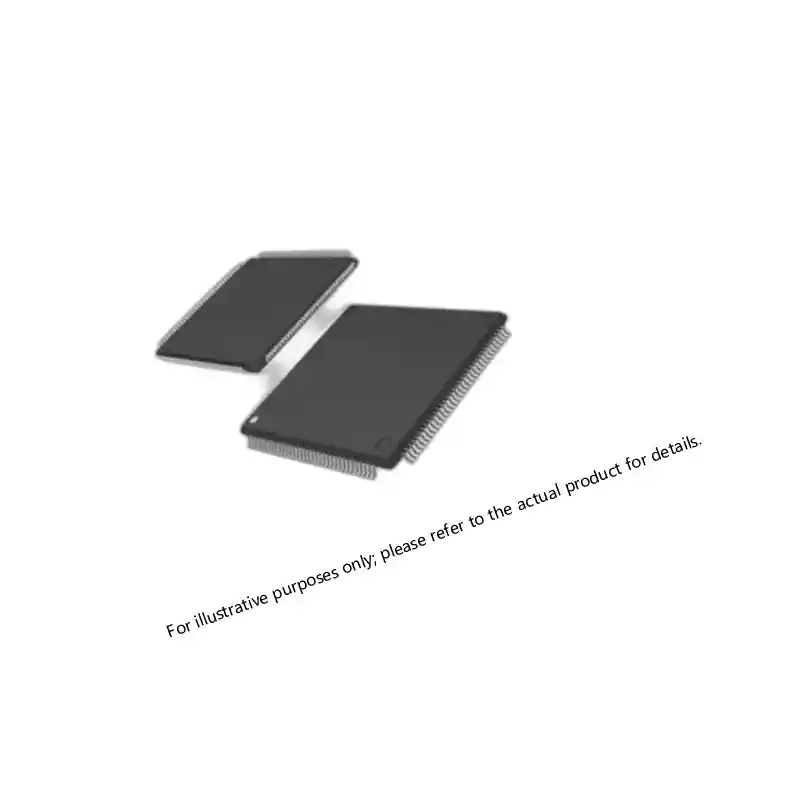
The 484-ball fine-pitch body carries its own constraints. At 1.0 mm pitch the ball array is not visually inspectable in the way a leaded package is, so acceptance depends on X-ray or equivalent inspection, on controlled reflow, and on moisture handling. A BGA that absorbed moisture before reflow can crack internally and still pass a bench check, which is why the packaging records and the humidity indicator card belong in the receiving file alongside the certificate of conformance.
Two practical checks settle most of the timing and assembly questions before an order is placed. First, ask for the design’s timing report on the exact order code and confirm the analysis was run at the industrial temperature corner, not at room ambient. Second, confirm the assembly house’s reflow profile and moisture sensitivity handling, and record the floor life limit for the package.
What the Industrial Suffix Does Not Prove
The most expensive misunderstanding in this part number is the assumption that a defence program’s use of a component makes the component military grade. It does not. An industrial grade device is characterized over a commercial-industrial envelope, typically -40 °C to +100 °C junction for this family, and that envelope is a manufacturer’s guarantee attached to the grade. A military temperature range of -55 °C to +125 °C is a different guarantee, and it is not created by the program’s requirement, by the distributor’s description, or by the fact that the board is installed in a defence system.
The same logic applies to qualification. A QML device qualified to MIL-PRF-38535 and screened under MIL-STD-883 methods carries a documented manufacturing and screening flow with a standard microcircuit drawing that a program can cite. This order code carries none of that. The package is a plastic BGA, so there is no hermetic cavity, no cavity-based particle impact screening, and no moisture immunity. Those are properties of the construction, and no amount of incoming test converts them.
| Record | How it was produced | What it can support | Do not infer |
| The order code itself | Decoded against the manufacturer’s ordering information | Identity of device, speed grade, package, and temperature grade | That any military qualification, QML listing, or 5962 drawing exists |
| Family data sheet limits | Manufacturer characterization across the specified grades | Performance inside the industrial envelope | Operation guaranteed at -55 °C or +125 °C |
| A supplier’s military grade label | Commercial catalog wording | Nothing about qualification or screening | That a screening record, traceability path, or qualification report exists |
| A third-party upscreening report | Tests run on a stated sample from a stated lot | Those tests, on that sample, under those conditions | That every unit or any later lot behaves the same |
| A prior program’s use | One design in one environment | A precedent worth reviewing against your own conditions | That the environment, lot, board, or duty cycle is equivalent |
| Plastic BGA construction | Package type and materials | Mass, board area, rework method, inspection approach | Hermeticity, moisture immunity, or cavity-based screening |
Each record above belongs to a different party and a different moment in a program. A screening report is evidence that certain tests were performed on certain units; it is not evidence about the die’s design margin, and it does not transfer the manufacturer’s warranty to a use outside the specified grade.
Upscreening is worth understanding precisely because it is often presented as a solution. Adding temperature testing at the corners, X-ray inspection, and electrical verification at temperature does extend the evidence available to a buyer, and for some programs that evidence is sufficient when the buyer’s authority accepts it in writing. What upscreening cannot do is change the qualification basis of the die, change the package construction, or make a sample-based result apply to units it did not cover.
The workable decision rule is short. If the requirement is a documented QML part with a standard microcircuit drawing and a -55 °C to +125 °C guarantee, this device cannot satisfy it and no sourcing arrangement will change that. If the program’s real environment sits inside the industrial envelope and the buyer’s authority accepts a commercial-industrial part supported by documented incoming inspection and configuration control, this device is a legitimate choice. The boundary is written acceptance, not an adjective in a catalog.
Configuration, Bitstream Custody, and Design Security
The on-chip configuration memory is the reason many designs choose this family in the first place. The device can hold its own configuration image and boot from internal memory, which removes an external configuration PROM, a programming step on the assembly line, and the board area both consume. On a space-constrained assembly that is a real gain, and it is one of the few architectural advantages that survives into a sustainment program.
It also creates a procurement question that does not exist for volatile FPGAs. The same order code can arrive blank or carrying an image, and a device carrying an image carries somebody’s design. For a buyer, the configuration state is a specification item, not a detail to be sorted out later. State in the purchase order whether devices must be new, unused, and unprogrammed, and require written confirmation of that state with the shipment.
Design security in this family rests on controlling who holds the configuration image and who holds the programmed devices. Programmers should confirm the exact readback and programming controls available for the specific device in the manufacturer’s configuration documentation before relying on them, because protection here is procedural and physical rather than cryptographic in the way later families allow. A procurement file that records programming history by lot, together with custody of the image itself, does more for design security than a clause in a purchase order.
The executable check is straightforward. Request the configuration state in writing, require erasure or certification where blank devices are mandatory, and keep a programming record per lot or serial number if the program’s configuration control plan demands traceability from image revision to installed unit.
What Belongs in the RFQ and What to Verify on Receipt
Most sourcing problems with a part like this one are created in the first email, not at the receiving dock. An RFQ that says “Spartan-3AN 700K, industrial, BGA” leaves the speed grade, the package, the configuration state, and the traceability basis open, and a supplier competing on price will resolve those ambiguities in the direction that costs least.
| RFQ field | What to state | Failure it prevents |
| Order code | XC3S700AN-4FGG484I in full, with speed, package, and temperature suffix | A near match that changes timing, footprint, or grade |
| Traceability | Manufacturer or authorized-supplier path, with date and lot code | Independent-market stock of unknown or refurbished origin |
| Condition | New, unused, unprogrammed, unless programmed parts are explicitly accepted | Pulled or residual-image devices entering a build |
| Documentation | Certificate of conformance, packing list, date codes, any test data | A receiving file that cannot support the sourcing record |
| Screening | Any lot test performed, with sample size and conditions | Reading a sample result as a lot guarantee |
| Packaging | ESD bag, moisture barrier, desiccant, humidity indicator, MSL label | Moisture-driven cracking during reflow of a 484-ball body |
A weak line and a workable line look like this. Reject “XC3S700AN industrial BGA, 50 pieces, best price.” Replace it with “XC3S700AN-4FGG484I, 50 pieces, new and unprogrammed, date code within the program window, manufacturer or authorized-supplier traceability, certificate of conformance stating lot and date codes, ESD and moisture-barrier packaging with humidity indicator, and any lot test data available.” The second version is longer and answers the questions that decide acceptance.
Receiving inspection should follow the same order of checks. Compare the device marking, the label, and the certificate of conformance before anything is removed from its packaging. Inspect the ball array and confirm the humidity indicator. Where the program’s sourcing plan requires it, apply an open-market inspection standard such as IDEA-STD-1010 and require supplier-process evidence such as AS6081 for counterfeit avoidance and AS9120 for distributor quality management. The DFARS clause on sources of electronic parts points contractors toward the original manufacturer or an authorized supplier, and where that route is unavailable, toward documented traceability and testing, so the receiving file is a compliance artifact, not paperwork.
A distributor’s own quality system is part of the evidence. A supplier who cannot describe how inbound stock is quarantined, inspected, and released is asking to be trusted on the strength of a catalog page, and that is not a basis for a defence build.
Lifecycle Risk and Second-Source Planning for a Legacy FPGA
Spartan-3AN is a 90 nm family with a long production history, not a current-node product, and that changes the sourcing plan. Lifecycle status should be confirmed per order code with the manufacturer or an authorized distributor rather than inferred from the family name, because different densities, speed grades, and packages can reach the end of their availability at different times. A buyer who confirms the family is “still available” has confirmed very little.
The options are familiar and their trade-offs are real. A last-time buy converts a future availability risk into an inventory and storage risk, and the quantity should be derived from the remaining build plan plus attrition rather than from a round number. Holding purchased stock long term requires moisture-controlled storage and a re-inspection interval, because packaging and solderability degrade. A qualified alternative source with full test is faster than a redesign but carries the residual risk that independent stock cannot be fully characterised. A redesign removes the supply risk and costs a qualification cycle.
A part swap is not the cheap middle path it appears to be. No current family is pin-compatible with the Spartan-3AN FGG484 footprint, and a different package within the same family is a different board. Migration to a later family means new configuration architecture, new tools, new timing closure, and requalification of the assembly, which is why programs frequently prefer controlled inventory over an unplanned redesign.
Legacy families stay in production long after the design freeze, and the practical question shifts from performance to availability, date codes, and acceptable substitutes. <A1020B-PG84B ACT2 FPGA: Specs, Sourcing, and Availability> covers specification, sourcing, and availability questions for an older Actel FPGA.
The decision rule that holds up in practice is to size the remaining production first. If the build plan is short and bounded, a documented last-time buy with proper storage is usually cheaper than a redesign. If the program has a decade of sustainment ahead and the board will be repaired repeatedly, the redesign cost is being paid either way, and paying it on a planned schedule is better than paying it during a shortage.
Send the Order Code, the Quantity, and the Acceptance Basis
A quotation on this device is only useful if it carries the fields that decide acceptance. Send the full order code including the -4 speed grade and the FGG484 package suffix, the quantity, the date-code window your program can accept, the traceability basis your contract requires, the documentation set you must file, the configuration state you need, and any screening or test you intend to perform or inherit. Where the requirement is a military temperature range or a QML device, say so in the first line, because that changes the answer rather than the price.
Sparkle Electronics supports defence contractors and systems integrators with authentic, traceable hi-rel component supply and can confirm availability, traceability path, and documentation against those requirements. Send the list to xuansc2144@gmail.com and include the acceptance basis, so the response addresses the qualification question rather than only the stock question.
FAQ
Is the XC3S700AN-4FGG484I rated for -55 °C to +125 °C?
No. The trailing I is an industrial grade, characterized to roughly -40 °C to +100 °C junction, and the body is a plastic BGA. A -55 °C to +125 °C requirement calls for a device qualified and screened to that envelope, typically a QML part with a standard microcircuit drawing. Using this device in a military-range application requires a documented program decision with buyer acceptance, not a relabeled grade.
Can an industrial Spartan-3AN be upscreened for defence use?
Partly. Upscreening can add temperature testing at the corners, X-ray inspection, and electrical verification, and it produces evidence of those specific tests on those specific units. It cannot change the qualification basis of the die, change the plastic package construction, or extend a sample result to units it did not cover. Upscreening is a documented risk decision, and the buyer’s authority has to accept it in writing.
What is the difference between the C and I versions of this device?
The C suffix is the commercial grade, typically 0 °C to +85 °C junction, and the I suffix is the industrial grade, typically -40 °C to +100 °C junction. The die is the same design, but the guaranteed envelope, the timing limits over temperature, and often the price and availability differ. Do not substitute one for the other without rechecking timing at the temperature corner the design actually sees.
What can replace this device if it becomes unavailable?
There is no pin-compatible drop-in in a current family for the FGG484 footprint, so the realistic options are authorized stock, a last-time buy sized to the remaining build plan, tested independent stock with full documentation, or a redesign to a later family. Each carries a different risk profile, and the choice depends on how much production remains rather than on preference.
What documentation should accompany a shipment?
A certificate of conformance stating lot and date codes, a packing list matching the ordered part number exactly, a traceability statement naming the source path, packaging records showing moisture barrier, desiccant, humidity indicator, and moisture sensitivity level, and any lot test data that was performed. For defence programs, this file supports the sourcing record required under electronic-parts procurement rules.
If you’re interested, check out these related articles:
Virtex-7 XC7VX690T: Performance, Reliability, and Integration
XCKU115 UltraScale FPGA: Powering Critical Defense Systems
Virtex-7 690T FPGA: Performance for Mission-Critical Systems