XC2VP40-5FG676I: Virtex-II Pro 40 FPGA Specs and Sourcing
Table of Contents
- What the XC2VP40-5FG676I Designation Actually Specifies
- Where the Virtex-II Pro 40 Sits and Why Programs Still Buy It
- Speed Grade and Temperature Grade Decide Whether a Match Is Real
- Screening an Offer Is Not the Same as Accepting the Part
- What to Put in the RFQ So the Quotes Are Comparable
- Availability, Obsolescence and the Options When Stock Is Thin
- Send the Ordering Code Before You Commit to a Quantity
- FAQ
- Is the XC2VP40-5FG676I still available?
- Can a faster speed grade be substituted for the -5 part?
- What is the difference between the I suffix and military-grade devices?
- What documentation should arrive with a shipment?
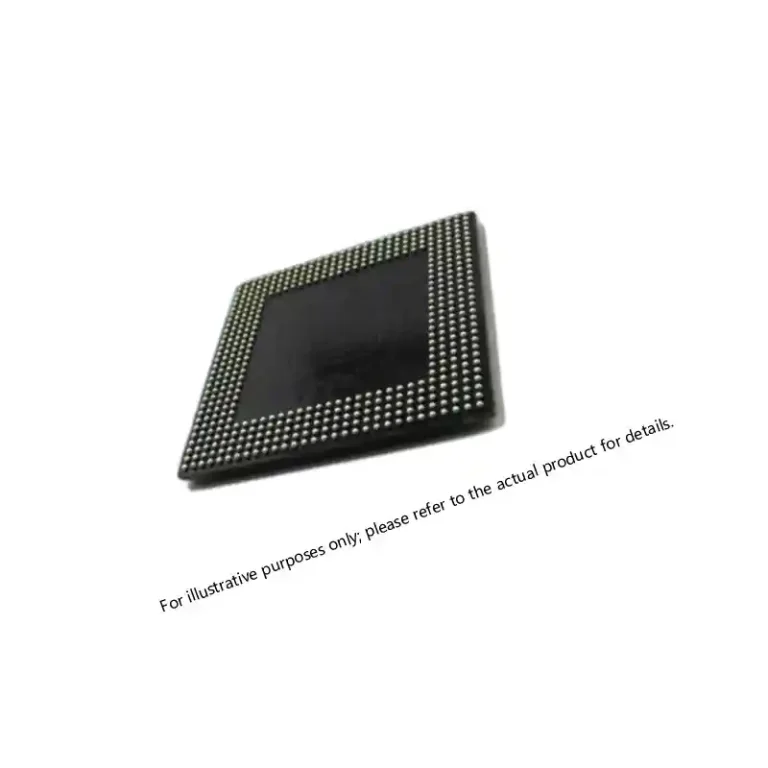
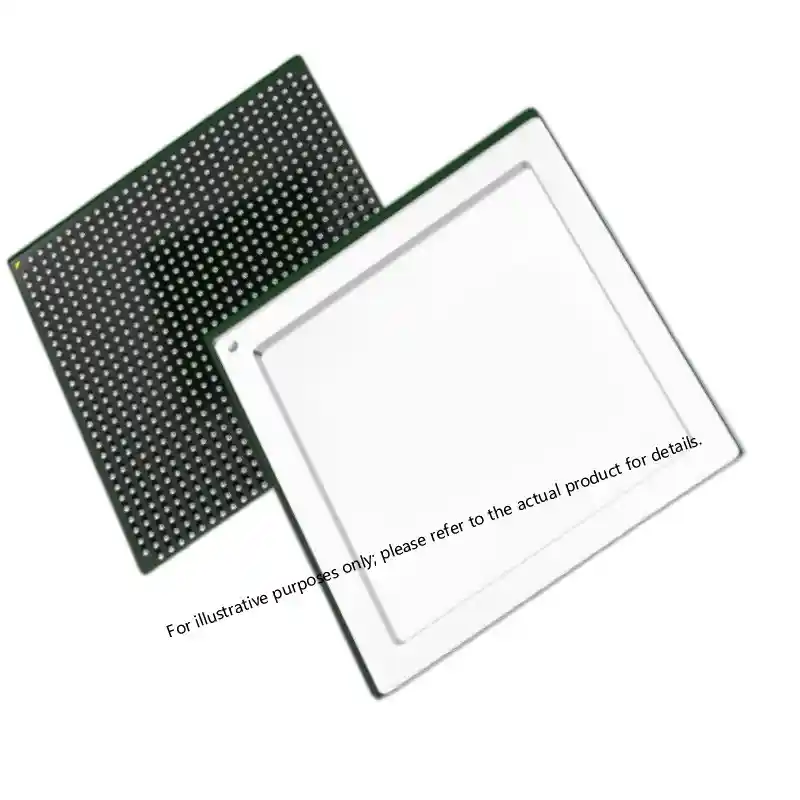
The XC2VP40-5FG676I is an industrial-temperature Virtex-II Pro device in the 676-ball fine-pitch BGA, ordered at the -5 speed grade. Buyers meet it in two situations: a qualified legacy design that is already built around this exact ordering code, or a repair and sustainment program that needs a small quantity to match an existing bill of materials. Both fail in the same way when the supply chain treats the code as a product name rather than a specification. Every segment of the designation constrains what the device may be used for, and a quote that matches only the first segment is not a match.
What the XC2VP40-5FG676I Designation Actually Specifies
Ordering codes in this family are positional, and the XC2VP40-5FG676I string carries five separate constraints that can each fail on their own.
| Field | What it states | What a buyer still has to confirm |
|---|---|---|
| XC2VP40 | Virtex-II Pro device, the 40-density member of the family | that the design’s utilisation fits this density and not a larger sibling |
| -5 | a defined speed grade, not the fastest grade offered in the family | that timing was signed off at this grade rather than a faster one |
| FG | fine-pitch BGA package family | that the board footprint and assembly process match this exact body |
| 676 | ball count for the package body | that the stencil, reflow profile and inspection method suit this ball pitch |
| I | industrial temperature grade | that the program’s temperature requirement is industrial rather than military or QML |
The suffix is the field most often lost in practice. A requisition written as XC2VP40-5FG676, with the trailing letter dropped, describes a different temperature grade than the part on the drawing. That single character is also the field where substituted stock usually appears, because a supplier holding a non-industrial equivalent can fill a shortened code without contradicting anything written on the purchase order.
Where the Virtex-II Pro 40 Sits and Why Programs Still Buy It
This family integrated embedded processor cores, multi-gigabit transceivers, block memory and hardware multipliers on the same die as the programmable fabric. For a board designed in that period, the effect was structural: one package replaced a separate processor, a bus bridge and a transceiver set, along with the interconnect between them. That is the reason these assemblies are expensive to replace rather than simply old. A redesign does not swap one component, it reopens the partitioning decision that the original design already settled.
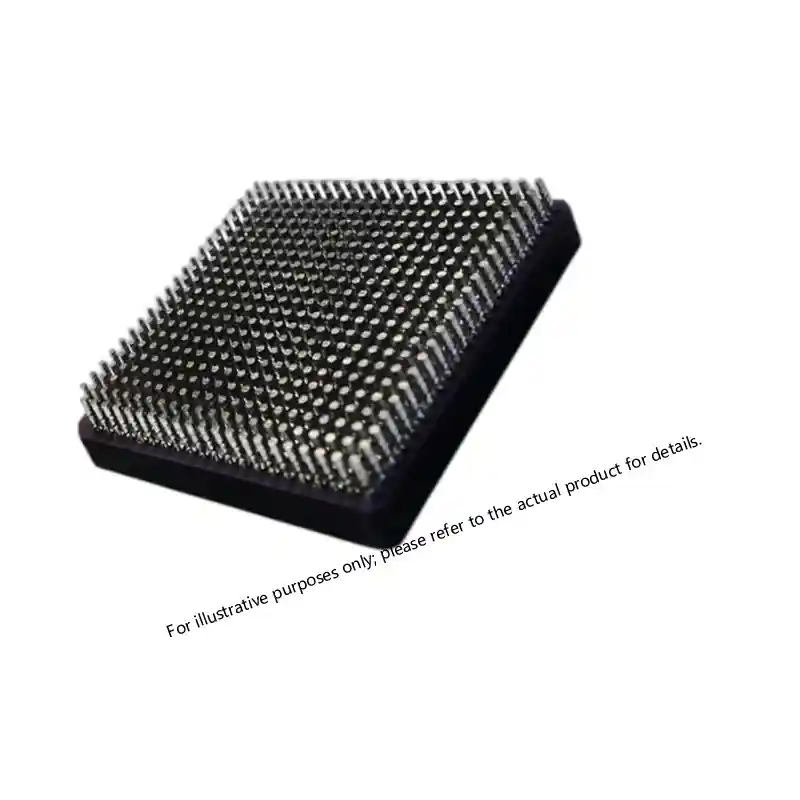
Because the fabric is programmable, one ordering code serves many unrelated functions across radar interfaces, instrumentation, image pipelines and legacy bus bridges. Two consequences follow for procurement. First, distributor demand data for the code tells you very little about demand inside your own program, so a buyer who needs a specific date code and lot should say so rather than assume stock was reserved against that need. Second, describing the application in the request, not only the part number, is what allows a supplier to check whether the stock on hand came from a comparable use environment.
Speed Grade and Temperature Grade Decide Whether a Match Is Real
The -5 grade sits below the faster grades offered in this family. A faster device is not an automatic improvement. The design’s static timing analysis was signed off against a specific grade, and the margin that analysis reported belongs to that grade. Substituting a faster part sounds conservative, but it changes the timing basis and, in a qualified assembly, changes the configuration baseline that was tested. Some programs permit the swap after re-running timing and documenting the result. Others treat it as a design change requiring regression testing. Neither position is wrong, but the decision belongs to the design authority, not to the purchasing desk.
The temperature suffix carries the same kind of weight in a different direction. Industrial grade covers a narrower range than the military and QML devices used in wider-temperature programs, and the difference is not only the rated band. It is also the qualification evidence and the test flow behind the part. Mixing industrial and military devices inside one assembly produces a unit whose stated capability belongs to its weakest component, and the mixed build is often invisible in a parts list that lists only base part numbers. Where a program has any temperature or qualification requirement above industrial, the industrial device should be treated as a different component, not as a cost-down option.
Screening an Offer Is Not the Same as Accepting the Part
Legacy devices attract both legitimate surplus and reworked material, so the useful discipline is to separate what each piece of evidence can actually establish.
| Evidence presented | What it can establish | What it cannot establish |
|---|---|---|
| Photographs of top and bottom markings | that the marking pattern is consistent with the ordering code quoted | that the die inside is the specified device |
| Sealed original packaging with a label | that the packaging appears consistent with the stated lot | that the contents match the label, since the seal is not opened to check |
| Certificate of conformance from the supplier | that the supplier declares the parts meet the stated specification | independent confirmation of that declaration |
| Traceability to a franchised or OEM channel | a chain of custody for the stated quantity and date code | that the parts satisfy your program’s acceptance criteria |
| Incoming electrical test or inspection records | behaviour of the tested sample under the stated conditions | behaviour of untested units, or of the lot under your application conditions |
A clean top mark is not proof of authenticity, and a worn or re-marked surface is not proof of counterfeit; worn markings are common on stock that has moved between storage locations for a decade. What the record does support is a decision about the next check. If markings, packaging and traceability all agree with the quoted code, the part has passed an identity screen and may proceed to whatever technical acceptance your program requires. If any one of them disagrees, the offer stops there. Promoting an identity screen into technical release is the most common way a legacy purchase turns into a nonconformance report six months later.
What to Put in the RFQ So the Quotes Are Comparable
Two suppliers quoting “XC2VP40, industrial” are not quoting the same thing. These fields make the responses comparable and give receiving inspection something to check against.
| RFQ field | What to ask for | Why it changes the answer |
|---|---|---|
| Full ordering code | XC2VP40-5FG676I written out in full and matched character for character | a quote against a shortened code can be filled with a different temperature grade |
| Speed grade basis | the grade the current timing analysis was signed off at | a faster device alters margins and may require requalification |
| Temperature grade and evidence | the grade the assembly is qualified to, and the qualification records held | industrial and military parts carry different evidence and test flow |
| Lot and date code | manufacturer lot, date code and quantity per lot | mixed lots complicate failure investigation and screening decisions |
| Documentation set | conformance certificate, traceability records, packaging condition, any agreed test data | sets what receiving inspection can accept without extra testing |
| Handling and delivery | ESD-safe packaging, moisture protection, shipping conditions | exposure in transit affects parts that are already hard to replace |
A useful contrast makes the difference concrete.
Reject this RFQ line: “XC2VP40, industrial grade, quantity 20, best price and lead time.”
Replace it with: “XC2VP40-5FG676I, full ordering code; speed grade -5 as signed off in the current timing analysis; industrial temperature grade; quantity 20 with lot and date code reported per unit; conformance certificate and channel traceability required with shipment; ESD-safe packaging confirmed before dispatch.”
The second version costs one extra paragraph and removes the three most common reasons a delivery is rejected at goods-in.
Availability, Obsolescence and the Options When Stock Is Thin
Demand for this device comes from programs that are already in service, which means supply is limited to what exists in the channel plus whatever is released from other programs. The practical options differ in cost and in the evidence burden they place on you.
Buying current distributor stock is the fastest route and places the full verification burden on the buyer, because the supplier is passing through material it may not have handled when it was new. A last-time buy converts an uncertain future supply into a storage obligation: the parts are paid for and held, and in exchange the program stops competing for them later. Storage conditions matter here, since moisture exposure and handling damage in a decade of warehouse storage can undo the benefit of having secured the parts at all.
Redesign to a later device family removes the supply risk permanently and costs the most in engineering hours, requalification and schedule. Programs usually find that the honest comparison is not component price against component price, but the price of scarce stock against the cost of reopening a qualified design.
Legacy FPGA sourcing follows the same pattern across families, where the ordering code carries the whole specification and the channel decides the evidence burden. <A1020B-PG84B ACT2 FPGA: Specs, Sourcing, and Availability> covers how an older programmable device is specified, sourced and kept available for programs that cannot readily migrate.
Where a program does choose to migrate, the replacement decision is usually made at the board level rather than the component level, and the newer families differ in their packaging, transceiver count and configuration memory requirements.
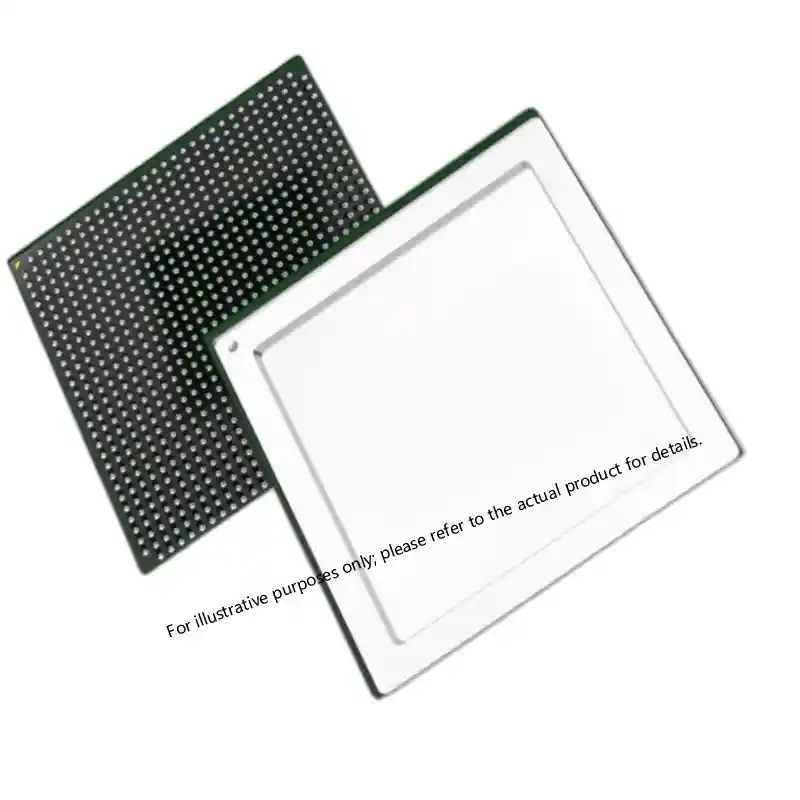
Migration discussions tend to move quickly from fabric density to qualification evidence, because the newer device has to satisfy the same program requirements as the part it replaces. <Virtex-7 XC7VX690T: Performance, Reliability, and Integration> covers how a later-generation FPGA is evaluated for performance, reliability and integration in an existing system.
Whichever route a program takes, the decision should be recorded against the assembly it affects, including the speed and temperature grade that were approved. That record is what makes the next purchase order reviewable instead of a repetition of the same search.
Send the Ordering Code Before You Commit to a Quantity
The details that decide whether a legacy order is usable are all available before a purchase order is written, and none of them is a price question.
Send the full ordering code as it appears on the drawing, the speed grade the current timing analysis was signed off against, the temperature grade the assembly is qualified to, the quantity with any lot or date code requirement, the documentation your receiving inspection will accept, and whether the parts are for a new build or for repair. Note the difference if it applies, because repair and sustainment purchases often carry a different acceptance burden than production builds, and the check performed at goods-in should match the purpose. Include the BOM line exactly as written, even if it is shortened, so any discrepancy can be resolved before quoting rather than after delivery. Sparkle Electronics reviews these details against available stock and channel records; write to xuansc2144@gmail.com with the code and the application, and the reply will state what the stock is, what documentation accompanies it, and what remains for your own inspection to confirm.
FAQ
Is the XC2VP40-5FG676I still available?
Availability depends on channel stock rather than on continuing production, since this is a long-established family used mainly in sustainment. Ask for the quantity on hand, the lot and date code, and the traceability behind it before treating an offer as firm. A supplier who can state those three details is describing material it has physically handled. A supplier who quotes only a lead time is describing an expectation. Neither answer guarantees that the parts meet your program’s acceptance criteria, which remains a separate step.
Can a faster speed grade be substituted for the -5 part?
Only after the design authority confirms it. Timing was signed off against a specific grade, so a faster device changes the margin analysis and may change the qualification basis of the assembly. Some programs accept the substitution with documented re-analysis; others treat it as a design change with regression testing attached. The purchasing decision should follow that determination rather than anticipate it, because a delivered batch of faster parts that cannot be released to the build has the same schedule effect as no delivery at all.
What is the difference between the I suffix and military-grade devices?
The I suffix denotes the industrial temperature grade, which covers a narrower range than military and QML parts and comes with a different qualification and test flow. The two are not interchangeable on a build, and mixing them within one assembly produces a unit whose stated capability reflects its weakest component. If a program’s requirement sits above industrial, treat the industrial device as a different part number entirely, even where the fabric and package appear identical.
What documentation should arrive with a shipment?
At minimum a conformance certificate, traceability to the channel the parts came from, and the lot and date code for the quantity supplied, plus confirmation of ESD-safe and moisture-protected packaging. Where testing was agreed, the records should state the conditions under which it was performed. These documents support a provenance claim within their stated scope; they do not replace the incoming inspection your program requires, and they do not establish that untested units behave like the sample.
If you’re interested, check out these related articles:
Virtex-7 XC7VX690T: Performance and Reliability Insights
XC7VX485T Virtex-7 FPGA: Performance and Sourcing for Defense
Virtex-7 690T FPGA: Performance, Packaging, and Reliability Insights
UltraScale KU085 FPGA Specifications for Defense Systems