XC2V2000-5FG676I: Virtex-II 2M-Gate FPGA Specs and Sourcing
Table of Contents
- Decoding the XC2V2000-5FG676I Ordering Code
- Why Virtex-II Devices Are Still in Fielded Defense Systems
- What the -5 Speed Grade and FG676 Package Mean for Your Board
- Verification Evidence That Actually Supports a Legacy FPGA Purchase
- Sourcing Paths for a 2M-Gate Virtex-II Device
- An RFQ Checklist for Legacy FPGA Procurement
- Planning a Migration Off Virtex-II Without Breaking Qualification
- Getting a Traceable Quote for Your Virtex-II Requirement
- FAQ
- Is the XC2V2000-5FG676I still available?
- Can I use a different Virtex-II speed grade instead?
- Does the industrial grade suffix meet military temperature requirements?
- What does a certificate of conformance prove?
- References
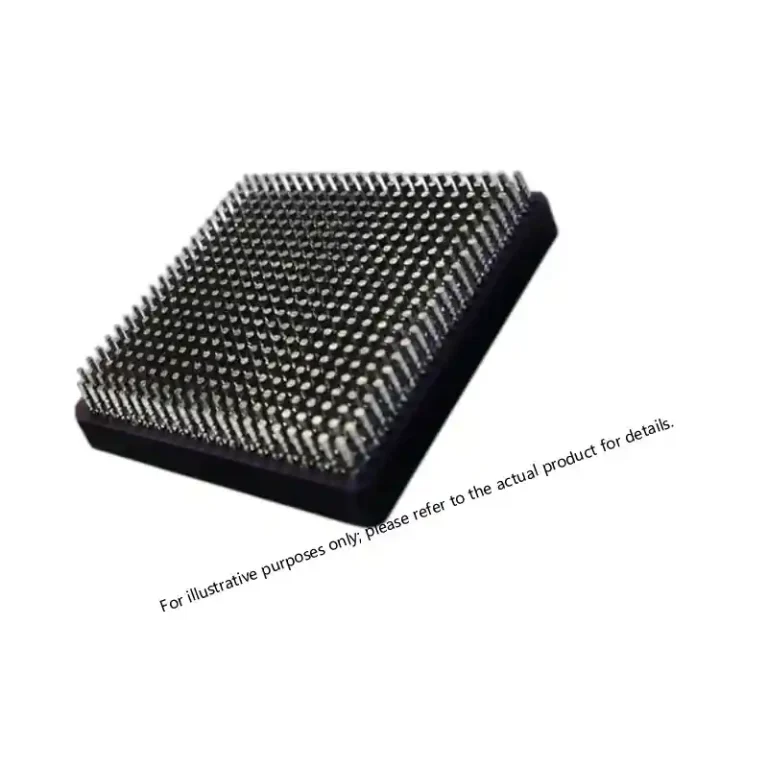
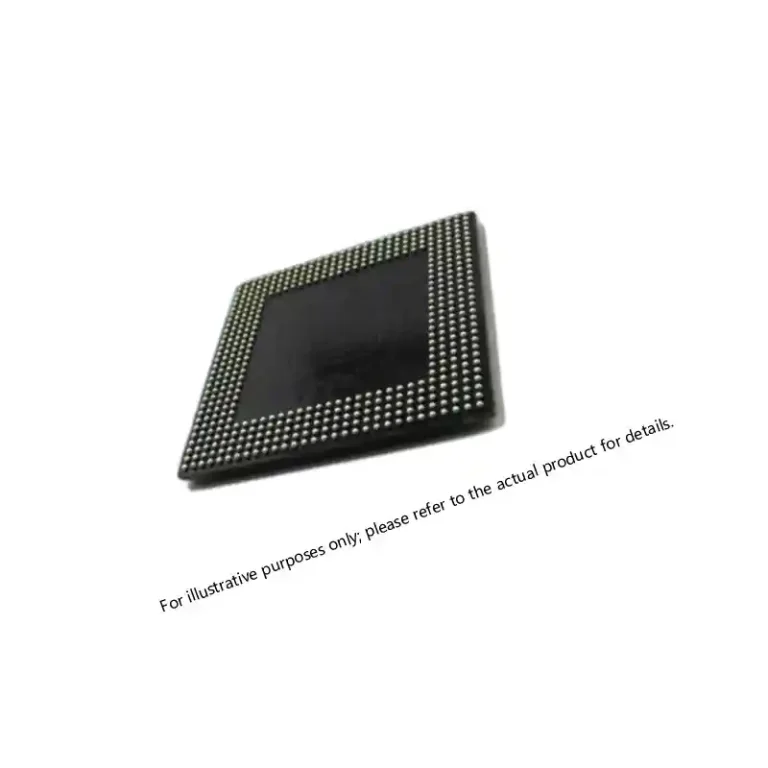
The XC2V2000-5FG676I is a Xilinx Virtex-II FPGA with 2 million system gates, a -5 speed grade, a 676-ball fine-pitch BGA package, and the industrial temperature grade. Those four facts settle what the part is. They settle almost nothing about whether a given unit is safe to install in a fielded system. Because Virtex-II left active production years ago, most of the risk in this orderable number now sits in lot history, storage conditions, documentation and test data rather than in the catalogue description. A confirmed part number is the beginning of the verification work, not the end of it.
Decoding the XC2V2000-5FG676I Ordering Code
Four segments carry the engineering meaning, and each one constrains a different part of the procurement decision. Treating them as one label is how an unsuitable substitution gets approved.
| Code segment | What it states | What it constrains |
|---|---|---|
| XC2V2000 | Virtex-II family, 2 million system-gate capacity class | The logic capacity the existing design was mapped into |
| -5 | Speed grade | The timing limits the placed and routed design was released against |
| FG676 | 676-ball fine-pitch BGA | Footprint, assembly process, inspection and rework tooling |
| I | Industrial temperature grade | The operating range and the screening flow behind it |
Two segments get read too loosely in practice. “System gates” is a family capacity class, not a logic-cell count, and it does not translate across families. If you need to compare Virtex-II capacity with anything newer, compare the resource utilisation report from your own implementation, because the two devices allocate logic, block memory and multipliers differently and the headline gate figure conceals that.
The “I” suffix states a temperature grade. It does not state military screening, QML qualification or radiation tolerance. Virtex-II shipped through more than one ordering flow, and a qualified or radiation-tolerant device carries a different prefix and a different qualification package. If the program’s parts control document calls for a qualified device, an industrial XC part does not satisfy it, however similar the electrical description looks. Read the operating range for the exact device from the family data sheet instead of inferring it from the suffix letter.
Why Virtex-II Devices Are Still in Fielded Defense Systems
The device is cheap to keep and expensive to remove. That inversion explains the persistence better than any attachment to an old architecture.
Taking an FPGA out of a qualified board forces a new placement and routing run, a new timing closure, a fresh round of environmental and EMC test results, and a revision of the design assurance evidence the program already accepted. All of that must be reviewed and approved before the board returns to service, and none of it appears on a component quote. Programs therefore hold Virtex-II designs in production long after the silicon has left active manufacture, and they buy the parts they can trace rather than the parts that are newest.
A second dependency gets missed in a lot of supply plans. Virtex-II is SRAM-based, so the device powers up unconfigured and loads its design from an external configuration memory. That memory is a separate orderable part on its own availability curve, and on many bills of material it disappears before the FPGA does. A plan that covers the XC2V2000-5FG676I but not the configuration device, the oscillator and the power sequencing parts is only partly a supply plan. Map the whole start-up chain before you commit to a last-time buy.
What the -5 Speed Grade and FG676 Package Mean for Your Board
The -5 digit is a timing bin. It fixes the delay limits the released design was signed off against, and those limits travel with the bitstream, the timing report and the qualification evidence.
A slower bin in the same package can carry identical logic capacity and an identical pinout and still fail on the bench, because the critical path that closed inside the -5 limits does not necessarily close inside a slower set. Approving that substitution means rerunning static timing analysis on the real design, and any path that misses its constraint has to be corrected in the source, not compensated for in the purchase order. A faster bin is not a free upgrade either. Releasing the same bitstream into a different speed grade invalidates the timing report the design was signed off with, and hold margins and clock behaviour need rechecking before anyone calls the swap equivalent. Where a program has no engineering capacity to rerun timing, the honest answer is to buy the specified bin rather than justify a substitute.
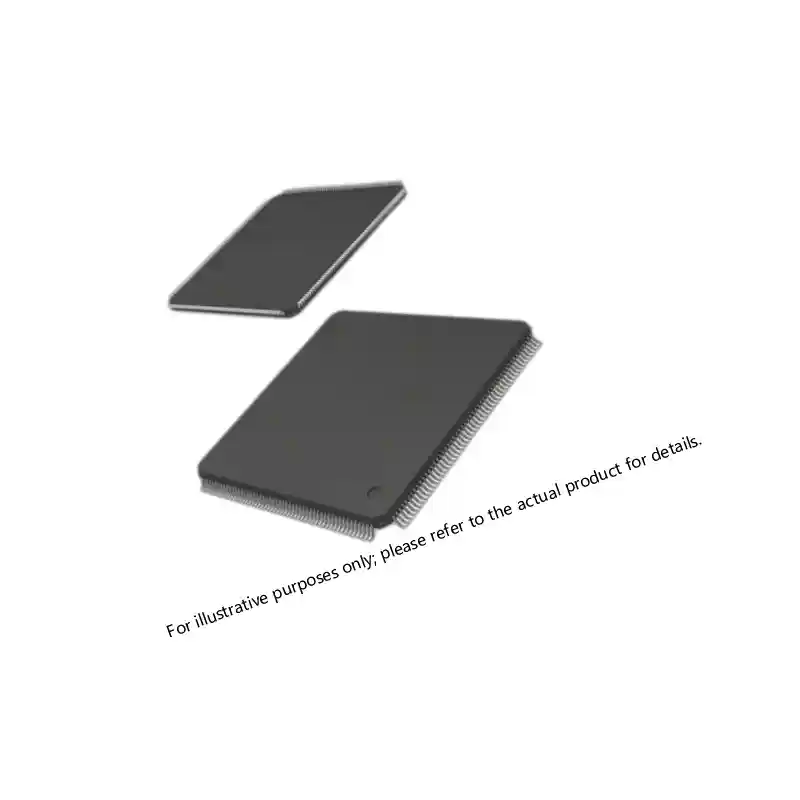
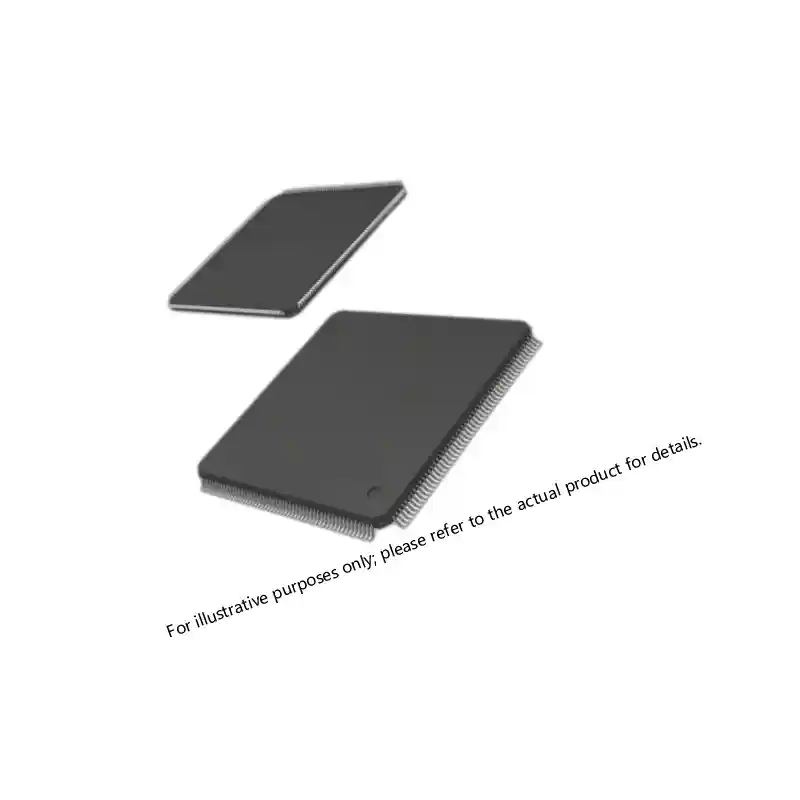
The FG676 package creates a different set of obligations. Balls sit under the body, so joint quality is invisible after assembly and acceptance depends on X-ray inspection and controlled reflow. Devices that have absorbed moisture can crack or delaminate during reflow, which matters most for stock that has spent years in a warehouse; the bake and floor-life rules in J-STD-033 [1] exist for exactly that condition. Reclaiming a BGA from a decommissioned assembly adds thermal and mechanical stress that no date code records, so treat reclaimed units as a separate evidence category rather than as ordinary stock.
Verification Evidence That Actually Supports a Legacy FPGA Purchase
Incoming inspection answers two questions that are routinely merged. Identity asks whether the unit is the device the label claims. Suitability asks whether this unit will perform in the application. No single test answers both, and a test that settles the first is not evidence for the second.
| Record | Method context | Responsible use | Do not infer |
|---|---|---|---|
| Radiographic image of the BGA | Sample units from the received lot, read against a reference image | Shows die attach, wire sweep and void patterns inconsistent with a genuine build | That the whole lot matches the imaged sample, or anything about electrical performance |
| Curve trace signature | Bench comparison with a known reference unit | Screens for open, shorted or mis-marked pins before assembly | That a matching signature proves the die is the specified device |
| Decapsulation and die inspection | Destructive, one unit per lot | Confirms die markings, fab code and top metal layer | That the remaining sealed units came from the same wafer |
| Certificate of conformance | Supplier-issued document | Records what the supplier warrants about the part and its lot | An independent measurement; a declaration is not a test result |
| Date and lot code review | Marking inspection plus packaging review | Narrows the manufacturing window and the likely storage duration | The storage conditions, which the code does not record |
Read the last column with the same seriousness as the third. A curve trace that matches a reference unit is a useful screen and nothing more, because the method cannot separate a correctly marked die from a remarked one, and that is precisely the gap counterfeit material survives. Radiography is a published method under MIL-STD-883 [2], which matters because it gives an accredited laboratory a fixed procedure and a recognised reporting format; it does not convert a sample result into a lot-wide guarantee. The same restraint applies to a supplier’s counterfeit-avoidance programme. Conformance to AS6081 [3] describes a distributor’s process for detection and disposition, not a statement that any individual unit is genuine. Where a program needs a defensible answer, send the sample to a laboratory working under ISO/IEC 17025 [4] and name the method in the purchase order.
Sourcing Paths for a 2M-Gate Virtex-II Device
Three paths exist, and they differ in evidence rather than in price.
Franchised or authorised inventory is the strongest evidence position, because the traceability chain back to the manufacturer is intact. For a device this old, that inventory is usually exhausted or reserved for existing contracts, and waiting for it to reappear is not a supply strategy.
An independent distributor is the realistic path for most requirements. What separates a usable supplier from a risky one is not the size of the inventory claim but the willingness to name the traceability chain and release test data for the specific lot being quoted. A distributor running a quality system aligned to AS9120 [5] and a counterfeit-mitigation process aligned to AS6081 has a documented route for exactly this situation, and those documents should be available on request rather than after a dispute.
Reclaimed material sits outside both paths. Components pulled from decommissioned assemblies can be legitimate in some programs and unacceptable in others, and the deciding questions are whether rework damage can be excluded, whether the original lot can be reconstructed, and whether the program’s quality clause permits reclaimed parts at all. Where any of those answers is unclear, the part belongs in a bench evaluation rather than in a build. Adjacent legacy FPGA families turn up in the same channels, and the same evidence test applies to them.
The same evidence problem appears whenever a discontinued FPGA has to be kept in service. <A1020B-PG84B ACT2 FPGA: Specs, Sourcing, and Availability> covers specification and sourcing questions for a legacy Actel device.
An RFQ Checklist for Legacy FPGA Procurement
A quote that lists a price and a quantity is not a quotation for a legacy FPGA; it is a price for a label. Ask for the rest.
| RFQ field | What to request | The failure it prevents |
|---|---|---|
| Orderable number | Full XC2V2000-5FG676I string including speed grade and temperature suffix | A slower bin or a commercial-grade part arriving under a shortened description |
| Lot identity | Date code and lot code for the units actually being quoted | A mixed-lot shipment that cannot be traced after a bench failure |
| Traceability | Chain from manufacturer to the supplier, stated in writing | Untraceable stock presented as franchised inventory |
| Test data | Radiography, curve trace and any electrical results for the quoted lot | A generic certificate reused across unrelated lots |
| Handling | Moisture-sensitive packaging, bake record and floor-life statement | Reflow damage traced back to years of uncontrolled storage |
| Documentation | Certificate of conformance naming manufacturer and lot, plus the counterfeit-mitigation report | Paperwork that names no lot and supports no claim |
One sentence shows the difference in practice.
Reject this request: “XC2V2000-5FG676I, 40 pieces, best price, quote today.”
Replace it with: “XC2V2000-5FG676I, industrial grade, 40 pieces from one lot, date code stated; certificate of conformance naming manufacturer and lot; radiography and curve-trace data for that lot; moisture-sensitive packaging to J-STD-033; unit price and lead time for 40 and for 100 pieces.”
The second version asks for more and is also faster to answer, because a supplier that cannot produce the documents can decline immediately instead of three weeks into an order.
Planning a Migration Off Virtex-II Without Breaking Qualification
Migration decisions are usually made on price and should be made on exposure. The useful trigger is availability: when the traceable supply of the specified speed grade and grade suffix falls below what the remaining production run plus spares demand will consume over the next two years, the redesign clock has started whether or not anyone has scheduled it.
The engineering path is not a swap. A later family in a 676-ball package is not a drop-in replacement, because ball count is not pinout. I/O assignment, configuration pins, power rails and the configuration memory interface all change, and the board layout changes with them. A realistic migration therefore carries a new schematic, a new layout, a new timing closure, a new configuration memory choice and a new qualification campaign, which is exactly why programs defer it until supply exposure exceeds the requalification cost.
Migration reviews normally begin with the family that would replace the old part. <Virtex-7 XC7VX690T: Performance and Reliability Insights> covers performance and reliability considerations for the Virtex-7 XC7VX690T.
Some programs skip the intermediate generations and go directly to a current family, on the reasoning that every intermediate step repeats the qualification cost without extending the support horizon much. That reasoning holds only if the target family can meet the same environmental class, keep the configuration memory path available for the life of the program, and offer a package that a reworked board can actually accept. Score those three conditions against the candidate before the schematic review starts, because a family that fails any of them turns the migration into a longer program than the obsolete part would have.
Where the redesign budget exists, the evaluation usually extends to the current generation of defense-grade devices. <XCKU115 UltraScale FPGA: Powering Critical Defense Systems> covers how the UltraScale XCKU115 is positioned for defense systems.
Getting a Traceable Quote for Your Virtex-II Requirement
Send the full orderable string, the lot date codes you can accept, the quantity and the documentation package your quality clause requires. Sparkle Electronics will return a traceability statement for the specific lot, the test data held against it and a delivery date, so the decision rests on documents rather than on a price line. Where a lot cannot be traced, we will say so rather than quote it. Email xuansc2144@gmail.com with XC2V2000-5FG676I in the subject line and the requirement in the body.
FAQ
Is the XC2V2000-5FG676I still available?
It is no longer in active production, so availability depends on stock held by distributors and on material released from programs that no longer need it. Quantity, date code and documentation vary from lot to lot, and a supplier quoting from stock should be able to state the lot and the traceability chain before you place an order. Treat any listing without a lot reference as an enquiry rather than as availability.
Can I use a different Virtex-II speed grade instead?
Not without engineering review. The speed grade fixes the timing limits the design was released against, so a slower bin can fail on paths that closed at -5, and a faster bin invalidates the timing report the design was signed off with. Either change needs static timing analysis on the real design and a decision about whether the qualification evidence still holds. The purchase order is the last place to settle that.
Does the industrial grade suffix meet military temperature requirements?
The I suffix identifies the industrial grade and does not by itself establish a military or qualified screening level. Programs that need a qualified or radiation-tolerant device specify it under a different ordering flow, and the parts control document should be the reference rather than the suffix letter. Confirm the operating range for the exact device from the family data sheet before assuming the grade suits the environment.
What does a certificate of conformance prove?
It records what the supplier warrants about the part, its manufacturer and its lot. It is a declaration, not a measurement, so it supports a traceability claim and says nothing about electrical performance. Where the program needs measured evidence, request test data for the quoted lot or send a sample to an accredited laboratory and name the method in the purchase order. A certificate carrying no lot reference supports neither.
References
[1] IPC/JEDEC J-STD-033, “Handling, Packing, Shipping and Use of Moisture/Reflow Sensitive Surface Mount Devices,” IPC and JEDEC.
[2] MIL-STD-883, “Test Method Standard: Microcircuits,” U.S. Department of Defense.
[3] SAE AS6081, “Fraudulent/Counterfeit Electronic Parts: Avoidance, Detection, Mitigation, and Disposition – Distributors,” SAE International.
[4] ISO/IEC 17025, “General requirements for the competence of testing and calibration laboratories,” ISO/IEC.
[5] SAE AS9120, “Quality Management Systems – Aerospace – Requirements for Distributors,” SAE International.
If you’re interested, check out these related articles:
UltraScale KU085 FPGA Specifications for Defense Systems
Virtex-7 XC7VX690T: Performance and Reliability Insights
Virtex-7 690T FPGA: Performance for Mission-Critical Systems
Virtex-7 XC7VX690T: Performance, Reliability, and Integration