XC2VP70-6FF1704I: Virtex-II Pro Sourcing and Screening
Table of Contents
- What the XC2VP70-6FF1704I Part Number Actually Specifies
- Where the Industrial Grade Stops and Defense Requirements Begin
- What Post-EOL Availability Really Means for This Part
- Incoming Inspection Checks for a 1704-Ball Flip-Chip BGA
- Sourcing Stock or Redesigning Around the Virtex-II Pro 70
- RFQ Fields That Separate Real Stock From Recycled Parts
- Next Step for Your XC2VP70 Requirement
- FAQ
- Is the XC2VP70-6FF1704I a military-grade component?
- Can a plastic BGA be upscreened to MIL-STD-883 Class B?
- How can I tell whether a listed XC2VP70 is authentic?
- Is it worth redesigning a board that uses the XC2VP70?
- References
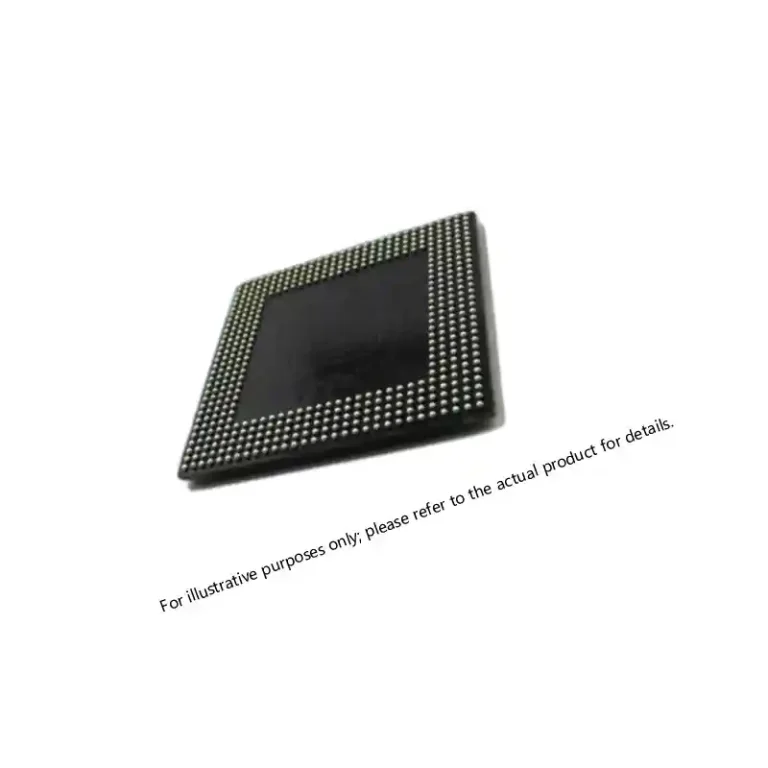
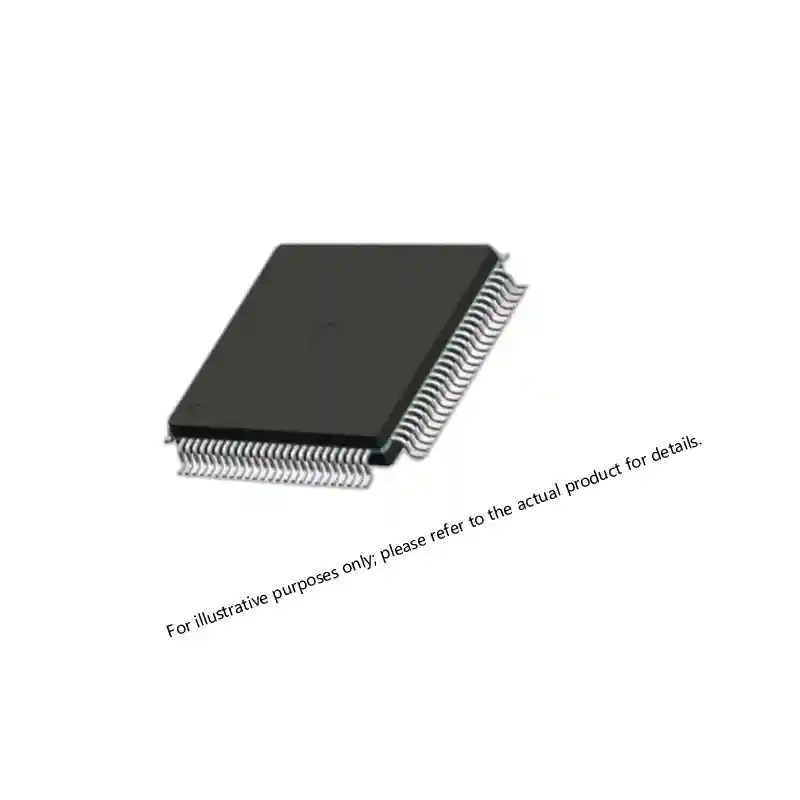
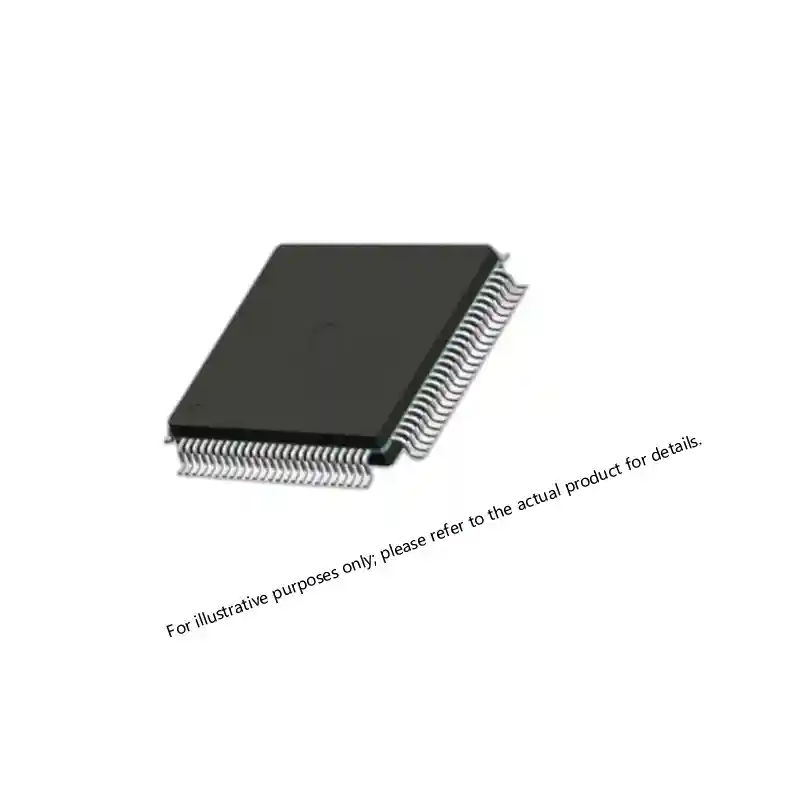
The XC2VP70-6FF1704I is an industrial-grade Virtex-II Pro 70 FPGA in a 1704-ball flip-chip BGA, and the problem it creates today is not a data sheet problem. The family left production years ago, so every unit a defense program buys now comes from held stock, a last-time buy, surplus, or the open market. What decides whether a build succeeds is whether the part in the bag is the device the ordering code claims, and whether its grade matches the temperature and qualification requirements the program actually wrote. Those are two separate questions, and most listings answer neither.
What the XC2VP70-6FF1704I Part Number Actually Specifies
An ordering code is a compressed specification, and each field changes what the buyer is entitled to expect.
XC2VP70 identifies the family and density: a Virtex-II Pro 70, with 74,448 logic cells and the embedded hard blocks listed below. The XC prefix marks the standard commercial and industrial product line. Xilinx qualified its defense devices through a separate flow under MIL-PRF-38535 [2], and the XC prefix does not carry that qualification. No test performed after the fact adds it.
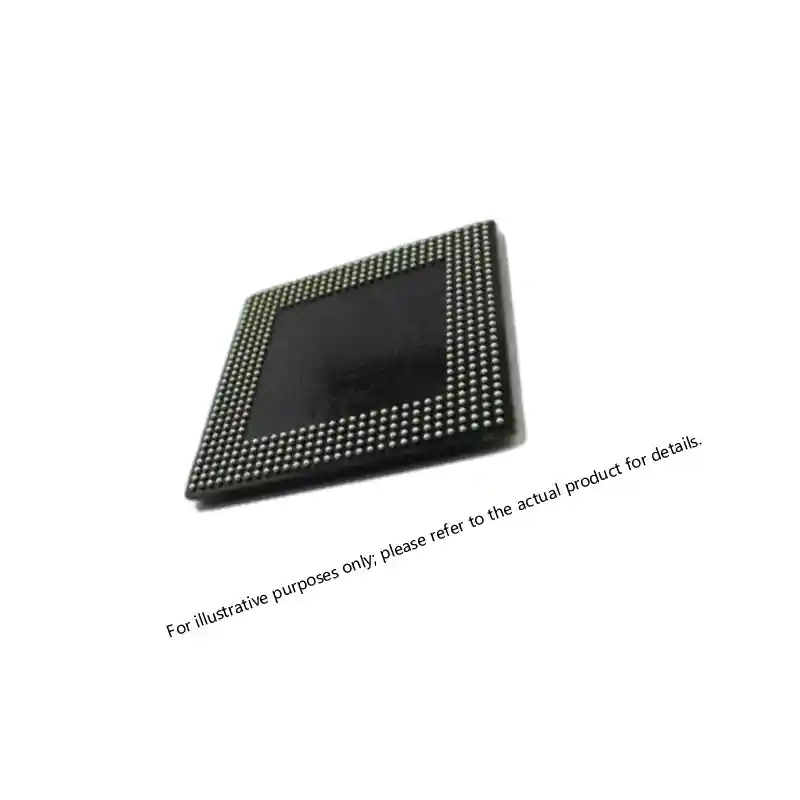
The -6 suffix is a speed grade. It fixes the timing model used to close the design, so a -5 device is not interchangeable on a timing-critical path even though the logic fabric is identical. The FF1704 suffix is the package, a 1704-ball flip-chip BGA that sets the land pattern, the inspection method, and the reflow profile. The trailing I is the temperature grade.
| Attribute | Value for the XC2VP70 |
|---|---|
| Logic cells | 74,448 |
| 18 × 18 multipliers | 328 |
| Block RAM | 5,904 Kb |
| PowerPC 405 cores | 2 |
| RocketIO transceivers | 20, 622 Mbps to 3.125 Gbps |
Confirm these figures against the current revision of the Virtex-II Pro data sheet before freezing a design. They describe the device family, not the condition of any individual unit in a bag.
One field is easy to overlook. The industrial grade is specified across a junction temperature range of -40 °C to +100 °C, which stops well below the -55 °C to +125 °C window most defense programs write into their requirements. That gap is a grade question, not a screening question.
Where the Industrial Grade Stops and Defense Requirements Begin
Three requirements separate the industrial XC part from a military-grade device, and only one of them can be addressed by testing after the fact.
The first is the qualified manufacturing flow. MIL-PRF-38535 [2] defines a QML flow with quality classes, and the XC2VP70-6FF1704I is not a QML device. A distributor can commission extensive test work on a lot, and that work does not create a qualification listing. A program that requires QML parts cannot close the requirement with a screened commercial part, however thick the test report.
The second is the package. MIL-STD-883 [1] hermeticity methods such as fine and gross leak detection exist to prove a sealed cavity. A plastic flip-chip BGA has no cavity to seal, so an “883 screened” label on a plastic package describes a subset of methods, not the full Class B flow. Buyers who read the label as full compliance are reading more than the record supports.
The third is temperature. Electrical testing at -55 °C and +125 °C can be performed on plastic parts, but the result describes how those units behaved at those temperatures during that test. It does not establish that the device is qualified to operate there across its service life.
What meaningful testing can do is narrower and still valuable. It separates authentic, functional units from relabeled, recycled, or out-of-spec material before the parts reach a solder reflow.
| Record | Basis | Responsible use | Do not infer |
|---|---|---|---|
| Ordering code XC2VP70-6FF1704I | Manufacturer part numbering | Screen a listing for device, speed, package, and temperature grade | That the units offered are military grade or QML qualified |
| “MIL-STD-883 screened” on a plastic BGA | Distributor or test-house statement | Ask which methods, which temperatures, and which test house produced the record | Full Class B compliance, since hermeticity cannot be achieved in a plastic package |
| Date code and sealed bag label | Package marking | Match the lot across bag, reel, and device marking | That storage history stayed controlled after the bag left the factory |
| Functional test on a known-good board | Bench test on that fixture | Accept a unit for a defined bench use with that coverage | Performance across the full temperature range, or long-term reliability |
| Published device data sheet | Manufacturer documentation | Design the interface, timing, and configuration scheme | That current stock is authentic, or that the bitstream has been archived |
The rows share one implication. A test record answers the question it was designed to answer. When a supplier sends a certificate with no method, no temperature, and no sample size, the document proves that testing happened, not what it established.
What Post-EOL Availability Really Means for This Part
Discontinued parts reach a buyer through four channels with different risk profiles: authorized-channel inventory held from a last-time buy, franchise distributor stock, surplus released from a closed program, and the open broker market. The first two arrive with documentation. The last two arrive with a story.
Because the device is SRAM-based, its configuration is loaded at every power-up from external memory. The configuration memory is a second obsolete line item, and a program that secures FPGAs but not the configuration devices or the archived bitstream ends up with working silicon and no way to boot it. Treat the bitstream archive and the configuration PROM as part of the same procurement plan, not as a software detail for the design team.
Mixed lots are the quiet failure mode in this market. A single shipment can carry date codes spread across several years, units with different storage histories, and parts whose balls were reworked after removal from a scrapped assembly. None of that shows up in a price quote.
Legacy FPGA families follow the same post-end-of-life path, and the sourcing checks do not change with the vendor name on the package. <A1020B-PG84B ACT2 FPGA: Specs, Sourcing, and Availability> covers specifications and availability for an older FPGA family in the same position.
Counterfeit avoidance is a documented discipline rather than a matter of trusting a supplier’s reputation. SAE AS6081 [3] sets out the avoidance, detection, mitigation, and disposition requirements distributors follow for suspect parts. Asking whether a source operates to that standard filters the market faster than asking whether its parts are genuine.
Incoming Inspection Checks for a 1704-Ball Flip-Chip BGA
The inspection sequence below is ordered by cost, cheapest first. A program that can stop a bad lot at step two should not be paying for step five.
- Review the documentation chain before opening anything. Lot traceability to the manufacturer or an authorized channel, a certificate of conformance that matches the shipped quantity, and date codes that agree between the bag label and the device marking set the baseline. A mismatch at this stage ends the inspection.
- Inspect marking and ball array under magnification. Laser marking should be consistent in depth and font across units, country of origin should not vary within a lot, and the ball field should show uniform height and finish. Uneven ball height, residual flux, or discoloration around the perimeter suggests reballing after removal.
- Use X-ray and, where the risk justifies it, acoustic microscopy. X-ray shows ball integrity, voids, and bridging. Acoustic imaging reveals die attach and delamination that no external view can reach.
- Check moisture state before any reflow. Long-stored surface mount devices absorb moisture, and IPC/JEDEC J-STD-033 [4] defines the bake and floor-life controls that prevent popcorning during assembly. A sealed bag with an intact humidity indicator is evidence. An opened bag of unknown age is not.
- Run parametric and functional test at room temperature on a fixture that exercises the interfaces the board actually uses. Curve tracing and supply current checks catch gross defects; a functional board catches interface failures that a socket test misses.
- Extend testing to temperature only when the program depends on the industrial grade’s margin. Characterizing a sample at the cold and hot ends of the specified range tells you how that sample behaved. It does not upgrade the part’s qualification.
Sourcing Stock or Redesigning Around the Virtex-II Pro 70
The decision is a comparison of two risk positions, not a price comparison. Stock carries authenticity and lot-consistency risk today. A redesign carries qualification cost, schedule risk, and a new set of component lifecycles tomorrow.
| Decision factor | Keeping the existing design on sourced stock | Moving to a redesign |
|---|---|---|
| Program horizon | Short remaining production and sustainment runs, where requalification cannot be recovered | Long sustainment tails, where stock risk repeats every year |
| Qualification cost | No new thermal, vibration, or EMI qualification campaign | Full board requalification, often exceeding the component savings |
| Configuration memory | PROM and bitstream both archived and available | Configuration scheme can be replaced with an in-production device |
| Volume profile | Low and declining quantities | Sustained annual volume that justifies engineering effort |
| Test capability | Incoming functional test exists and covers the used interfaces | No practical way to screen incoming lots, so lot risk is taken blind |
| Board constraints | Form factor, connector pinout, or legacy interfaces are fixed | Layout revision is permitted and the mechanical envelope can change |
The redesign path needs realistic expectations. A move to a 7-series or UltraScale device is a board redesign rather than a part substitution, because core voltages, I/O standards, configuration schemes, and package footprints all change. Migration planning is often limited less by logic capacity than by how much of the existing interface and timing budget can be carried across.
Migration decisions usually turn on how much of the existing interface and timing budget survives the move to a newer device. <XC7VX485T Virtex-7 FPGA: Performance and Sourcing for Defense> covers performance and sourcing considerations for a newer Virtex family used in defense designs.
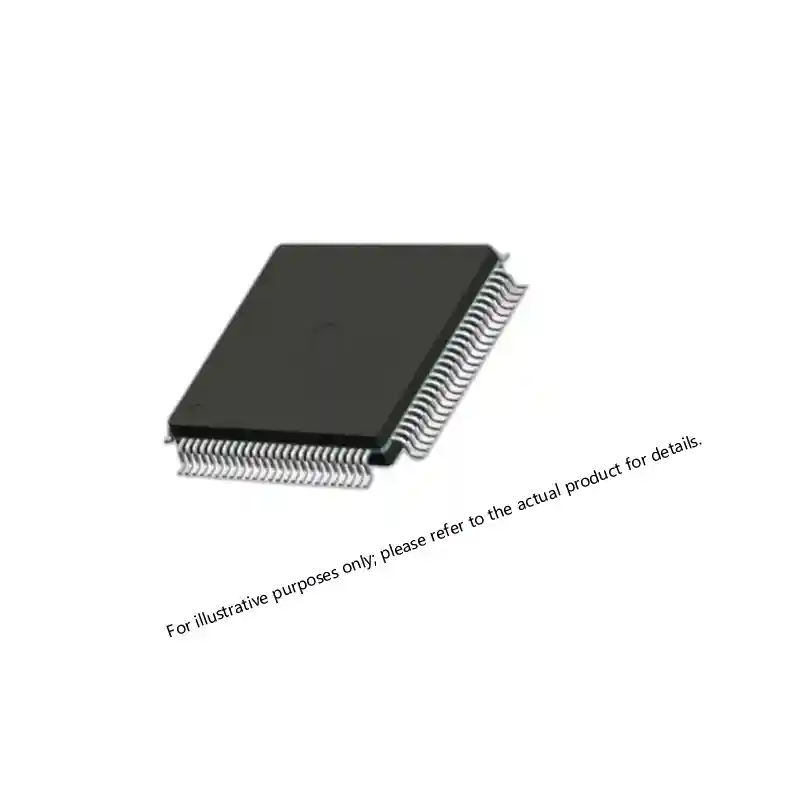
A third option deserves mention because it is often the correct one. A last-time buy executed before the channel dries up converts an open supply question into a storage and kitting question, provided the program has somewhere to store the material properly and a plan for the test coverage it will need at issue.
RFQ Fields That Separate Real Stock From Recycled Parts
A vague request gets a vague quote, and the difference only appears at incoming inspection. The fields below are the ones that change the answer.
| Field | What to request | Why it matters |
|---|---|---|
| Full ordering code | XC2VP70-6FF1704I written out, not “XC2VP70” | A different speed grade or package is a different timing model and land pattern |
| Date code and lot | Date code per unit quantity, with photographs of bag label and device marking | Mixed lots hide refurbished and reballed material |
| Traceability | Manufacturer or authorized-channel documentation, or a documented prior-owner chain | Undocumented origin is the main path for counterfeit material |
| Test evidence | Test house, method, temperature, coverage, and sample size | “Tested” without a method says nothing about what was measured |
| Packaging state | Sealed bag status, moisture sensitivity level, bake record | Reflow of an unbaked long-stored BGA risks delamination |
| Commercial basis | Unit price at quantity, minimum order, lead time, partial-shipment policy | Broker quotes often assume partial quantities and re-quote later |
A distributor that supports defense programs treats the test-evidence row as part of the quotation rather than an optional extra. Sparkle Electronics coordinates verification and long-term supply planning for MIL-SPEC programs, and the first thing a useful quote states is what the offered lot can and cannot prove.
Next Step for Your XC2VP70 Requirement
Send the full ordering code, the quantity, the date-code window you will accept, the temperature range the board actually sees in service, the test coverage you require, the configuration memory part number, and the program deadline. With those seven items, a quote can be built against your acceptance criteria instead of against a generic listing.
Email xuansc2144@gmail.com with the requirement and the board documentation you already hold. Each line is reviewed against the grade and traceability the program requires, and the answer states plainly when the requested grade cannot be met by the part number in question, because a screened industrial device is still an industrial device.
FAQ
Is the XC2VP70-6FF1704I a military-grade component?
No. It is an industrial-grade Virtex-II Pro device, specified across a junction temperature range of -40 °C to +100 °C and manufactured outside the MIL-PRF-38535 qualified flow. Programs that require QML devices need a differently qualified part number or a documented waiver supported by their own qualification evidence. Burn-in, temperature testing, and a certificate of conformance improve confidence in a lot, but none of them changes the grade printed in the ordering code. Treat any listing that calls this part military grade as a signal to check the rest of the listing carefully.
Can a plastic BGA be upscreened to MIL-STD-883 Class B?
Not fully. Several methods in the standard, including burn-in and temperature cycling, can be applied to plastic packages and produce useful data. Hermeticity testing cannot, because there is no sealed cavity to leak, and internal visual examination requires decapsulation, which destroys the unit. What results is a screened commercial part with a defined test history. That can be the right answer for a program that understands the boundary, and it is never equivalent to a Class B qualified device.
How can I tell whether a listed XC2VP70 is authentic?
No single check settles it. Start with the documentation chain and confirm that lot, quantity, and date code agree across the certificate, bag label, and device marking. Then inspect ball uniformity and marking consistency for signs of reballing or relabeling, follow with X-ray or acoustic imaging where the lot value justifies it, and finish with parametric and functional test on a fixture that exercises your interfaces. Each step reduces risk. Only the combination, applied to a lot with traceable origin, gives you something you can defend in a program review.
Is it worth redesigning a board that uses the XC2VP70?
It depends on how much production life remains and what requalification would cost. If the program has a short remaining horizon and existing boards are already qualified, sourcing documented stock and testing it at incoming inspection is usually the lower-risk path. If sustainment runs for many years, if the configuration memory is also unavailable, or if volume is high enough to amortize engineering effort, a redesign pays back. The decisive constraint is often test capability: a program that cannot functionally screen incoming lots is taking lot risk without seeing it.
References
[1] MIL-STD-883, “Test Method Standard: Microcircuits,” U.S. Department of Defense.
[2] MIL-PRF-38535, “Integrated Circuits (Microcircuits) Manufacturing, General Specification,” U.S. Department of Defense.
[3] SAE AS6081, “Fraudulent/Counterfeit Electronic Parts: Avoidance, Detection, Mitigation, and Disposition,” SAE International.
[4] IPC/JEDEC J-STD-033, “Handling, Packing, Shipping and Use of Moisture/Reflow Sensitive Surface Mount Devices,” IPC/JEDEC.
If you’re interested, check out these related articles:
Virtex-7 690T FPGA: Performance, Packaging, and Reliability Insights
Virtex-7 690T FPGA: Performance for Mission-Critical Systems
XCKU085 UltraScale FPGA: Performance for Critical Systems
Virtex-7 XC7VX690T: Performance and Reliability Insights
A1020B-PG84B ACT2 FPGA: Specs, Sourcing, and Availability