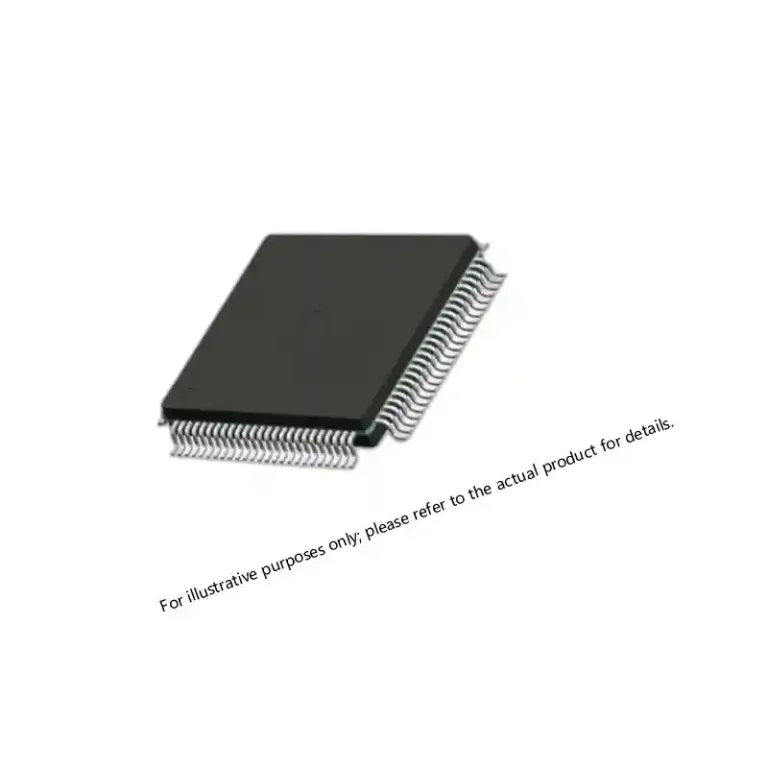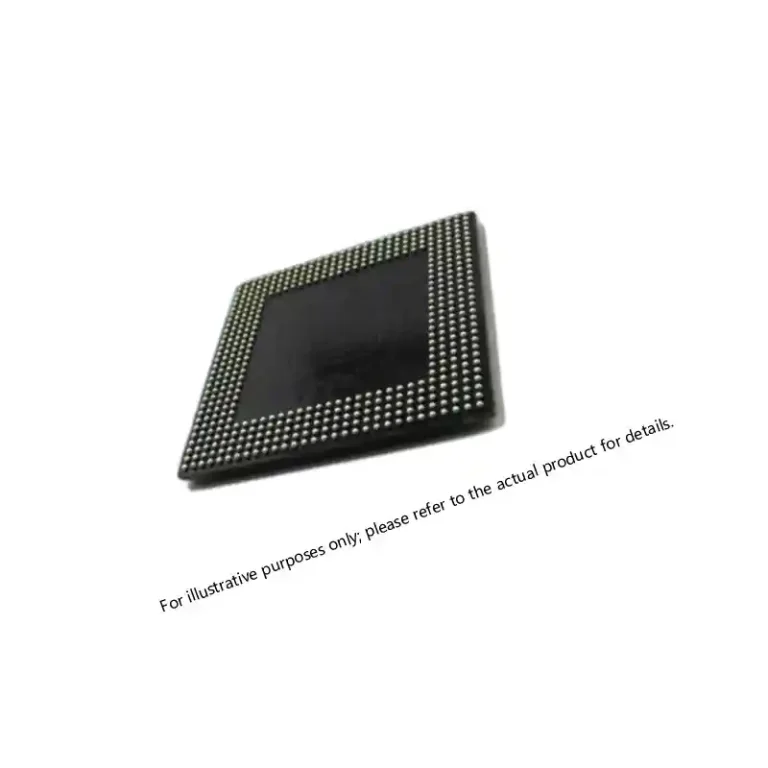
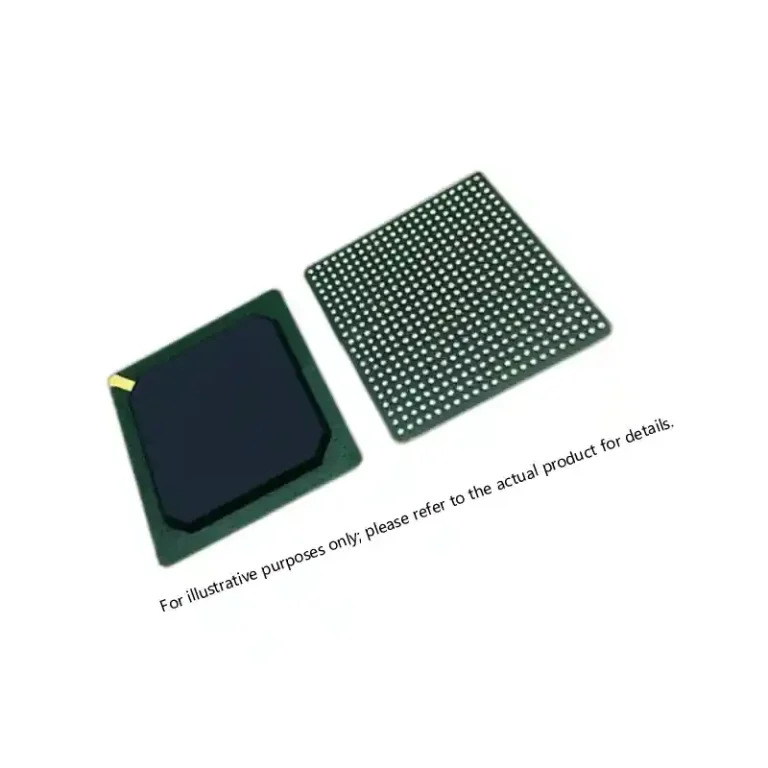
XC4VLX25-10SF363I: Virtex-4 LX25 Specs and Sourcing
Table of Contents
- Decoding the XC4VLX25 Order Code Field by Field
- What the LX25 Fabric Can and Cannot Do
- Why a Different Speed Grade Is Not a Substitute
- Package and Board Constraints in the SF363 Footprint
- Availability Reality for a Mature Virtex-4 Device
- Verifying Authenticity and Traceability Before You Commit
- Building the RFQ and Acceptance Checklist
- Send the Order Code With Your Acceptance Requirements
- FAQ
- Is the XC4VLX25-10SF363I still available?
- Can I use a faster speed grade instead of the -10 part?
- What does the I suffix mean on this part number?
- What should I check first when buying from an independent distributor?
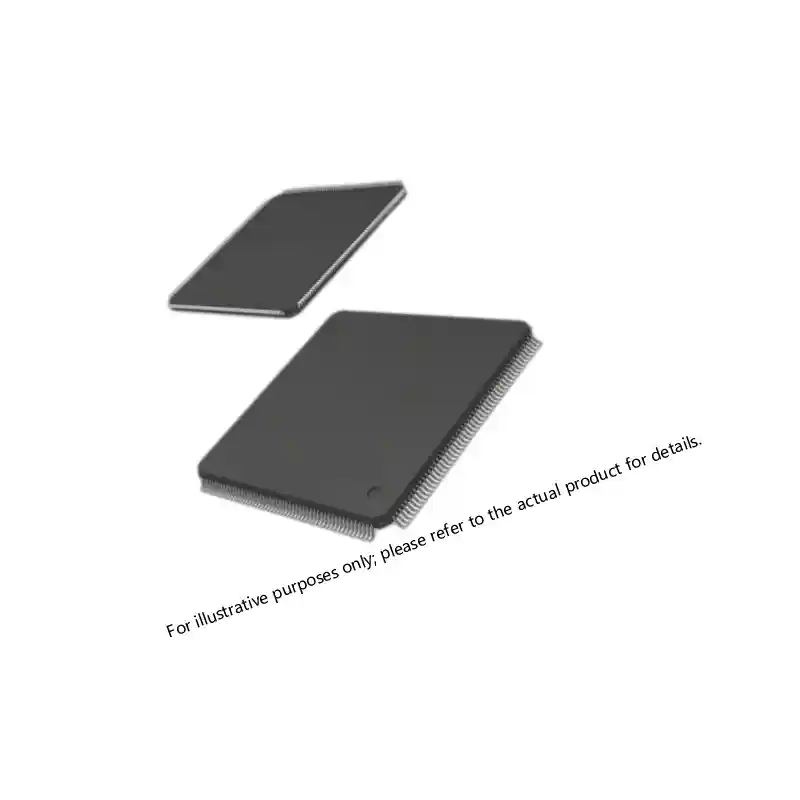
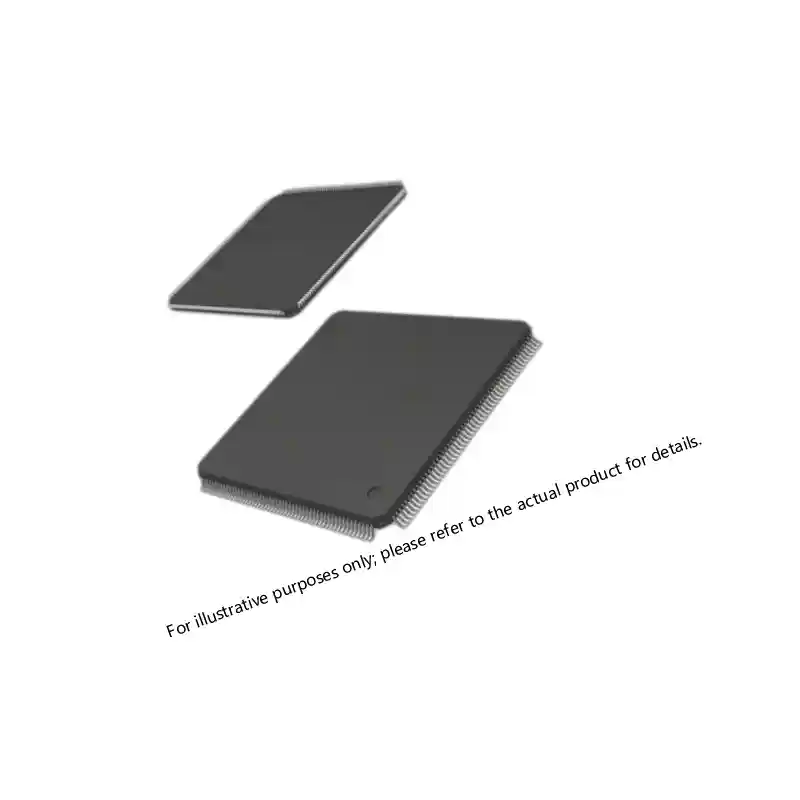
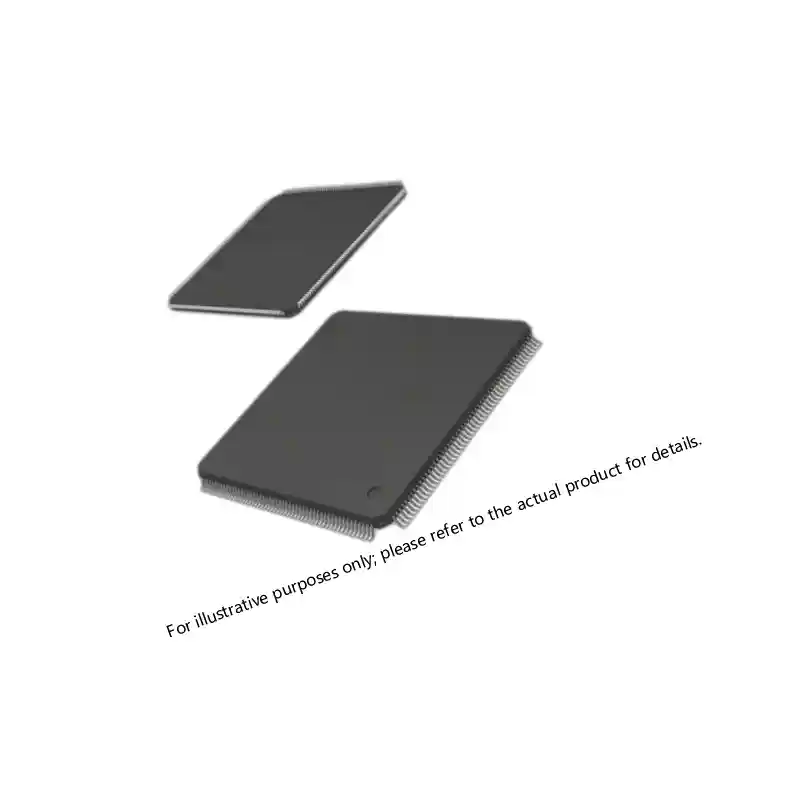
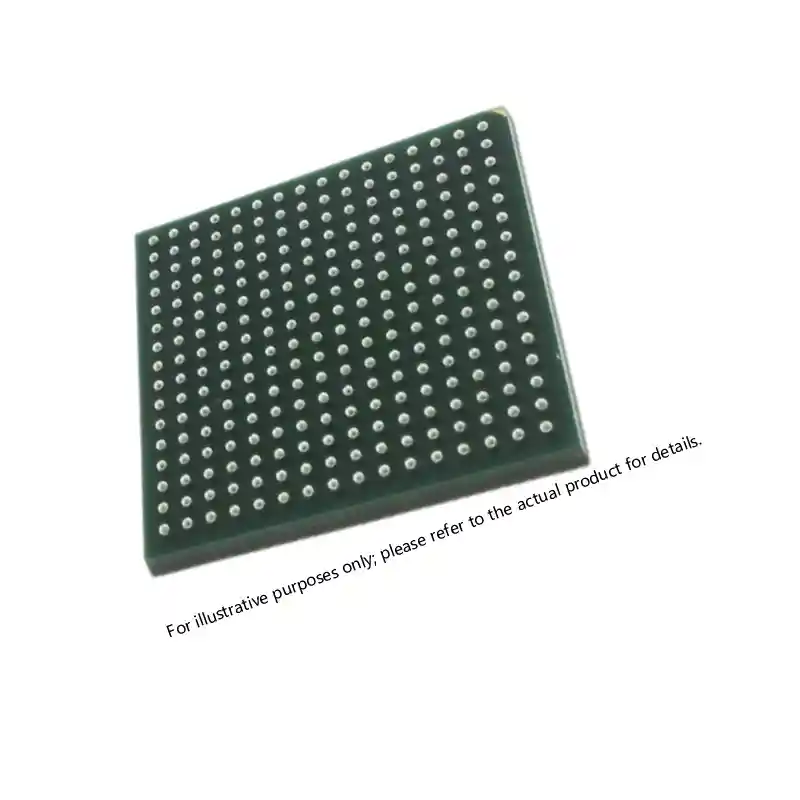
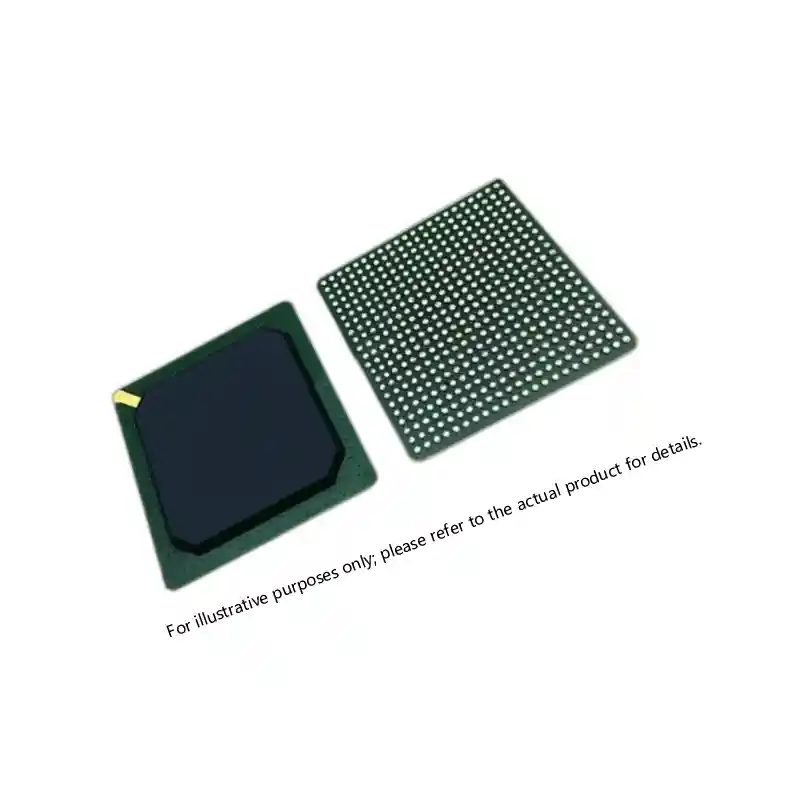
The XC4VLX25-10SF363I is a Virtex-4 LX25 field-programmable gate array in the standard -10 speed grade, supplied in the 363-ball SF363 fine-pitch BGA with the industrial temperature grade. When that order code is already fixed on a bill of materials, it works as a constraint rather than a preference: density, speed bin, footprint and temperature range all have to match what the layout and the timing report were closed against. The decision that consumes program time is rarely which FPGA is fastest. It is whether a specific lot can be shown to be the part that was designed in, through a traceable chain, against an acceptance basis that someone has actually defined.
Decoding the XC4VLX25 Order Code Field by Field
Read from left to right, each field narrows what the part is. Two listings can look almost identical in a search result and still describe different platforms, different speed bins or different footprints.
| Order-code field | What it specifies | What changes when it is wrong |
|---|---|---|
| XC4VLX | Xilinx Virtex-4 LX platform, the logic-optimized branch of the family | FX and SX devices are different die with different hard blocks |
| 25 | Density, 10,752 slices and 24,192 logic cells | The design either does not fit or pays for fabric it never uses |
| -10 | Speed grade, the standard bin for this family | Timing margins move, and a design closed on a faster bin can fail |
| SF363 | 363-ball fine-pitch BGA package | Footprint, ball assignment and available I/O all change |
| I | Industrial temperature grade, -40 °C to +100 °C junction | Thermal margin and derating assumptions change |
The temperature suffix is the field most often dropped between a drawing and a quotation. A listing that offers “XC4VLX25-10SF363” without the suffix is describing a commercial-grade device, which is a different order code with a different junction temperature limit. The same applies to the package finish: Xilinx ordering codes normally add a G to the package field to mark the lead-free option, so the finish your assembly process needs belongs in the request, not in a footnote.
The practical check is to transcribe the code from the approved BOM and the assembly drawing rather than from a supplier page, then confirm that every field of the quoted part matches, including finish and temperature. A quotation that omits a field is a question, not an offer.
What the LX25 Fabric Can and Cannot Do
The LX25 sits in the middle of the Virtex-4 LX range, which means it carries enough DSP and memory for moderate signal processing and not enough for the heaviest designs in the family.
| Resource | LX25 provision | Consequence for a design review |
|---|---|---|
| Logic | 10,752 slices, 24,192 logic cells | Comfortable for control logic and moderate datapaths, tight for wide parallel processing |
| DSP | 48 DSP48 slices, each an 18 x 18 multiplier with a 48-bit accumulator | Supports a moderate filter chain, not a large beamforming array |
| Block RAM | 1,296 Kb in 72 blocks of 18 Kb | Buffering is finite, deep capture memories need external SRAM |
| Embedded processor | None, the PowerPC 405 core belongs to the FX platform | Control planes need a soft core or an external processor |
| Multi-gigabit transceivers | None, RocketIO GTP belongs to the FX platform | High-speed serial links must use LVDS-style I/O at lower rates |
| I/O | Package dependent, and SF363 is the smaller option | Bank count and VCCO grouping are fixed by the package |
The absence of hard processor cores and serial transceivers is the part of this table that changes architectures. A design that assumed an embedded PowerPC has to move its control plane onto a soft core or a companion device, and a design that assumed multi-gigabit serial links has to be rebuilt around source-synchronous LVDS.
Confirm fit by running synthesis and place and route against the XC4VLX25 at the -10 speed grade, then reading slice, DSP and block RAM utilization together with the timing result. Comparing logic-cell counts against a device from another vendor or another generation proves nothing, because the counting conventions differ.
Why a Different Speed Grade Is Not a Substitute
Speed grade is a binning result rather than a feature. Devices from the same production flow are tested and sorted by achievable performance, and the -10 marking states the minimum the part is guaranteed to meet at the specified voltage and temperature corners. Faster bins exist within Virtex-4; the -10 part is the standard bin, not an enhanced one.
The consequence appears during timing analysis. If a design was closed against a faster speed file, the same netlist may not meet setup at the slow corner on a -10 device. The check is mechanical: load the -10 speed file for the industrial grade, analyze at maximum junction temperature and at the minimum supply voltage the board’s regulator tolerance allows, and read the worst negative slack on every clock domain, including paths that leave the device and arrive at external components. A design that passed in the lab at room temperature has not been checked by that step.
Substituting in the other direction is also a real change. Where the qualified configuration is the -10 part, populating a faster bin is a configuration change that has to pass through program change control, because it alters the qualified build even though the board still works. That same price premium is what makes re-marking attractive to unscrupulous sellers, since a slower device sold as a faster one carries a margin with no visible difference on the lid.
Package and Board Constraints in the SF363 Footprint
SF363 is a 363-ball fine-pitch BGA on 1.0 mm pitch. At that pitch the land pattern, stencil apertures and reflow profile come from the package drawing for the exact order code, and small errors appear as bridging between balls or as voids under the die shadow rather than as obvious placement faults.
I/O count and bank assignment are properties of the device and package together. Replacing an LX25 in a larger package with the SF363 part changes which banks are available and how the VCCO rails must be grouped, which is a layout change and not a substitution.
Because automated optical inspection cannot see ball-to-pad joints under the package, X-ray is the practical check on assembly quality. Agree the accept criterion with the assembly house before the first lot: void percentage, ball collapse and bridging limits are easier to settle in advance than during a dispute over a rejected panel.
Moisture sensitivity matters on the component side as well. A tray that has been opened and stored without a humidity indicator, or a tray that has been repackaged, needs a bake to the moisture sensitivity level on the label before reflow. That requirement applies to parts pulled from stock as much as to new arrivals, and the bake record is worth keeping with the lot documentation.
Availability Reality for a Mature Virtex-4 Device
Virtex-4 is a 90 nm family that has been in the field for two decades. New production cannot be assumed, and supply now comes from three places: distributor inventory, program excess and the aftermarket. Each has a different evidence trail, and the acceptance level that fits a repair of a handful of boards is not the level that fits continued production.
The failure modes are consistent. Mixed date codes are consolidated into one lot. Parts are re-marked to a faster grade or a later date code. Devices are removed from scrapped assemblies, reballed and sold as new. Trays are repackaged and labels are reprinted, which breaks the link between the bag and the original manufacturer. None of these are visible in a price list.
For a sustainment program, the question is narrower than for a production line: a defined number of boards, an existing configuration, and a documented acceptance test that the repair station already runs. For production, the same lot has to support incoming inspection at volume, which changes the cost of every check and the value of the traceability chain. Decide which case you are in before quoting, because the two cases justify different evidence.
Legacy FPGA support usually comes down to documentation rather than availability. <A1020B-PG84B ACT2 FPGA: Specs, Sourcing, and Availability> covers how an older Actel device is specified and sourced when new production has ended.
The alternative is to design the part out. That path trades a sourcing problem for a qualification problem: a new device means a new layout, a new timing closure, new configuration memory, and a requalification cycle whose cost is measured in months. Programs that run the comparison honestly often find that a controlled, tested purchase of the existing order code is the cheaper option for the remaining life of the platform, while programs with a decade of production ahead of them usually do not.
When a platform does migrate to a later family, the sourcing questions change shape rather than disappear, because the newer device has its own grade and traceability requirements. <XC7VX485T Virtex-7 FPGA: Performance and Sourcing for Defense> covers that later-generation device in a defense sourcing context.
Verifying Authenticity and Traceability Before You Commit
The useful discipline here is to state what each check proves and what it does not. Most procurement disputes come from a record being asked to support a conclusion it was never capable of supporting.
| Record | What it can establish | Responsible use | Do not infer |
|---|---|---|---|
| Photograph of the top marking from the actual lot | Marking text, logo form and date-code format consistency | Screening for obvious mismatch before a quote is accepted | That the die inside is the ordered device |
| X-ray or die-level imaging of the package | Die presence, die size class, bond layout indicators | Confirming the package contains a plausible die for the grade | That the die is genuine, or that it meets -10 timing |
| Lead finish and solderability check | Finish type and solderability after storage | Setting the reflow profile and judging shelf-life risk | That electrical performance survived the storage history |
| Curve trace or open and short test | Gross I/O integrity | Rejecting clearly damaged units before full test | Any statement about timing, configuration or long-term reliability |
| Configuration load and functional test on a known-good board | That your bitstream loads and basic I/O behaves | Screening a lot against your own design | That the lot meets the full datasheet over temperature |
| Certificate of conformance and chain of custody | Who the supplier says handled the parts, and to which standard | Judging whether the documentation trail is auditable | That a certificate is an independent test result |
The line between screening and technical acceptance is where programs get into trouble. Photographs and X-ray decide whether a lot is worth testing; they do not release it. Release requires an electrical result measured against the datasheet limits for the specific grade at the specified temperature, together with an approval signature from whoever owns the design authority. A configuration load on a single development board is a data point about that board, that bitstream and that bench temperature, and it says nothing about the rest of the tray.
Traceability is a chain rather than a document. A certificate of conformance is only as strong as the chain behind it, so ask for the manufacturer, the franchise path or the documented aftermarket path, the lot labels, and the date codes of the actual units to be shipped. Where a supplier cannot reconstruct that chain, the honest position is that the parts are unidentified, and unidentified parts cannot carry a program’s reliability assumption whatever the price.
Building the RFQ and Acceptance Checklist
A request that names only the part number and a quantity leaves the supplier to choose the grade, the date code and the evidence. Put the requirement in the request instead.
| RFQ field | What to ask for | Why it matters |
|---|---|---|
| Order code | Full code including temperature grade and package finish | Prevents a commercial-grade or leaded part being quoted as equivalent |
| Date code and lot | Stated date codes, no mixed lots without prior approval | Mixed lots break lot-level test evidence |
| Traceability | Manufacturer path, franchise or documented aftermarket chain, lot labels | Decides whether the acceptance record is auditable |
| Test data | Curve trace, configuration load result, who performed each test and where | Separates supplier screening from independent measurement |
| Packaging and moisture | Original sealed trays, moisture sensitivity level, bake history | A repackaged tray has lost its link to the manufacturer |
| Quantity and schedule | Annual consumption for sustainment buys, delivery milestones | Sets whether a lifetime buy is justified against shelf life |
A vague line invites a vague answer. Reject this request: “XC4VLX25-10SF363I, quantity 50, best price, in stock.” Replace it with: “XC4VLX25-10SF363I, industrial grade, package finish as required by our process, date codes stated and agreed before shipment, no mixed lots, full traceability to manufacturer or documented aftermarket chain, curve trace and configuration-load results supplied with the lot, original sealed trays with moisture sensitivity level marked, delivery in two milestones.”
Record the answers rather than the assurances: who performed each test, at what temperature, with which bitstream, and against which limits. That record is what an auditor will ask for two years later, and it is also what tells you whether a second lot from the same supplier is comparable to the first.
Send the Order Code With Your Acceptance Requirements
Send the exact order code, the temperature grade and package finish your process requires, the date-code range you can accept, the quantity and delivery milestones, the traceability documents you need, the test data you expect with the shipment, and the acceptance criteria your design authority has signed off. If this is a lifetime buy for a sustainment program, add the annual consumption estimate so the quantity can be checked against storage life and the conditions the parts will sit in.
One boundary is worth stating plainly: a quotation for the correct order code is the start of the evidence chain, not proof that the units are the grade marked on the lid.
Sparkle Electronics supports defense and high-reliability programs with traceable component supply. Send the requirement to xuansc2144@gmail.com and the sourcing team will confirm what can be offered against your acceptance criteria before anything ships.
FAQ
Is the XC4VLX25-10SF363I still available?
Availability depends on the channel rather than on a catalogue status. The Virtex-4 family is mature, so supply now comes from distributor inventory, program excess and the aftermarket, and the condition of those parts varies widely. Treat any offer as a specific lot with specific date codes, and ask for the traceability chain and the test record before quoting it into a program. A seller who cannot state where the units came from has described unidentified material, whatever the listing says.
Can I use a faster speed grade instead of the -10 part?
Only through change control, not as a purchasing decision. A faster device may meet timing more easily, but it changes the qualified configuration, and programs that hold a fixed qualification basis have to treat it as a configuration change. The reverse direction is the dangerous one: a design closed against a faster bin may not meet setup at the slow corner on a -10 device, so verify with the -10 speed file at maximum junction temperature before assuming any substitution is safe.
What does the I suffix mean on this part number?
The suffix marks the industrial temperature grade, which for Virtex-4 means a junction temperature range of -40 °C to +100 °C. It is not the same device as the commercial-grade code without the suffix, and the difference matters in two places: thermal analysis for an enclosed chassis, and the derating assumptions written into the design. Confirm the suffix on the quotation, because a listing that omits it is describing a different order code.
What should I check first when buying from an independent distributor?
Start with the chain, not the price. Ask for the manufacturer path or documented aftermarket path, the date codes of the actual units, and whether the trays are original and sealed. Then agree the test scope: curve trace and a configuration load at minimum, with an independent electrical measurement if the lot is going into production. Screen the lot with photographs and X-ray, but release it only on measured results against the datasheet limits for the grade.
If you’re interested, check out these related articles:
Virtex-7 690T FPGA: Performance for Mission-Critical Systems
XC7VX485T Virtex-7 FPGA: Performance and Sourcing for Defense
XC7VX485T FPGA: Virtex-7 Performance for Defense
XCKU115 UltraScale FPGA: Powering Critical Defense Systems