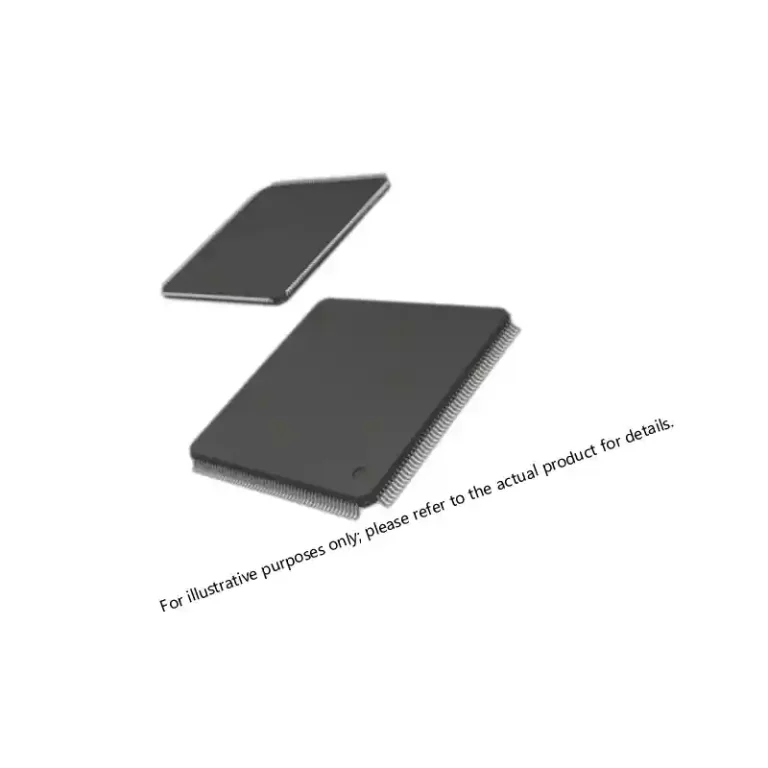
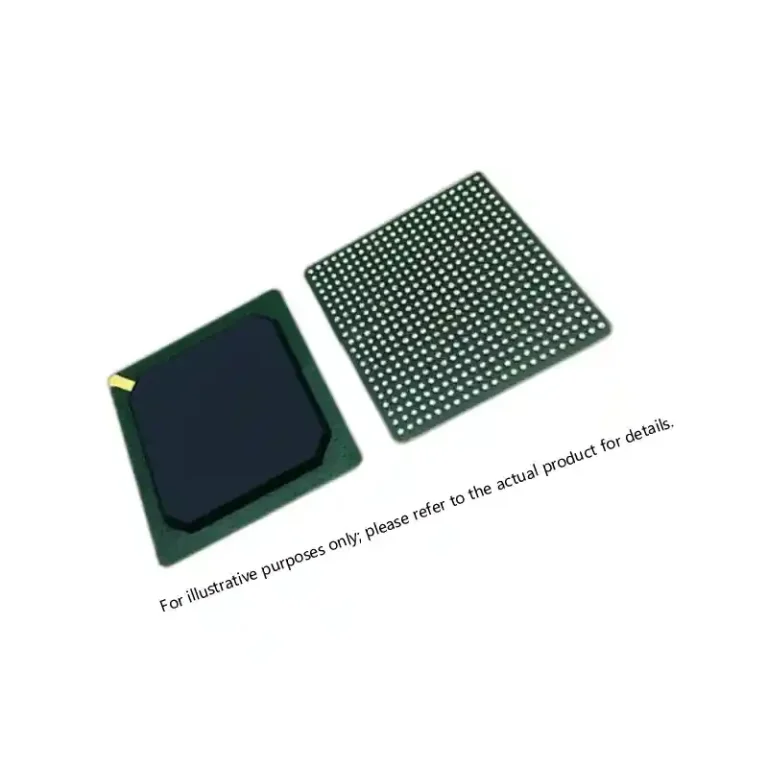
Xilinx FPGA Aerospace: Key Uses in Avionics and Satellites
Table of Contents
- What Makes Xilinx FPGAs Suitable for Aerospace Applications
- Which Xilinx FPGA Families Are Used in Avionics and Satellite Systems
- How Are Aerospace Xilinx FPGAs Qualified for Flight Use
- What Should Buyers Look for When Sourcing Xilinx FPGAs for Defense Programs
- How Do You Manage Long-Term Supply and Obsolescence for Xilinx Aerospace FPGAs
- Common Questions About Xilinx FPGAs in Aerospace Systems
- Can commercial Xilinx FPGAs be used in LEO satellite missions?
- What is the difference between radiation-tolerant and radiation-hardened Xilinx FPGAs?
- How long does it take to receive QML-V Xilinx FPGAs after placing an order?
When engineers specify a Xilinx FPGA for an aerospace avionics or satellite program, the decision usually begins with radiation tolerance, logic density, and reprogrammability. Those are the headline capabilities that put Xilinx devices into flight computers, sensor processing chains, and payload controllers across the industry. What is less often discussed, and what our team at Sparkle Electronics deals with every day, is that the component’s post-integration reliability depends just as much on supply chain integrity as it does on the silicon itself. Counterfeit devices, undocumented lot codes, and unverified configuration memory can turn a qualified design into a program risk before the FPGA ever leaves the stockroom. In this article, we walk through the Xilinx aerospace FPGA families that appear most often in operational hardware, the qualification standards that matter for real-world procurement, and how early sourcing decisions shape long-term program success.
What Makes Xilinx FPGAs Suitable for Aerospace Applications
The fundamental advantage of a Xilinx FPGA in aerospace is its ability to absorb function changes after hardware is built. A satellite payload processor can be reprogrammed in orbit to correct a modulation scheme or add a data compression algorithm. That reconfigurability reduces the number of unique ASICs a program must fund and sustain. What makes reconfiguration possible in a radiation environment, however, is a combination of silicon process hardening, redundant configuration memory, and error correction.
Xilinx radiation-tolerant FPGAs use a hardened SRAM cell design that lowers the single-event upset (SEU) cross-section compared to commercial parts. On top of that, the configuration bitstream is protected by cyclic redundancy check (CRC) monitoring and, in qualified devices, by built-in scrubbing circuits that periodically read and correct the configuration memory. These features do not make the FPGA immune to radiation, but they constrain the failure rate to a level where a system-level triple modular redundancy (TMR) approach can absorb the remaining errors without mission interruption. For programs that cannot accept any SEU-driven reconfiguration, Xilinx also works with die banks and qualified packaging flows to deliver QML-V radiation-hardened-by-design versions of selected architectures.
The other suitability factor is thermal range. Aerospace Xilinx FPGAs are specified for the military temperature range of -55°C to +125°C, which covers everything from a satellite bus electronics bay to a fighter aircraft avionics rack. Parts that carry a QML-V or QML-Q rating go through additional burn-in and screening steps that confirm the temperature corners across the full production lot rather than on a sample basis.
Which Xilinx FPGA Families Are Used in Avionics and Satellite Systems
The Xilinx FPGAs that show up most often in aerospace programs fall into four families, each mapped to a different set of requirements. The table below summarizes the predominant series and their typical use.
| Family | Representative Devices | Typical Aerospace Application |
|---|---|---|
| Virtex-4QV, Virtex-5QV | XQR4VFX60, XQR5VFX130 | Rad-hard payload processors, command and data handling for GEO and deep-space missions. |
| Virtex-7 (Radiation-Tolerant) | XQ7VX690T | High-throughput on-board processing for radar, SIGINT, and multi-spectral imaging satellites. |
| Kintex UltraScale (Radiation-Tolerant) | XQKU060, XQKU085 | Software-defined radio, beamforming, and LEO constellation payloads that balance performance and cost. |
| Artix-7 (Lower-Cost Hi-Rel) | XQ7A100T | Housekeeping controllers, sensor interfaces, and non-critical avionics where QML-Q screening is sufficient. |
Virtex-4QV and Virtex-5QV are the workhorses for deep-space and long-duration GEO missions. They are radiation-hardened by design and listed on the U.S. Defense Logistics Agency QML-V qualified parts list. Production volumes for these parts are low, lead times are measured in months, and unit pricing reflects that. Virtex-7 radiation-tolerant devices offer higher logic density and more DSP slices but rely on a combination of process hardening and configuration scrubbing rather than full rad-hard-by-design. They are widely used in medium-earth orbit (MEO) and LEO programs where the total ionizing dose requirement is lower.
Kintex UltraScale devices sit in the middle: they deliver significant DSP throughput at a lower per-logic-cell cost than Virtex-7 and are among the most actively quoted Xilinx parts across defense and space programs today. Artix-7 fills the low-power, smaller form-factor slot, often in secondary processing roles where the main reliability concern is thermal cycling, not heavy-ion strikes.
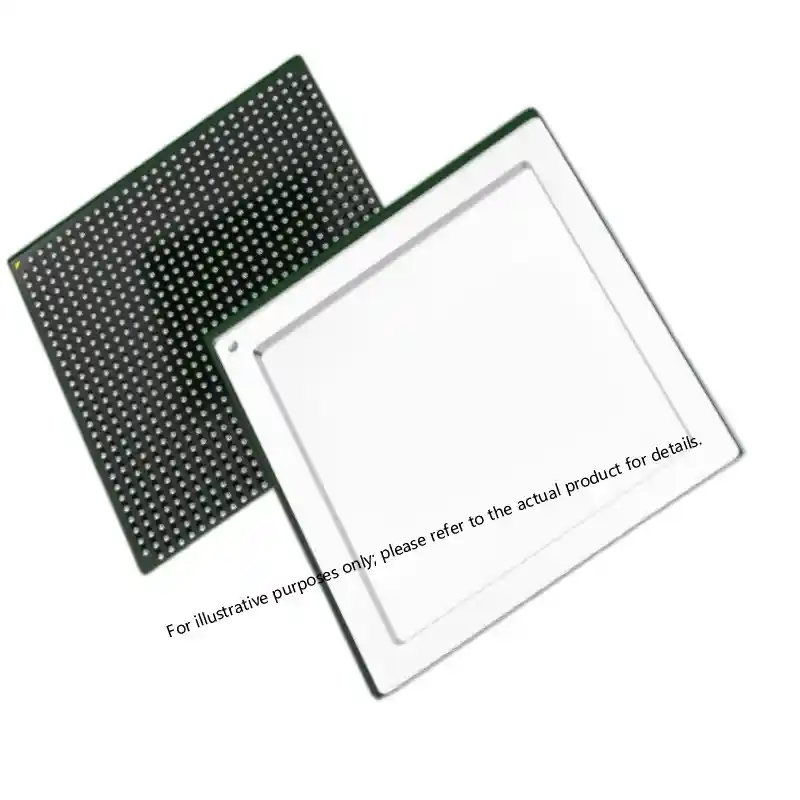
If your program involves radiation-hardened FPGAs with specific QML-V requirements, confirming the exact package and screening flow before design freeze can save months of requalification. Reach out at xuansc2144@gmail.com to walk through your part number needs and we can cross-check availability against current die bank schedules.
How Are Aerospace Xilinx FPGAs Qualified for Flight Use
Qualification for an aerospace Xilinx FPGA is not a single certification. It is a stack of standards that depends on the mission profile. The most commonly referenced documents are MIL-PRF-38535 (QML V and Q), MIL-STD-883 (screening and test methods), and DO-254 for airborne electronic hardware.
QML-V is the highest reliability grade for monolithic ICs in military and space applications. A Xilinx FPGA that carries a QML-V part number, such as the XQR5VFX130, has gone through wafer-level radiation characterization, extended burn-in, temperature cycling across the full military range, and lot-level destructive physical analysis. The Defense Logistics Agency maintains the Qualified Manufacturers List, and no part can claim QML-V compliance without being listed on it. When a procurement specification calls out a 5962- series part number, the corresponding device must come from a QML-certified production line and be shipped with a certificate of conformance and full lot traceability.
QML-Q is the step below V and applies to parts that still go through Class B screening per MIL-STD-883 but with fewer radiation assurance steps. Devices like the XQ7A100T Artix-7 are typically supplied as QML-Q unless the program pays for additional upscreening.
DO-254 is not a component-level standard but governs how the FPGA design and verification process is documented for FAA or EASA certification. The silicon itself does not become DO-254 compliant; the design assurance level (DAL) assigned to the FPGA function drives the verification artifacts the integrator must produce. Still, selecting a Xilinx part that already has QML-Q or V qualification simplifies the DO-254 compliance argument because the component reliability data is already validated.
What Should Buyers Look for When Sourcing Xilinx FPGAs for Defense Programs
The procurement risk around Xilinx aerospace FPGAs concentrates in three areas: counterfeit or remarked parts, incomplete traceability documentation, and uncontrolled storage conditions between the factory and the program integration line. All three are preventable if the sourcing checklist includes more than just price and lead time.
First, verify the part number suffix. A Xilinx part number for an aerospace device will include a temperature rating indicator (I for industrial, M for military) and, for QML parts, a 5962- series designation or an XQR prefix. If a quote shows a commercial temperature range part number at a reduced price for an aerospace application, the documentation chain needs immediate scrutiny. Commercial Xilinx FPGAs can be upscreened, but the process adds cost and requires the screening to be performed by a certified test house with a documented flow. The buyer should receive the original upscreening report, not just a vendor assurance letter.
Second, insist on lot traceability back to the Xilinx wafer fabrication site. For QML-V devices, this is built into the certification process. For QML-Q and radiation-tolerant parts, the distributor must provide a certificate of conformance that ties the lot code to the original purchase order from Xilinx or an authorized source. In our experience at Sparkle Electronics supporting defense integrators, the single highest-value document buyers can request is the chain of custody record showing every transfer of ownership and storage condition since the lot was released from the factory.
Third, check configuration memory integrity before programming. We recommend that incoming inspection include a verify operation against a known-good bitstream, with the device powered at the rated core voltage and at both the high and low temperature corners specified in the program requirement. A bit error that shows up at -40°C but not at room temperature can indicate a latent oxide defect that passed room-temperature electrical test but will become a hard failure during thermal cycling.
How Do You Manage Long-Term Supply and Obsolescence for Xilinx Aerospace FPGAs
Aerospace programs that span fifteen years or more inevitably outlive the commercial production window of the FPGA family they were designed around. The question is not whether a part will go end-of-life, but whether the program has a funded obsolescence management plan before it does.
The first line of defense is die banking. Xilinx offers die bank programs for selected aerospace FPGA families, where a program purchases a quantity of tested wafers or finished die, and Xilinx stores them in a controlled environment for future package assembly. The advantage is that the program secures the silicon from a known fabrication lot and avoids the performance drift that can occur when migrating to a newer process node. The disadvantage is the upfront capital outlay and the need to forecast total program demand years in advance.
For programs that cannot commit to a die bank, the next option is a last-time-buy executed when Xilinx issues an end-of-life notification. We advise procurement teams to forecast not just the flight unit quantity but also the engineering model, qualification test article, and ground support equipment quantities that will consume the same part number. Missing those in the last-time-buy results in a second wave of spot buys at significantly higher cost and with less traceability assurance.
Technology refresh planning is the third lever. Moving from a Virtex-4QV to a radiation-tolerant Virtex-7 or Kintex UltraScale is not a pin-for-pin migration. It requires board redesign, updated signal integrity analysis, and re-verification of the DO-254 artifacts. However, the newer families bring enough performance margin and power reduction that the business case often closes if the program has at least five years of remaining production ahead of it. In our supply chain engineering support work, we help program offices compare the total cost of a last-time-buy plus long-term storage against the non-recurring engineering cost of a technology refresh, so the decision is based on fully loaded numbers rather than component unit price alone.
Common Questions About Xilinx FPGAs in Aerospace Systems
Can commercial Xilinx FPGAs be used in LEO satellite missions?
It depends on the orbit altitude, mission duration, and the tolerance for single-event effects. A 3U CubeSat in a 500 km orbit with a two-year mission life may use a commercial Kintex-7 FPGA with careful configuration scrubbing and system-level TMR, and that approach has flown successfully. However, once the mission involves high-value payloads, five-year life, or a higher radiation environment such as a polar orbit, the commercial part’s SEU rate typically exceeds what scrubbing can manage without excessive power consumption. At that point, migrating to a radiation-tolerant Kintex UltraScale or a QML-V Virtex-5QV becomes the more predictable path. If you are evaluating this trade for an active proposal, we can run a parametric comparison of candidate Xilinx parts against your orbit parameters. Share your requirements and we will confirm which devices have flight heritage in similar radiation profiles.
What is the difference between radiation-tolerant and radiation-hardened Xilinx FPGAs?
Radiation-tolerant parts, like the Virtex-7 XQ7VX690T, use a hardened SRAM process and on-chip configuration memory scrubbing to reduce SEU susceptibility, but they are not guaranteed to be immune to single-event latchup (SEL) beyond a certain LET threshold. Radiation-hardened devices, such as the Virtex-5QV XQR5VFX130, are designed from the transistor up to meet a total ionizing dose specification (typically 100 krad or more), to be SEL-immune up to a high LET, and to carry a QML-V qualification. In procurement terms, the rad-hard part comes with a 5962- number and a much longer lead time. The radiation-tolerant part is often a standard military-temperature-range device with additional testing and characterization. The right choice depends on whether the program’s radiation requirements can be met by a tolerant part with system-level mitigation or if a hardened part is mandatory.
How long does it take to receive QML-V Xilinx FPGAs after placing an order?
Lead times for QML-V devices like the Virtex-5QV routinely run 26 to 52 weeks depending on the package variant and whether the part is on an active QML line. If a program needs a specific speed grade or ceramic package that is not in the current production queue, the lead time can extend further. The most effective way to compress that window is to work with a distributor that maintains an inventory of unprogrammed QML-V die and can coordinate with an accredited assembly and test house for package completion. Even then, plan for a minimum of 20 weeks from order to delivery. Early engagement, ideally during the design review phase, is the only lever that consistently shortens the procurement cycle. Discuss your part number and quantity with us at xuansc2144@gmail.com to get a realistic lead time estimate for your specific configuration.
If you’re interested, check out these related articles:
XC7VX485T Virtex-7 FPGA: Performance and Sourcing for Defense
Virtex-7 690T FPGA: Performance, Packaging, and Reliability Insights
UltraScale KU085 FPGA Specifications for Defense Systems
XCKU085 UltraScale FPGA: Performance for Critical Systems