Military-Grade Electronics Shipping Compliance: A Global Guide
Table of Contents
- Export Control Regulations for Military-Grade Electronics Shipments
- Determining If Your Item Falls Under ITAR or EAR
- Export License Requirements and License Exemptions
- Preparing Documentation and Packaging for International Shipments
- Essential Documents for Each Shipment
- Packaging That Survives Inspection, Not Just Transit
- Choosing a Freight Forwarder with Defense Export Experience
- Vetting Your Forwarder: A Practical Checklist
- Managing Shipments In-Transit: Monitoring and Customs Holds
- Post-Shipment Compliance: Recordkeeping and Internal Audits
- Common Compliance Questions from Defense Shippers
- What happens if military electronics are shipped under the wrong classification?
- Do I need an export license for prototype or sample military-grade components?
- How do I verify my freight forwarder’s ITAR registration is active?
- What packaging is required for MIL-SPEC components being shipped overseas?
- How long should export records be kept for defense electronics?
Between export control classifications, packaging standards, and carrier vetting, shipping military-grade electronics internationally is a process where a single oversight can halt a program for weeks. Procurement and logistics teams handling MIL-SPEC components, FPGAs, or radar-grade ADCs must navigate a compliance landscape where documentation errors are not administrative annoyances—they are shipment-blocking events. This guide outlines the practical steps for shipping defense electronics across borders without compromising regulatory standing, from export license determination to post-shipment recordkeeping, drawing on over a decade of support for defense programs worldwide.
Export Control Regulations for Military-Grade Electronics Shipments
Understanding which regulatory framework applies to your shipment is the first decision point. Most military-grade electronic components fall under the International Traffic in Arms Regulations (ITAR) if they are specifically designed, modified, or configured for military use. Components that are dual-use—meaning they have both commercial and military applications—are typically controlled under the Export Administration Regulations (EAR), though the line between the two can become blurred when a part number appears on the United States Munitions List (USML).
Determining If Your Item Falls Under ITAR or EAR
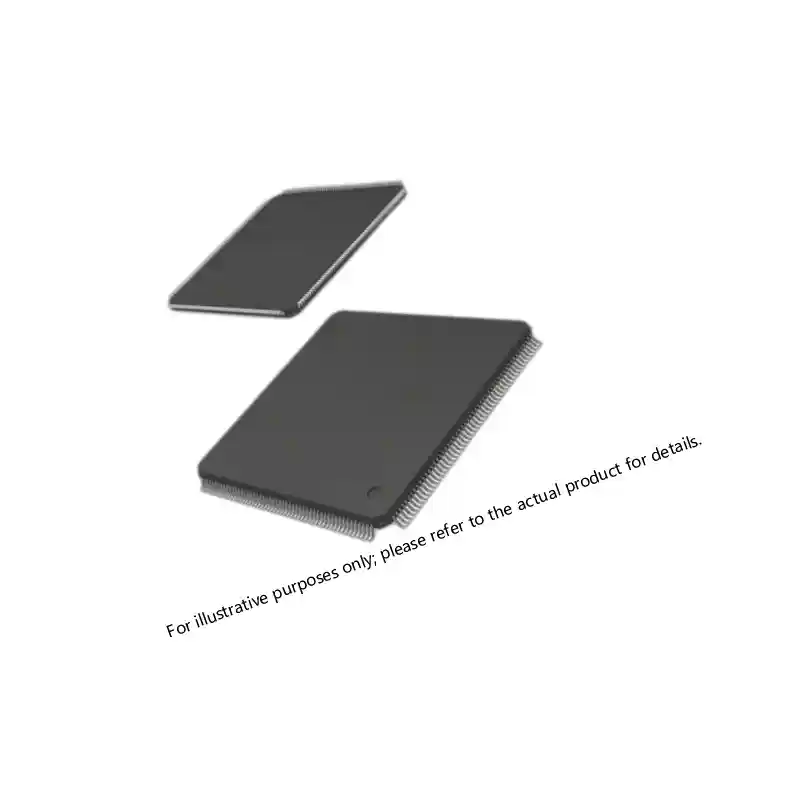
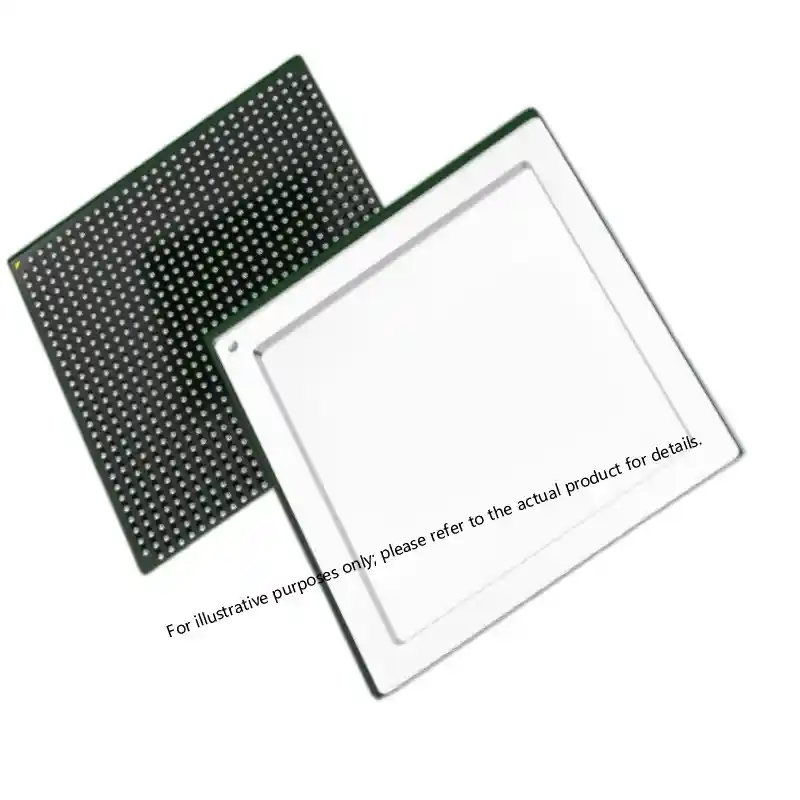
Start by checking whether the component appears in the USML or has an export control classification number (ECCN) assigned by the Department of Commerce. MIL-SPEC integrated circuits, radiation-hardened FPGAs, and 5962-series devices often fall under ITAR, while many commercial-off-the-shelf (COTS) microcontrollers or memory devices remain under EAR. However, we have seen cases where a single part number—such as a QML-qualified FPGA—is classified differently depending on the end-use system. A component used in a radar processing module is treated as defense article, whereas the same device purchased for an industrial test bench may qualify for an EAR license exception. Classification must be determined at the shipment level, not the component level.
Export License Requirements and License Exemptions
If your item is ITAR-controlled, an export license from the Directorate of Defense Trade Controls (DDTC) is required unless a specific exemption applies. Common exemptions include temporary imports for repair, low-value spare parts under the $500 exception, or shipments to certain allied governments. For EAR-controlled items, no license may be needed if the ECCN indicates no license requirement for the destination country, or if a license exception such as STA (Strategic Trade Authorization) or GOV (Government) applies. Relying on an exemption requires careful documentation, and we routinely see programs that were delayed because the shipment used an exemption without the correct supporting paperwork. The decision to use an exemption should be made with someone experienced in ITAR/EAR filing, not an assumption based on the item description.
Preparing Documentation and Packaging for International Shipments
A complete shipping packet is the single strongest defense against customs delays. Every defense electronics shipment leaving our facility includes a commercial invoice with detailed part descriptions and ECCN/USML classification, a packing list that groups components by lot and cage code, and a certificate of conformance when required by the contract. Missing any one of these can cause a hold, and once a shipment is flagged, clearing it often takes weeks rather than days.
Essential Documents for Each Shipment
| Document | Purpose | When Required |
|---|---|---|
| Commercial Invoice | Declares value, HS code, end-use, and ECCN/USML classification | Every international shipment |
| Packing List | Itemizes boxes by weight, dimensions, and contents | Every shipment |
| Certificate of Conformance (C of C) | Confirms components meet the specified MIL-STD or procurement standard | When purchase order specifies MIL-PRF requirements |
| End-User Certificate | Identifies the final recipient and intended use, preventing diversion | For ITAR-controlled or sensitive EAR items |
| Export License or Exemption Statement | Proves authorization to ship the listed items | For all ITAR items and any EAR item requiring a license |
| Dangerous Goods Declaration | Certifies that lithium batteries or other hazardous materials are packed properly | When batteries or certain electrolytes are included |
Never assume a freight forwarder will generate these correctly unless you have verified their defense export experience. We have encountered brokers who list the wrong ECCN on the commercial invoice, likely because they treated the shipment as commercial electronics. That error, once printed on the airway bill, becomes part of the export record and is difficult to correct later.
Packaging That Survives Inspection, Not Just Transit
MIL-SPEC packaging requirements exist for a reason: components like ceramic FPGAs, radiation-hardened memory, and precision ADCs can be damaged by electrostatic discharge or vibration during customs handling. The minimum standard is moisture-barrier bags with desiccant and humidity indicator cards, sealed in anti-static packaging. For shipments that will travel through multiple climate zones, we add vacuum-sealed outer wraps and shock-absorbing foam that meets MIL-STD-2073. A packaging failure that leads to a latent electrostatic discharge defect may not show up until the component is installed—at which point the root cause is almost impossible to trace back to the shipment.
Choosing a Freight Forwarder with Defense Export Experience
One of the highest-risk decisions in military electronics shipping is handing your components to a forwarder who lacks an active ITAR registration or a documented trade compliance program. Any freight forwarder handling ITAR-controlled goods must be registered with the DDTC and must have a qualified empowered official. If they are also handling EAR-controlled items, they should understand how to classify ECCNs and apply license exceptions correctly.
Vetting Your Forwarder: A Practical Checklist
In our experience supporting over 30 countries, we request the following from any forwarder before engaging them for a defense shipment: proof of active DDTC registration number, a written statement of their trade compliance procedures, and a point of contact who understands defense export requirements—ideally someone who can explain the difference between a DSP-5 and a BIS-748P without hesitation. If a forwarder tells you they handle “high-tech” shipping but cannot describe their process for denied party screening, that should be treated as a red flag. Every shipment of military electronics must be screened against consolidated screening lists, including the BIS Denied Persons List and the DDTC Debarred List, before the forwarder takes custody of the goods.
If your program involves shipments to countries that are not NATO members or to regions with heightened export restrictions, confirm that your forwarder has specific experience with those destinations. At Sparkle Electronics, we maintain a pre-vetted network of ITAR-registered forwarders and brokers who understand the nuances of shipping to defense contractors in Asia, the Middle East, and Eastern Europe—where customs procedures can be more demanding and end-user documentation is scrutinized more heavily. If your shipment involves high-value or lot-controlled devices, it is worth asking your forwarder about their chain-of-custody procedures before freight booking.
Managing Shipments In-Transit: Monitoring and Customs Holds
Once the shipment is airborne or at sea, active tracking and prompt response to customs queries become the difference between on-time delivery and a week-long hold. GPS-enabled tracking and temperature/humidity loggers are cost-effective for shipments containing components valued above a few thousand dollars, especially when those components are moisture-sensitive or require storage within specific temperature ranges.
If customs places a hold on a defense electronics shipment, the reason is usually a documentation mismatch—the airway bill’s description does not match the classification on the commercial invoice, or the invoice lists a harmonized system code that customs does not associate with the stated end-use. In these cases, having a compliance contact at the forwarder who can call the destination customs office directly and provide corrected documentation electronically can clear the hold within 24 hours. If no such contact exists, the process can stretch into weeks as paperwork moves through mailing channels. We have found that the fastest resolution comes when the shipper provides a detailed letter of explanation that references the specific USML category or ECCN, cross-linked to the end-user certificate, and sends it through the forwarder’s compliance portal.
Post-Shipment Compliance: Recordkeeping and Internal Audits
ITAR requires exporters to maintain shipment records for five years from the date of export; EAR requires the same for controlled items. These records must include the export license or exemption documentation, the commercial invoice, the packing list, the airway bill, and any correspondence with the forwarder or customs. Failing to retain these records exposes your program to potential DDTC or BIS audits, and in our experience, a missing record is far more common than a deliberate violation—but the penalty structure does not distinguish between the two.
An internal audit of your shipping records, conducted annually, is a low-cost way to identify documentation gaps before they become enforcement issues. The audit should cross-check each export license against the actual shipment details, verify that the commercial invoice’s end-use statement matches the end-user certificate, and confirm that the forwarder’s denied party screening was performed before each shipment. If your program has shipped to the same end-user multiple times, make sure the end-use statement reflects the current program, not a recycled version from a prior purchase order.
Common Compliance Questions from Defense Shippers
What happens if military electronics are shipped under the wrong classification?
The exporter is considered the party responsible, even if a freight forwarder completed the documentation. If ITAR-controlled items are shipped under an EAR classification without a license, the penalties can include fines per violation and loss of export privileges. If the error is discovered before the shipment reaches customs, a voluntary disclosure to the DDTC or BIS—submitted before the agency identifies the violation—often reduces penalties. The critical step is to stop the shipment, correct the classification, and file the voluntary disclosure immediately. Once the shipment clears customs, the scope of the violation becomes harder to limit.
Do I need an export license for prototype or sample military-grade components?
Yes, if the prototype is ITAR-controlled or falls under a restricted ECCN. There is no blanket exemption for samples, low quantities, or evaluation units. Some companies attempt to ship under the ITAR exemption for technical data, mistakenly believing that a hardware sample qualifies as “technical data.” It does not. The correct approach is to classify the sample just as you would a production part, obtain the license if required, and declare the sample’s actual value for customs purposes.
How do I verify my freight forwarder’s ITAR registration is active?
Ask for their DDTC registration number and verify it through the DDTC’s public registration search. A registration lapses every year if not renewed, and we have encountered forwarders who displayed an old registration number on their website but had not renewed. Active registration does not guarantee competence, but an expired registration means they cannot legally handle ITAR-controlled goods at all.
What packaging is required for MIL-SPEC components being shipped overseas?
At minimum, components should be in sealed moisture-barrier bags with desiccant and a humidity indicator card, inside anti-static packaging. For military-grade FPGAs, ADCs, or memory devices, we recommend vacuum-sealed outer wraps and shock-absorbing foam that meets MIL-STD-2073. If the shipment contains lithium batteries or certain electrolytes, a separate dangerous goods declaration is required, and the outer packaging must include the appropriate hazard labels.
How long should export records be kept for defense electronics?
ITAR mandates five years from the date of export; EAR requires five years for controlled items. These records should be stored in a format that can be retrieved quickly and must include every document related to the shipment, from the purchase order through the proof of delivery. We advise maintaining digital scans in a secure, access-controlled repository, with backup copies stored separately. When a regulatory audit occurs, the ability to produce a complete shipment file within 48 hours is expected. If you need help organizing your export records or want to verify that your shipping documentation meets current requirements, send your requirements to xuansc2144@gmail.com and we can review your documentation package before the next shipment.
If you’re interested, check out these related articles:
UltraScale KU085 FPGA Specifications for Defense Systems
XCKU085 UltraScale FPGA: Performance for Critical Systems
XC7VX485T Virtex-7 FPGA: Performance and Sourcing for Defense
Virtex-7 690T FPGA: Performance for Mission-Critical Systems