SiP Technology for Military Miniaturized Electronics
Table of Contents
Defense electronics programs under relentless SWaP-C pressure are demanding component integration that goes far beyond traditional PCB design. System-in-Package (SiP) technology consolidates multiple ICs, passives, and even MEMS into a single compact module, delivering the size, weight, and power reductions that next-generation man-portable radios, missile guidance units, and soldier-worn systems require. But adopting SiP for military applications introduces sourcing complexities that many engineering teams underestimate. Compliance with MIL-SPEC screening, traceability documentation, and long-term supply continuity require a different procurement approach than standard discrete components. This article examines what SiP technology actually changes for defense program managers, drawing on twelve years of supporting military component supply chains.
What System-in-Package Technology Means for Military Electronics
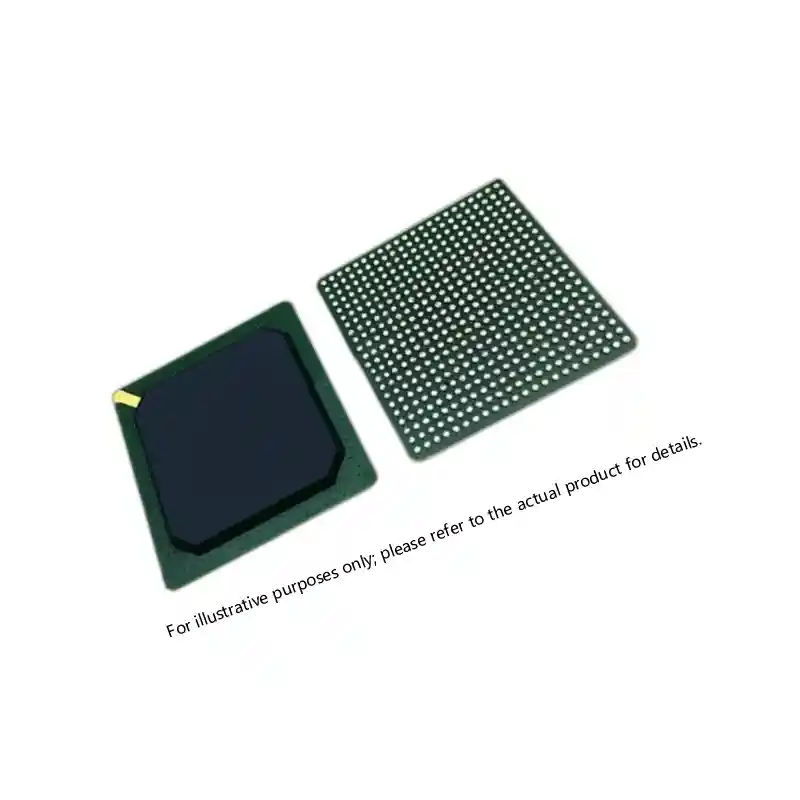
A System-in-Package integrates two or more semiconductor dies, along with passive components, into a single package that functions as a complete subsystem. Unlike a System-on-Chip (SoC), which combines different functional blocks on one silicon die, SiP uses separate dies interconnected by wire bonds, flip-chip bumps, or through-silicon vias within a shared substrate. This allows mixing process technologies: a GaAs RF front-end can sit beside a silicon CMOS digital processor, with high-density capacitors embedded in the interposer. For military systems, this heterogeneous integration directly addresses the physical constraints that discrete board-level assemblies cannot solve.
In practice, we see SiP applied where miniaturization demands exceed what a multi-chip module (MCM) or a single-die ASIC can deliver. A tactical radio that once required a 10-layer board with separate amplifiers, filters, and ADCs can now use a single SiP module measuring less than 15mm on a side. The same approach appears in fuzing electronics, where an SiP combines the sensor interface, safety arm logic, and fire signal conditioning into a hermetically sealed package rated for extreme shock and temperature cycling.
Key Benefits for SWaP-C and Mission Reliability
SiP technology attacks weight and volume at the system level, not just the component level. Eliminating individual packages and interconnecting traces reduces the total occupied board area and removes multiple layers of parasitic inductance and capacitance. For a man-portable electronic warfare system operating on battery power, that translates to lower power consumption and longer mission duration. The integration density also shortens signal paths, which becomes critical for high-speed digital interconnects above 1 GHz where PCB trace length alone can limit timing margin.
The reliability argument is equally strong. Fewer solder joints mean fewer failure points during vibration and thermal cycling. A single SiP can replace a dozen discrete components, each having its own failure-in-time (FIT) rate, and the internal interconnects are encapsulated in a molded or hermetic enclosure. We have seen programs where a SiP-based RF front-end eliminated alignment-sensitive strip-line transitions that were a recurring yield issue in the earlier board-level design. When the module is qualified to MIL-STD-883 methods for thermal shock, mechanical shock, and constant acceleration, the resulting reliability is a known quantity rather than a sum of statistical estimates.
Design and Integration Challenges with Military SiP
Adopting SiP is not a simple bill-of-materials substitution. The design process requires early collaboration between the OEM, the packaging house, and the component distributor because die-level availability, bonding pad layout, and thermal dissipation must be locked down months before assembly. Thermal management is the single largest technical risk. Concentrating multiple heat sources inside a compact package drives junction temperatures higher, and the thermal resistance path to the case becomes the limiting factor. For wide-temperature military requirements (-55°C to +125°C ambient), detailed thermal simulation and material selection for thermal interface compounds are mandatory.
Another hard lesson from actual programs involves known good die (KGD). Unlike packaged components that can be fully tested at final electrical sort, a bare die purchased from a wafer supplier carries only partial probe test data. Ensuring that every die in the SiP meets device specification before integration demands a rigorous KGD program, which adds cost and lead time. We have supported customers where a SiP supplier discovered that the GaN power amplifier die from a third party failed at 50% of the rated output power when tested in the final module configuration. The re-qualification cycle delayed the program by seven months. That kind of risk is why source selection for the die and the assembly house is not a procurement afterthought.
Sourcing Military SiP Components: What Procurement Teams Need to Know
Sourcing SiP modules for a defense program is fundamentally different from procuring standard QML-listed ICs. A SiP is a custom or semi-custom assembly, so there is no single MIL-PRF-38535 slash sheet that covers the complete module. Instead, the module may be qualified to MIL-PRF-38534, which governs hybrid microcircuits, or to a customer-specific source control drawing (SCD) with a tailored qualification plan. The procurement team must verify that the assembly house holds the appropriate MIL-PRF-38534 certification for the class of hybrid (Class H or Class K) and that the die suppliers are from a trusted source, per DFARS requirements if the program falls under U.S. defense contracts.
Traceability becomes paramount. A SiP module may contain five to ten different die types, each with its own lot history and wafer traceability. Documenting that chain of custody from wafer fabrication through assembly, test, and final screening requires a level of record-keeping that many commercial packaging houses are not equipped to provide. We require full lot traceability on every SiP module we source for defense customers, including die lot numbers, wire bond pull test results, and hermetic seal fine-and-gross leak reports.
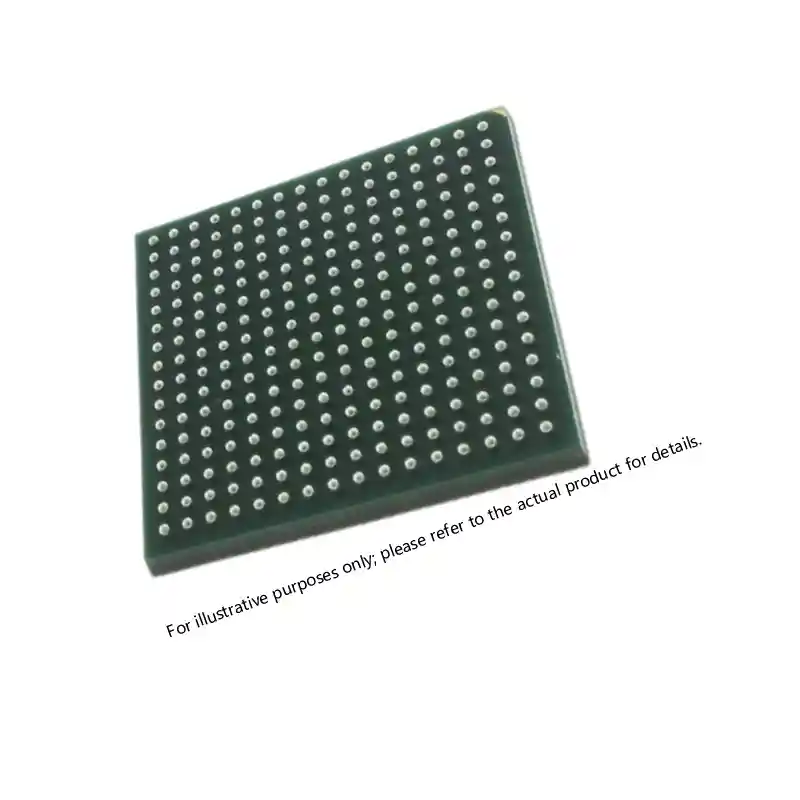
Lead times are another area where SiP diverges sharply from discrete procurement. A standard Xilinx QML FPGA might carry a 20-week lead time. A custom SiP using that same FPGA as one of its dice can stretch to 30 weeks or longer, depending on substrate fabrication and assembly capacity. Program managers who are accustomed to ordering components six months before board build may need to extend their planning horizon to nine months, accounting for die procurement, KGD testing, substrate lead time, assembly, and environmental screening. Holding strategic inventory of critical SiP modules becomes an option worth evaluating, particularly for programs with production commitments beyond five years.
If your program is transitioning a multi-board subsystem into a SiP form factor, the sourcing decisions made during the initial design phase will determine lead time and compliance posture for the life of the contract. We support defense teams in selecting packaging partners, qualifying die sources, and establishing a documented supply pipeline that meets MIL-PRF-38534 and DFARS expectations. Contact Sparkle Electronics at xuansc2144@gmail.com with your SiP performance specifications and target production volume. We will provide a detailed sourcing plan including recommended assembly houses, component traceability strategies, and a lead time projection aligned with your integration schedule.
Common Questions About SiP in Defense Programs
What is the difference between SiP and an MCM in military applications?
An MCM typically uses a common substrate with multiple bare dice bonded and connected, whereas SiP can include stacked dice, embedded passive components, and three-dimensional interconnects like through-silicon vias. SiP allows greater functional density and mixed process integration, making it suitable for combining an RF die with a digital baseband processor and memory in one package. MCMs are simpler and often used for applications like combining multiple memory dice or discrete logic functions, where the packaging complexity of SiP is not necessary.
Are SiP modules more expensive than a bill of materials using discrete parts?
At the component level, the SiP unit cost is usually higher than the sum of the individual unpackaged dice because of the extra assembly, testing, and qualification steps. However, at the system level, the total cost of ownership often favors SiP. Eliminating board layers, reducing assembly labor, shrinking enclosure size, and improving first-pass yield through pre-tested modules can offset the initial component price difference. The key is to run a full system cost analysis, not a per-part comparison. We have seen radar programs where the SiP approach reduced the RF front-end board cost by 18% after accounting for assembly rework and test escapes.
How is MIL-SPEC compliance verified for a SiP device that has no standard slash sheet?
When no QML slash sheet exists, compliance is demonstrated through a qualification test plan approved by the procuring activity and typically referenced in the source control drawing. The plan specifies test methods from MIL-STD-883 (e.g., Method 1010 for thermal shock, Method 2001 for constant acceleration) or MIL-STD-202 for passive elements. The assembly house must provide a qualification report that includes lot samples, test data, and failure analysis for any rejects. We always verify that the qualification report is current and that the assembly line is under certified QMS per MIL-PRF-38534 before releasing any SiP modules to a customer.
What lead times should I plan for when specifying a custom military SiP?
A first-article military SiP, including design, die procurement, KGD testing, substrate fabrication, assembly, and full environmental qualification, can take 36 to 40 weeks. Repeat orders with an established bill of materials and qualified assembly process typically run 24 to 30 weeks. These are longer than standard lead times for discrete QML components, so the SiP procurement timeline must be factored into the program master schedule from day one. Programs that hold a modest strategic stock of qualified SiP modules can avoid schedule risk during production surges. Share your expected annual usage rate and we will propose an inventory model that aligns with your delivery milestones.
If you’re interested, check out these related articles:
Virtex-7 690T FPGA: Performance, Packaging, and Reliability Insights
XCKU115 UltraScale FPGA: Powering Critical Defense Systems
XC7VX485T Virtex-7 FPGA: Performance and Sourcing for Defense
Virtex-7 690T FPGA: Performance for Mission-Critical Systems
A1020B-PG84B ACT2 FPGA: Specs, Sourcing, and Availability