XC5VFX100T-1FFG1136I: Virtex-5 FXT Specs and Sourcing Guide
Table of Contents
- Reading the XC5VFX100T-1FFG1136I part number in order
- What the Virtex-5 FXT platform contributes to a defense design
- The industrial grade suffix and the military grade question
- Screening and traceability evidence to require before acceptance
- What to put in an RFQ for the XC5VFX100T-1FFG1136I
- Keeping a Virtex-5 FXT design supplied through end of life
- Last-time buy, die bank, or bridge buy
- When a refresh costs less than another buy
- Companion parts on the same BOM
- Send the ordering code, not the family name
- FAQ
- Is the XC5VFX100T-1FFG1136I a military-grade part?
- Can an industrial-grade Virtex-5 FXT be upscreened for a defense program?
- How long will the XC5VFX100T-1FFG1136I remain available?
- What documents should accompany a shipment of this device?
- Can a different speed grade or package be substituted?
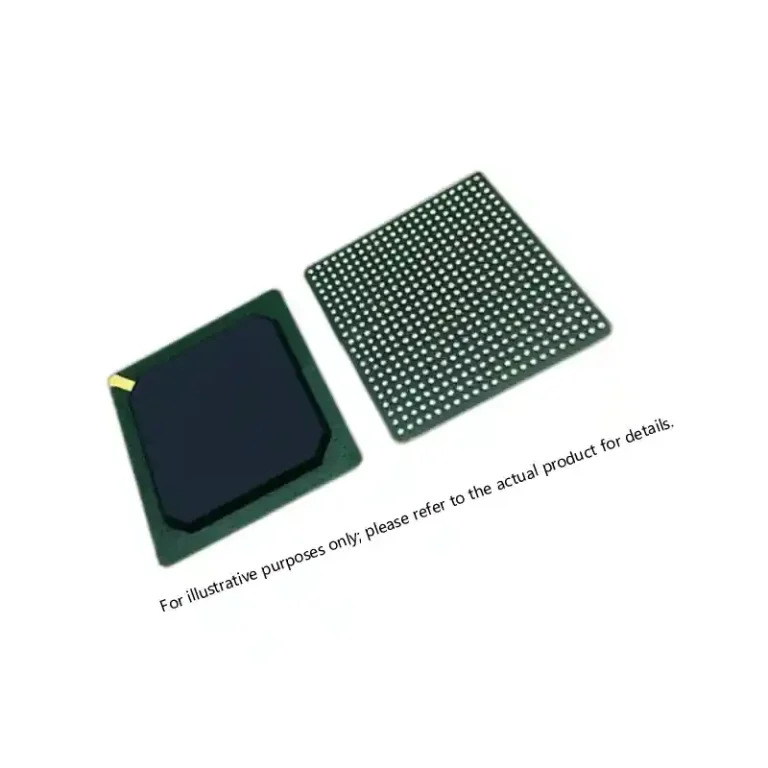
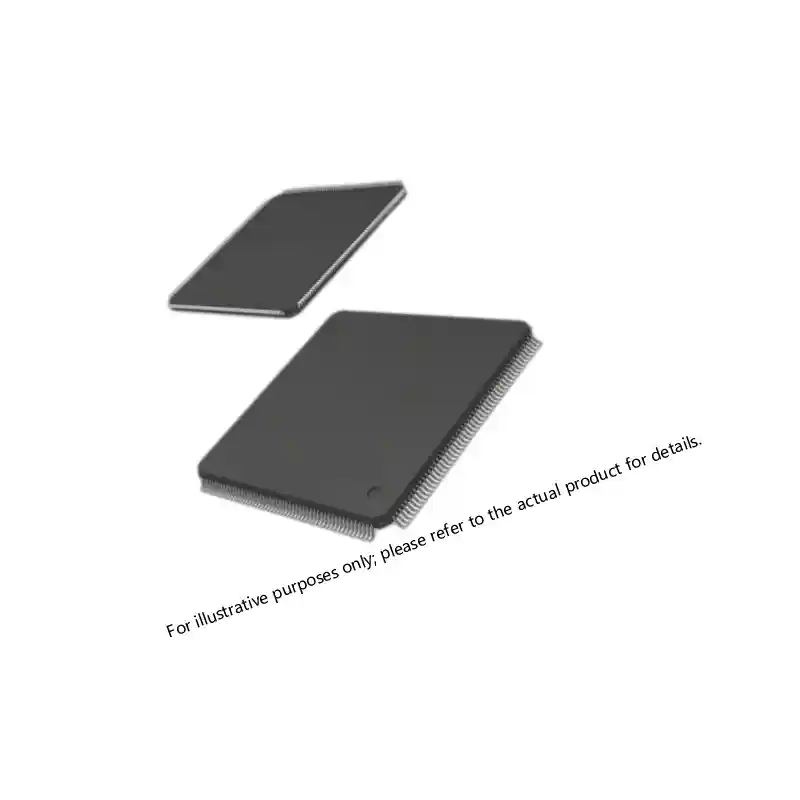
The XC5VFX100T-1FFG1136I is a Virtex-5 FXT FPGA in a 1136-ball flip-chip BGA, and its ordering code carries more information than most buyers extract from it. Device family, density class, speed grade, package and temperature grade are all fixed inside that string. What the string cannot tell you is whether the device suits a defense program. That depends on three things it does not encode: whether an industrial temperature grade matches the environment the board will actually see, whether the traceability and screening records behind a specific lot support the acceptance the program requires, and whether a 65 nm FPGA still has a supply path for the life of the platform. The part number is the start of that decision, not the decision.
Reading the XC5VFX100T-1FFG1136I part number in order
Each field answers a question that will be asked later, usually by someone who is not holding the device.
| Field | Meaning | What it does not establish |
|---|---|---|
| XC5VFX100T | Virtex-5 FXT family device in the 100T density class | The screening level or quality conformance of the delivered lot |
| -1 | A lower speed grade option within the family | That a design closed at another grade transfers without re-timing |
| FFG | Flip-chip fine-pitch ball grid array with a lead-free ball finish | That the package is hermetic ceramic |
| 1136 | A 1136-ball count | Your board land pattern, which follows the package drawing rather than the code |
| I | Industrial temperature grade | Any military, QML or defense-grade qualification |
The combination is the identity. Change one field and you have a different orderable item, with different qualification data behind it and often a different price and lead time.
The G inside FFG marks a lead-free ball finish. A program whose assembly specification still calls for tin-lead solder has to resolve that as an assembly decision, either through a package option with a leaded finish or through an approved reballing route, rather than treating the letter as a detail that manufacturing will absorb.
Speed grade deserves the same treatment. A -1 device and a faster member of the same family are not interchangeable on an existing board. The static timing analysis was closed against the grade that was ordered, the characterization data was gathered on that grade, and any reliability evidence the program collected belongs to it. Buying a faster part is not a conservative substitution unless the design has been re-verified against it.
What the Virtex-5 FXT platform contributes to a defense design
Virtex-5 FXT is a 65 nm family that places FPGA fabric, DSP48E slices, embedded PowerPC 440 processor blocks, multi-gigabit GTX serial transceivers and Ethernet MAC blocks on one die. The practical argument for the platform is consolidation. Signal processing, control and serial interconnect that might otherwise occupy three packages sit in one, which removes board area, an extra power conversion stage and the interconnect between them. For a program working under SWaP-C pressure, that consolidation is usually the reason an FXT device was chosen instead of an LX device with comparable fabric.
The condition that flips the choice is worth stating plainly. If the design needs only interface logic, bus bridging or a small state machine, a smaller device in the same family does the same work with less power and a shorter qualification path.
The second limitation is process age. A 65 nm device is a sustainment choice more often than a clean-sheet choice. It gets selected because a board already exists, because the firmware is qualified on it, or because a form-fit-function replacement is required for an assembly that cannot be redesigned inside the program’s schedule. Those are legitimate reasons, and none of them makes the platform the right starting point for new development.
When the requirement itself has moved past the device, the program is facing a migration rather than a substitution, and the schedule for that work is usually set by the destination family rather than by the obsolescence notice that triggered it.
Compute and serial bandwidth requirements that outgrow a 65 nm device turn a sustainment problem into a migration project. <XCKU115 UltraScale FPGA: Powering Critical Defense Systems> covers how the UltraScale class is positioned for defense systems.
The industrial grade suffix and the military grade question
The I at the end of the ordering code is a temperature grade, and it is the field most often read past. Two separate mistakes follow from that. One is treating the suffix as meaningless because the program office described the environment as sheltered. The other is treating industrial grade as interchangeable with military grade because both sound like categories rather than numbers.
The manufacturer specifies the industrial grade over a junction temperature range of −40 °C to +100 °C. Military-grade devices are specified over a wider range and at a different reference point, commonly the case, so placing the two headline numbers side by side compares a junction limit against a case limit. That is a comparison of two measurement conventions, not of two parts.
Three routes are open once the grade question is put that way.
Keeping the industrial-grade device and controlling the thermal environment is the first. It is defensible when a thermal analysis covers cold start, sustained operation and worst-case dissipation, and shows the junction staying inside the industrial range across the mission profile. It is not defensible when the enclosure temperature is an assumption carried over from an earlier program.
Ordering the defense-grade derivative is the second. Defense-grade Virtex-5 devices are offered under a separate ordering prefix for selected members of the family, so the first check is whether the specific device, package and speed grade you need exists in that grade at all. That check belongs before the schedule commitment, not after it.
Upscreening industrial parts is the third. It applies tests beyond the published specification to a specific lot, and its limits are structural: it cannot change the die, it cannot create a manufacturer qualification listing, and the results describe the sampled lot rather than the family. A program whose requirements call for a qualified manufacturer flow does not reach that requirement through incoming test.
For a new design where a defense-grade equivalent exists, that route carries the least qualification risk. For sustainment of a board already released with industrial parts, a documented thermal case plus lot traceability is often the defensible path, provided the program’s own requirements allow it. The decision belongs to the program, not to the distributor’s stock position.
Screening and traceability evidence to require before acceptance
Documents that arrive with a shipment are not interchangeable, and treating them as one acceptance package is where most sourcing disputes begin.
| Record | Method context | Responsible use | Do not infer |
|---|---|---|---|
| Supplier certificate of conformance | Supplier declaration that contents match the ordered part number and quantity | Documentary identity and order matching | That the parts passed electrical or environmental testing |
| Lot and date code traceability record | Manufacturer lot tied to the delivered quantity | Screening by date code and an aging assessment | That acceptance of an earlier shipment covers this lot |
| Electrical test data at room temperature | Bench record with the test conditions stated on the report | Evidence of function under those stated conditions | Performance across the full industrial temperature range |
| Package marking photographs and lead finish report | Visual and physical inspection record | Signs of resurfacing, mixed date codes, inconsistent finish | Authenticity on its own, which rests on the traceability chain behind the marking |
The boundary matters as much as the list. A certificate of conformance is a declaration about identity; an electrical test report is evidence about behavior under stated conditions; a marking photograph is evidence that a marking exists. Each supports a different decision, and none of them authorizes the next.
Acceptance also has to distinguish four separate questions that programs tend to collapse into one: is this the part that was ordered, is the record behind it valid, does the record apply to this lot and this application, and who holds release authority. A receiving inspector can answer the first. Only the party with release authority can answer the last, and a distributor should not blur the two.
Where a record does not exist for a lot, the accurate position is that the lot is undocumented. It is not equivalent to a documented lot, and a price difference between the two is usually the market saying so.
What to put in an RFQ for the XC5VFX100T-1FFG1136I
An RFQ built on a family name invites a quote for the wrong thing. The fields below convert the request into something a supplier can answer precisely and a buyer can compare across suppliers.
| RFQ field | What to request | Failure it prevents |
|---|---|---|
| Ordering code | The complete string including speed grade, package and temperature suffix | A quote for a different grade that looks similar on the header |
| Quantity and schedule | Annual demand, peak demand and required ship dates | A partial shipment that stalls a build |
| Traceability | Manufacturer lot and date code, with the chain of custody stated | Undocumented stock presented as new surplus |
| Test data | Which measurements, at which conditions, delivered with the shipment | A certificate of conformance accepted in place of test evidence |
| Packaging | Tray or tube, moisture-barrier bag, desiccant and humidity indicator | Moisture-induced damage at reflow on a large BGA |
| Lifecycle position | Last-time-buy status, availability horizon, die or wafer bank position | A buy decision made without knowing the supply runway |
A single contrast shows the difference in practice.
Reject this RFQ line: one XC5VFX100T, industrial grade, fastest you have, ship today.
Replace it with: XC5VFX100T-1FFG1136I, quantity and required ship date stated, manufacturer lot and date code traceability required, room-temperature functional test data with conditions required, moisture-barrier packaging with humidity indicator required, lifecycle status statement required.
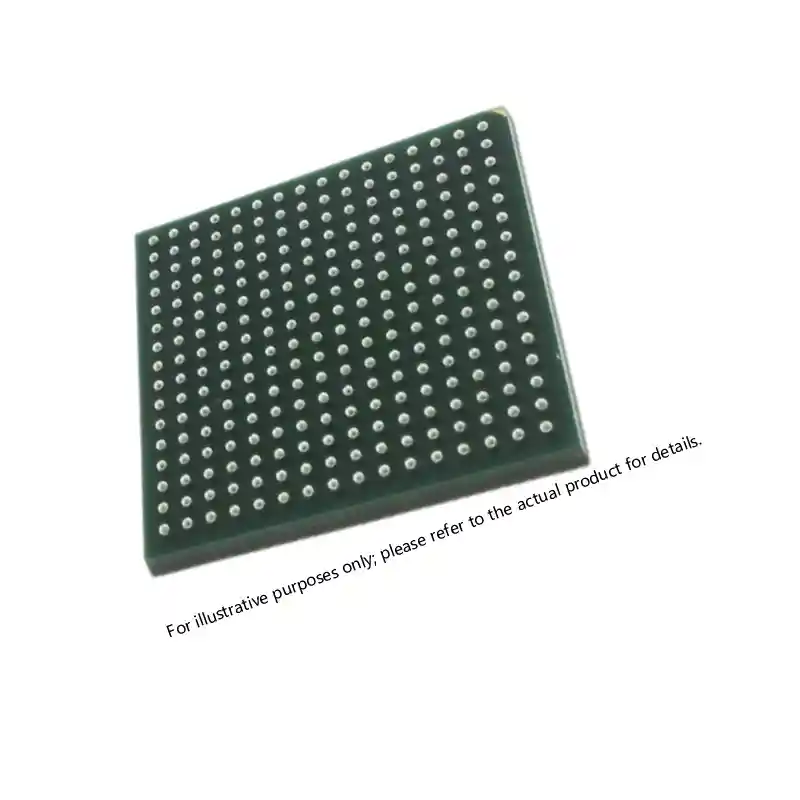
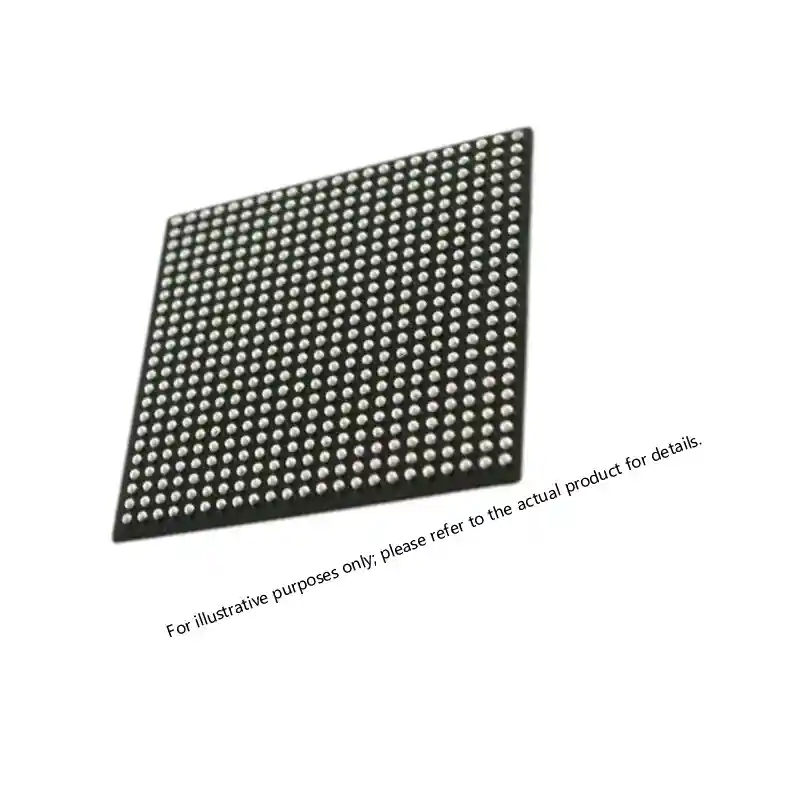
Programs rarely buy one FPGA family at a time. A BOM that carries several families often finds the smaller companion device harder to buy than the main processor, because the Virtex-5 line item dominates the purchase order while a ProASIC3 device such as the A3P1000 in the FG256 or FGG484 package is ordered in quantities too small to attract attention on its own.
Keeping a Virtex-5 FXT design supplied through end of life
Lifecycle status is set per ordering code, not per family. Two devices that share a datasheet can sit at different stages, and the notice that covers one package or temperature grade may not cover the one your BOM calls out. The check is the manufacturer’s lifecycle notice for the exact code, repeated on a schedule rather than once at design release.
Last-time buy, die bank, or bridge buy
A last-time buy covers remaining production plus spares, and its size depends on forecast accuracy rather than on the size of the last order. Storage is part of the decision: dry-pack handling, humidity control, an ESD control program and temperature stability determine whether the parts bought today are still usable when the line calls for them years later. Inventory that degrades in storage is not a supply plan.
A die or wafer bank preserves the silicon without packaged inventory. It removes the wafer fabrication risk but not the assembly, test and qualification work, and those steps carry their own lead time when the bank is finally drawn down.
When a refresh costs less than another buy
A refresh is cheaper than another buy under specific conditions: the board is being respun for another reason, the firmware ports without a rewrite, the power and thermal budget has headroom for a newer device, and the qualification budget exists for a new part. Where the qualified board is stable and the fleet is small, a documented last-time buy against a known requirement is often the lower-risk spend.
A technology refresh is a board-level project rather than a part swap, and the destination family sets much of the schedule. <Virtex-7 690T FPGA: Performance, Packaging, and Reliability Insights> covers performance, packaging, and reliability considerations for the Virtex-7 690T.
Companion parts on the same BOM
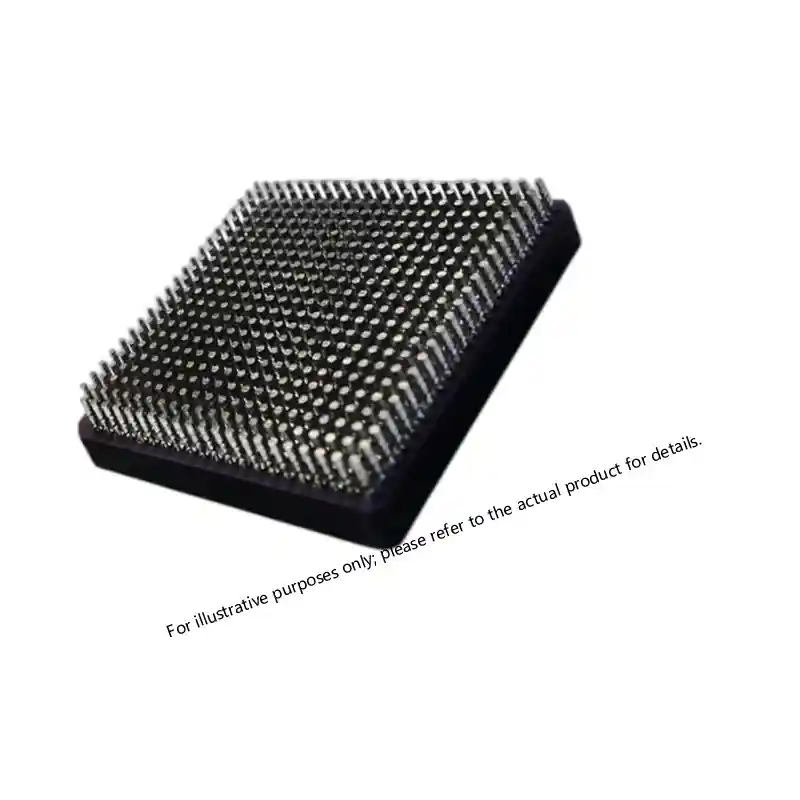
The main FPGA is rarely the item that stops a build. Companion devices age on their own schedule, and a legacy ACT2 or Axcelerator part that was designed in alongside the Virtex-5 can become the harder item to source, particularly when the required quantity is small and the package is unusual.
Treating those devices as an afterthought is what turns a single-line shortage into a program delay. The sourcing plan should cover every long-lived programmable part on the board, not only the one with the largest unit price.
Companion devices age on a different schedule from the main FPGA, and a low-volume legacy part can become the binding constraint on a build. <A1020B-PG84B ACT2 FPGA: Specs, Sourcing, and Availability> covers specifications, sourcing, and availability for the A1020B-PG84B.
The same logic applies to the smallest programmable parts on the board. A ProASIC+ device in a CQ208 package may represent a fraction of the BOM value and still hold up an assembly for months if it is treated as a catalogue item rather than a lifecycle item.
Send the ordering code, not the family name
A quote is only useful if it describes the part you can actually build with. Send the complete ordering code, the quantity and required ship date, the traceability and test-data requirements your program applies, the packaging and moisture-handling specification, and the lifecycle horizon you are planning against. Those six items are enough to turn a price check into a supply decision.
Sparkle Electronics Co., Limited supports defense contractors and systems integrators with hi-rel component sourcing, lot traceability documentation and lifecycle planning for long-running programs. Send the requirement to xuansc2144@gmail.com and include the ordering code in the subject line so it routes to the right desk.
A quote confirms price, availability and the documented condition of the stock being offered for the code you specified. It does not substitute for your program’s own acceptance authority, and it should not be presented as if it does.
FAQ
Is the XC5VFX100T-1FFG1136I a military-grade part?
No. The I suffix identifies an industrial temperature grade, specified over a junction range of −40 °C to +100 °C. Military-grade Virtex-5 devices are ordered under a separate prefix and specified over a wider range at a different reference point. If your program requires a defense-grade flow, confirm whether the exact device, package and speed grade you need exists in that grade before you commit a schedule to it.
Can an industrial-grade Virtex-5 FXT be upscreened for a defense program?
Upscreening applies additional tests to a specific lot, and its reach is limited to that lot. It does not change the die, does not create a manufacturer qualification listing, and does not extend the specified temperature range. It can support a program that has already accepted an industrial-grade design and needs lot-level evidence. It cannot replace a qualified manufacturer flow where the program’s requirements call for one.
How long will the XC5VFX100T-1FFG1136I remain available?
Lifecycle status is set per ordering code, so the answer for the family is not the answer for this part. Check the manufacturer’s lifecycle notice for the exact code, and repeat the check on a schedule. The practical planning inputs are the last-time-buy position, the availability horizon quoted by your source, and whether a die or wafer bank exists for the device.
What documents should accompany a shipment of this device?
At minimum, a certificate of conformance matching the ordered code and quantity, a lot and date code traceability record, and any test data your purchase order specified, with the test conditions stated on the report. Moisture-barrier packaging with a humidity indicator belongs in the same shipment for a package of this size. Each document supports a different acceptance question, so the purchase order should say which one your program relies on.
Can a different speed grade or package be substituted?
Only with engineering approval, and usually only after re-verification. A different speed grade changes the timing basis the design was closed against, and a different package changes the land pattern, the thermal path and possibly the assembly process. Both are new orderable items with their own qualification evidence, so a substitution request should be routed through the design authority rather than handled as a purchasing decision.
If you’re interested, check out these related articles:
A1020B-PG84B ACT2 FPGA: Specs, Sourcing, and Availability
Virtex-7 XC7VX690T: Performance and Reliability Insights
Virtex-7 690T FPGA: Performance for Mission-Critical Systems