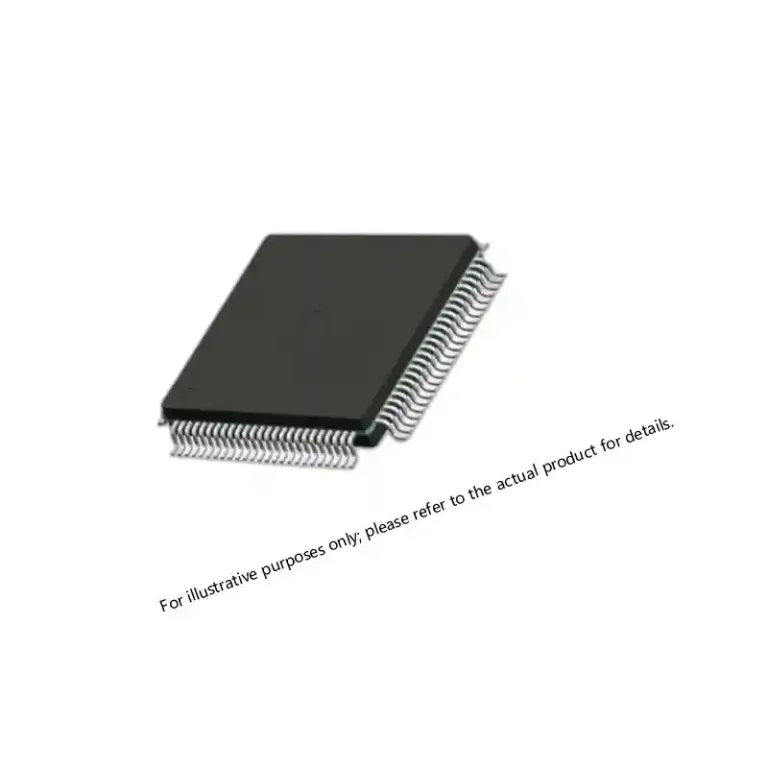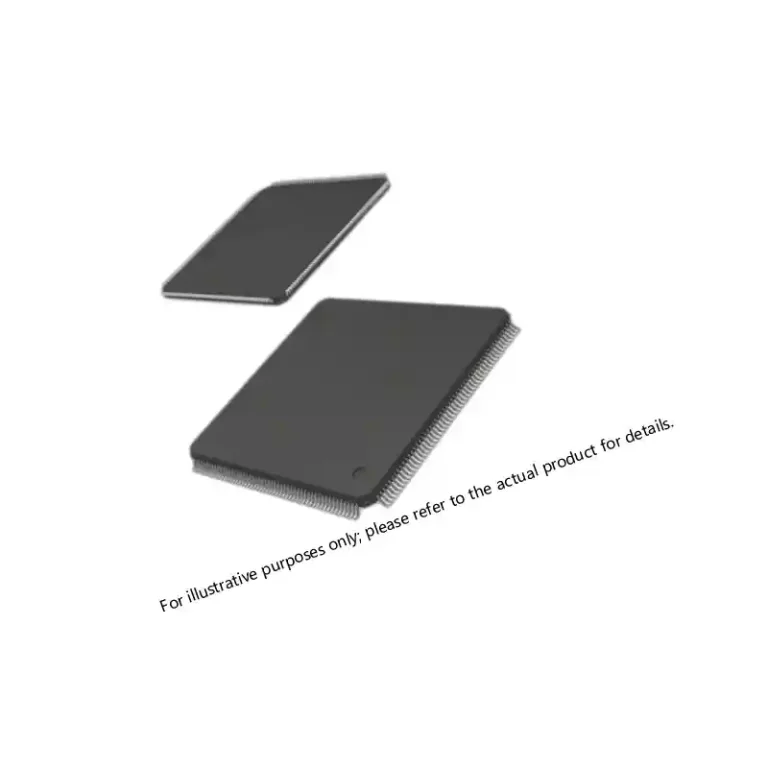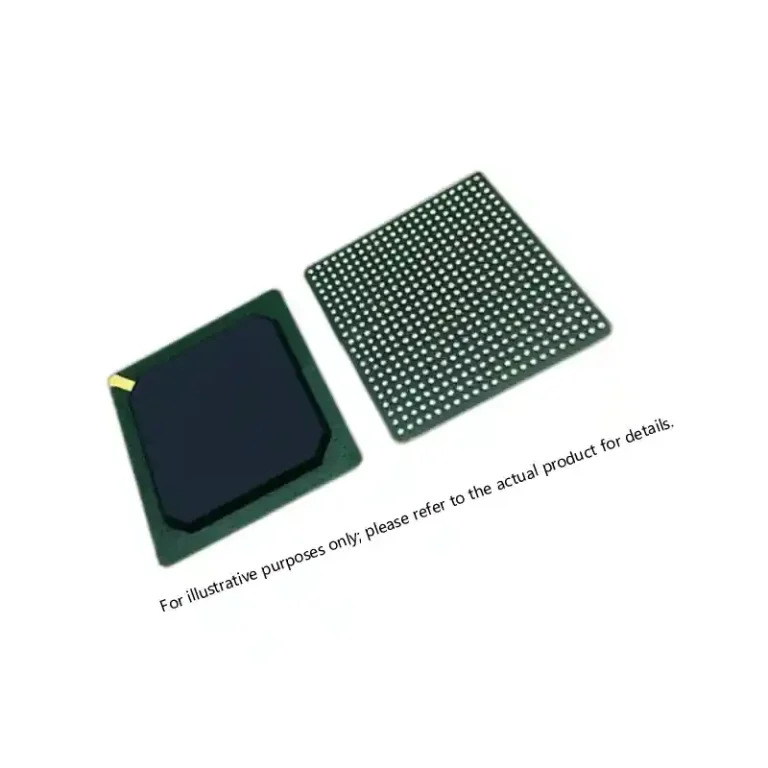

XC5VFX130T-1FFG1738I: Virtex-5 FXT Specs and Sourcing
Table of Contents
- What the XC5VFX130T-1FFG1738I Actually Specifies
- Reading the Speed Grade and Temperature Suffix
- Where the FXT Architecture Fits in Defense Processing
- Embedded control and datapath partitioning
- Serial I/O and legacy platform integration
- When a newer FPGA becomes the better choice
- Performance, Power, and Thermal Boundaries Buyers Should Confirm
- Sourcing Risks for a Legacy Virtex-5 FXT
- Inspection and Traceability Checks Before Acceptance
- Documentation set
- Physical and marking checks
- Electrical verification and screening limits
- Long-Term Supply and Technology Refresh Planning
- Request a Documented Quote for the XC5VFX130T-1FFG1738I
- FAQ
- Is the XC5VFX130T-1FFG1738I still available?
- Does the I suffix mean the part is MIL-SPEC screened?
- Can a -2 or -3 speed grade replace a -1 device?
- What documents should accompany a quote?
- References
XC5VFX130T-1FFG1738I is a Virtex-5 FXT class FPGA in a 1,738-ball flip-chip package, and the procurement risk usually sits in the suffix rather than the family name. The speed grade, package, temperature code, and lot traceability determine whether the part fits the design and whether the documentation supports release. Treat the ordered part number as a specification to be re-verified, not a stock code to be matched. A device built for a -1 timing target can be the correct choice for a legacy program, but it should not replace a -2 or -3 design without a fresh timing analysis. The same discipline applies to the industrial temperature grade and to any screening or lot records the program requires.
What the XC5VFX130T-1FFG1738I Actually Specifies
The catalog description for this device is compact: Virtex-5 FXT 130T, -1 speed, FFG1738 package. Each element answers a different procurement question, and none of them is a substitute for the others. The FXT variant combines FPGA logic with embedded PowerPC 440 processor blocks and GTX transceivers, a combination intended for embedded processing and serial I/O consolidation [1].
The 130T designation is a density class, not a usable gate count. A design that needs a specific mix of logic, DSP slices, block RAM, embedded processors, and transceivers must be mapped against the family resource table before a buyer treats one 130T order as equivalent to another. Two boards can carry the same family name and still require different resource checks.
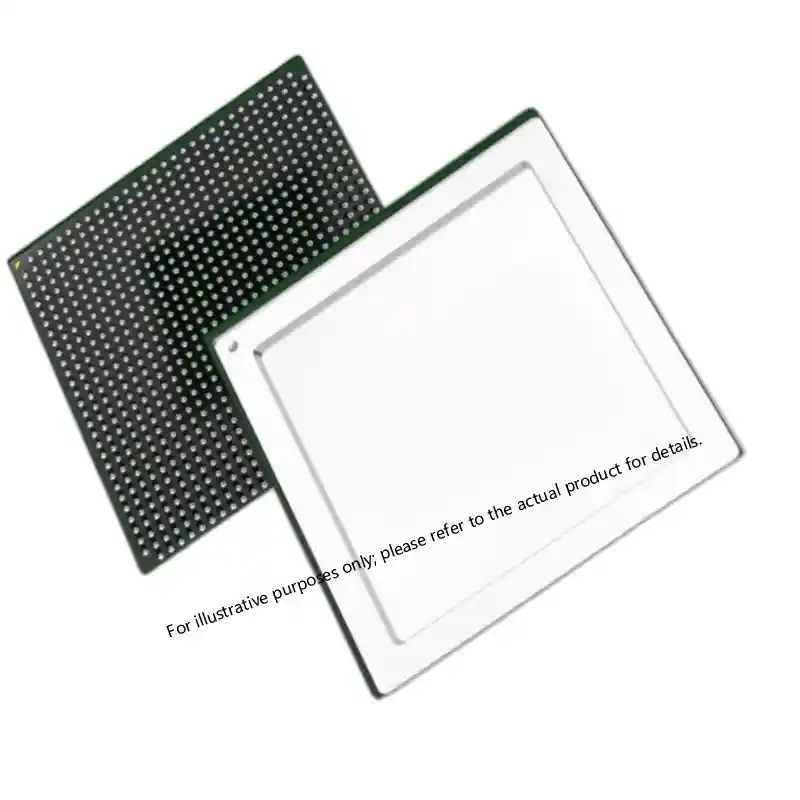
FFG1738 identifies a 1,738-ball flip-chip BGA. The G in the package code denotes a lead-free finish. Board assembly, land pattern, reflow profile, and inspection capability must be confirmed before the part reaches the line. A package that is electrically correct can still fail assembly if the board shop has not qualified the ball pitch, stencil, and reflow window.
| Part number field | Meaning | What to verify before purchase |
|---|---|---|
| XC5VFX130T | Virtex-5 FXT, 130T density class | Required logic, DSP, block RAM, PowerPC, and GTX resources |
| -1 | Speed grade 1 | Timing closure at the purchased grade |
| FFG1738 | 1,738-ball flip-chip BGA | Package outline, land pattern, and assembly capability |
| I | Industrial temperature grade | Junction temperature range and platform thermal margin |
| FXT | Embedded PowerPC 440 and GTX transceiver variant | Control architecture, software support, and serial protocol requirements |
| G in FFG | Lead-free finish | Reflow profile and finish compatibility |
Package identity checks repeat across FPGA families, especially when a BOM carries several mature devices.
Reading the Speed Grade and Temperature Suffix
The -1 suffix is a speed grade, not a generic performance rating. A design that closed timing at -1 can use the part. A design released against -2 or -3 should be retimed before a -1 device is accepted as a substitute. The check is a static timing analysis at the purchased grade, using the actual speed file and operating conditions. A quote that lists only the family name leaves that check unresolved.
The industrial code is also narrower than many buyers assume. Industrial grade identifies a temperature range for the device. It does not establish MIL-STD-883 screening, MIL-PRF-38535 qualification, or a radiation rating. Those are separate requirements, and each needs its own evidence. The datasheet is the reference for junction temperature limits and DC characteristics [2].
At procurement, ask for the exact orderable part number on the label, not a family name. A quote for XC5VFX130T is not a quote for XC5VFX130T-1FFG1738I. The package and grade change the form, fit, and documentation, and they can change the price for reasons that have nothing to do with logic capacity.
Temperature and package checks repeat across FPGA families in the same BOM, particularly when mature and newer devices share a board.
Where the FXT Architecture Fits in Defense Processing
FXT architecture matters when the board uses the embedded processor for control and the FPGA fabric for deterministic datapath work. The value is not the label alone. It is the partition between software, hard processor blocks, programmable logic, and high-speed serial links. A buyer should confirm that the program can support all four.
Embedded control and datapath partitioning
PowerPC 440 blocks can run control, housekeeping, and protocol tasks while the fabric handles filtering, beamforming, or packet processing. The split can reduce the need for an external processor, but it also concentrates configuration, boot, and software validation in one device. The program needs the toolchain, IP, and software support for the embedded processor, not only the logic capacity.
Serial I/O and legacy platform integration
GTX transceivers support high-speed serial links and can replace parallel buses in legacy upgrades. The relevant check is not the transceiver count alone. Line rate, reference clock, protocol IP, equalization, and connector loss all affect whether the link closes. A part that is electrically correct can still fail integration if the board was designed around a different transceiver variant.
When a newer FPGA becomes the better choice
Virtex-5 FXT remains relevant where the existing board, software, and qualification base are already built around it. For new designs with long production lives, a newer family may offer better long-term availability, lower power per function, and updated transceiver support. The decision should compare redesign cost, requalification effort, and supply risk, not just unit price.
Programs that need more DSP throughput or a later transceiver architecture often evaluate the Virtex-7 class before committing to a redesign. <Virtex-7 690T FPGA: Performance for Mission-Critical Systems> covers performance positioning for the Virtex-7 690T.
The same architecture review applies across related FPGA families used on legacy and upgraded boards.
Performance, Power, and Thermal Boundaries Buyers Should Confirm
Performance claims for this part should be tied to the design, not to a generic benchmark. The -1 speed grade, the FXT resource mix, and the thermal environment set the real operating envelope. A buyer who receives a “high performance” statement without the supporting conditions has received a description, not an acceptance basis.
A power estimate that assumes typical conditions can understate supply current at high toggle rates. The buyer should ask for the design power budget, airflow assumption, and heat-sink plan, then compare them with the device junction temperature limit [2]. If the program cannot supply those inputs, the honest position is that thermal margin is unconfirmed, not that the part is suitable.
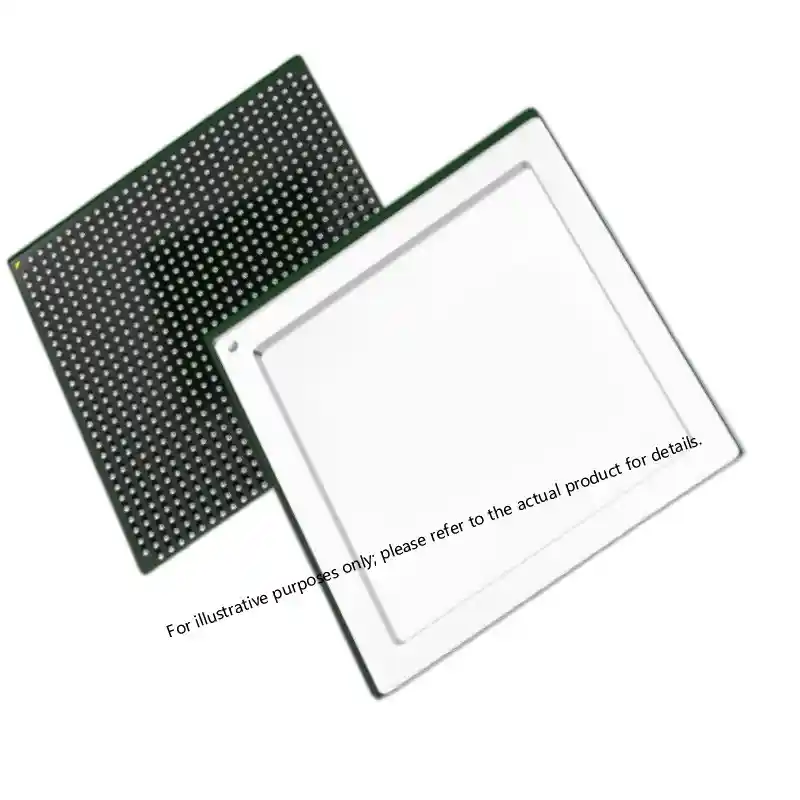
Package assembly is a separate gate. The 1,738-ball FFG1738 body requires a board shop with fine-pitch BGA experience, X-ray inspection, and a reflow profile qualified for the lead-free finish. A supplier quote does not prove the assembly process can handle the package.
| Selection check | Why it changes the decision | Evidence to request |
|---|---|---|
| Timing margin at -1 | A design closed at a faster grade may not meet timing at -1 | Static timing report for the purchased grade |
| Thermal design | Industrial grade still has a finite junction range | Power estimate, airflow study, and heat-sink plan |
| GTX line rate and protocol | Transceiver support depends on clocking and protocol IP | Reference clock, line rate, and protocol assumptions |
| Power rail sequencing | FXT rails require a defined power-up order | Board sequence and supply margin review |
| Configuration memory | Virtex-5 needs a compatible configuration path | Configuration device and bitstream version |
| Package assembly | The 1,738-ball body stresses process control | Assembly qualification and reflow profile |
Sourcing Risks for a Legacy Virtex-5 FXT
Virtex-5 is a mature family. Supply increasingly comes from authorized stock, excess inventory, and aftermarket positions rather than from a current production pipeline. That does not make every aftermarket part suspect, but it changes the evidence a buyer should require.
Start with the source path. An authorized distributor quote carries the manufacturer lot identity and a known handling chain. An independent distributor should be evaluated against AS6081 for counterfeit avoidance and AS9120 for distributor quality management [3][4]. The evaluation should cover incoming inspection, traceability, segregation, and corrective action, not only the price line.
Common failure modes in mature FPGA sourcing include mixed date codes presented as one lot, re-marked packages, parts pulled from boards, moisture-sensitive packaging that was opened and resealed, and documentation that names a test method without the actual record. Each failure mode has a different check. A photo can reveal a package, but it does not prove die provenance.
Legacy FPGA sourcing often shifts from catalog stock to targeted searches across older program inventories. <A1020B-PG84B ACT2 FPGA: Specs, Sourcing, and Availability> covers sourcing and availability for the A1020B-PG84B.
Last-time-buy and bridge-stock decisions should be based on program demand, storage conditions, and the cost of redesign. A large buy without a storage and revalidation plan can convert a supply problem into a shelf-life problem.
Inspection and Traceability Checks Before Acceptance
Incoming inspection should separate identity, documentation, and electrical acceptance. A single check rarely establishes all three. The release decision should name which gate has been met and which gate remains open.
Documentation set
Request the certificate of conformance, lot traceability, date code, packaging records, and any screening or test reports that the purchase order requires. The documents should identify the exact part number, quantity, lot, and test method. A certificate that names only the family is not enough for a controlled program.
Physical and marking checks
Examine the package, markings, solder balls, and moisture indicator. Look for inconsistent fonts, sanding, previous solder, mixed finishes, and date codes that do not match the paperwork. XRF and X-ray can add information about finish and internal structure, but they do not replace electrical test.
Electrical verification and screening limits
Bench test and screening should be scoped to the program risk. A functional test at room temperature does not cover timing margin over temperature. A screening record shows that specified tests were performed. It does not by itself prove the device meets the design timing, thermal, or reliability requirements.
| Evidence | What it can establish | What it cannot establish |
|---|---|---|
| Manufacturer datasheet | Published family, package, and grade limits | Specific lot performance or authenticity |
| Certificate of conformance | Supplier declared process and inspection | Independent verification of every attribute |
| Marking and package photo | Visible identity and condition at receipt | Die provenance or full electrical compliance |
| XRF or X-ray | Finish and internal structure indicators | Complete functionality across temperature |
| Bench functional test | Operation under the tested conditions | Coverage of all corners and long-term reliability |
| Screening record | Tests performed to a stated method | Suitability for the program without design review |
Release should be a documented decision: identity accepted, documentation accepted, electrical acceptance accepted, and any deviations approved by the responsible authority. If one gate is missing, the part can be stored but not released.
Long-Term Supply and Technology Refresh Planning
Long-term supply planning for the XC5VFX130T-1FFG1738I should start with the remaining production life of the platform, not with a generic forecast. Build a demand profile by year, identify the last design change that would require requalification, and set a bridge-stock level that covers the redesign and qualification window.
Technology refresh should compare three options: continue with the current part, qualify a later Virtex family, or move to a newer architecture. The comparison should include toolchain migration, IP reuse, board changes, power delivery, thermal design, and qualification testing. A lower unit price for a newer part does not offset a full requalification if the program cannot fund it.
Any long-term buy should include a storage plan. Moisture-sensitive BGAs need sealed packaging, desiccant, humidity indicator cards, and controlled reflow preparation. Inventory that is not stored to the package requirements may not be usable when the program needs it.
Technology refresh usually compares the installed part with a newer process node and transceiver architecture. <XCKU085 UltraScale FPGA: Performance for Critical Systems> covers UltraScale performance for critical systems.
No single supply strategy removes obsolescence risk. A combination of authorized stock, last-time buy, and a funded redesign path is usually more defensible than relying on one aftermarket source.
Request a Documented Quote for the XC5VFX130T-1FFG1738I
Send the exact orderable part number, quantity, required date code or lot, temperature grade, screening requirement, and destination. Include the certificate of conformance and traceability documents your program requires, and state whether the parts are for production, repair, or evaluation. Sparkle Electronics can review the request against available stock and documentation. Email xuansc2144@gmail.com with those fields and the program acceptance criteria. A complete request shortens the quote and reduces the chance of a part-number mismatch.
FAQ
Is the XC5VFX130T-1FFG1738I still available?
Availability varies by source and date code. Authorized stock, excess inventory, and aftermarket positions can all appear under the same part number, but they carry different documentation. Ask for the exact orderable part number, lot or date code, and traceability records before comparing price. A quote without source and lot detail is not a firm supply commitment.
Does the I suffix mean the part is MIL-SPEC screened?
No. The I suffix identifies an industrial temperature grade. MIL-STD-883 screening, MIL-PRF-38535 qualification, and radiation assurance are separate requirements. A part can be industrial grade and still lack the screening records a defense program requires. Confirm the screening method, test frequency, and documentation on the purchase order.
Can a -2 or -3 speed grade replace a -1 device?
A faster grade may work, but it is not an automatic drop-in. The board, timing constraints, and power model must be checked against the installed grade. A -1 design should not be assumed to accept a -2 or -3 part without rerunning static timing and validating the configuration. Treat any speed-grade change as a design change.
What documents should accompany a quote?
Ask for the exact part number, quantity available, date code or lot, source path, certificate of conformance, and any screening or test reports. For independent supply, include AS6081 and AS9120 evidence where applicable. The documents should match the parts, not just the family name. Missing documents should be treated as an open item, not a minor administrative detail.
References
[1] Xilinx, “Virtex-5 Family Overview,” DS100, 2015. [Online]. Available: https://docs.amd.com/v/u/en-US/ds100
[2] Xilinx, “Virtex-5 FPGA Data Sheet: DC and Switching Characteristics,” DS202, 2017. [Online]. Available: https://docs.amd.com/v/u/en-US/ds202
[3] SAE International, “AS6081: Fraudulent/Counterfeit Electronic Parts: Avoidance, Detection, Mitigation, and Disposition – Distributors,” 2012.
[4] SAE International, “AS9120B: Quality Management Systems – Aerospace – Requirements for Distributors,” 2016.
If you’re interested, check out these related articles:
Virtex-7 XC7VX690T: Performance, Reliability, and Integration
Virtex-7 690T FPGA: Performance, Packaging, and Reliability Insights
XC7VX485T Virtex-7 FPGA: Performance and Sourcing for Defense