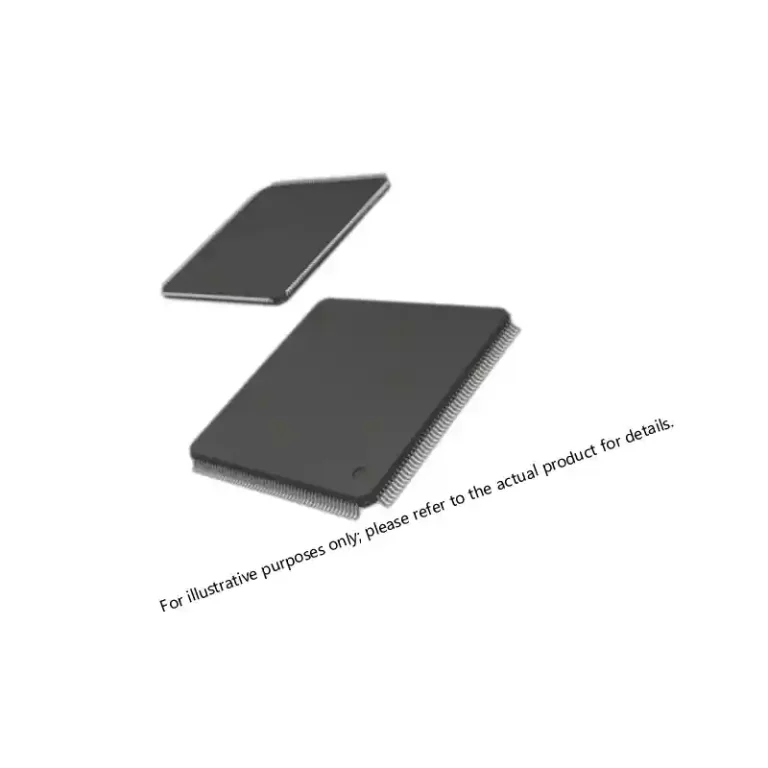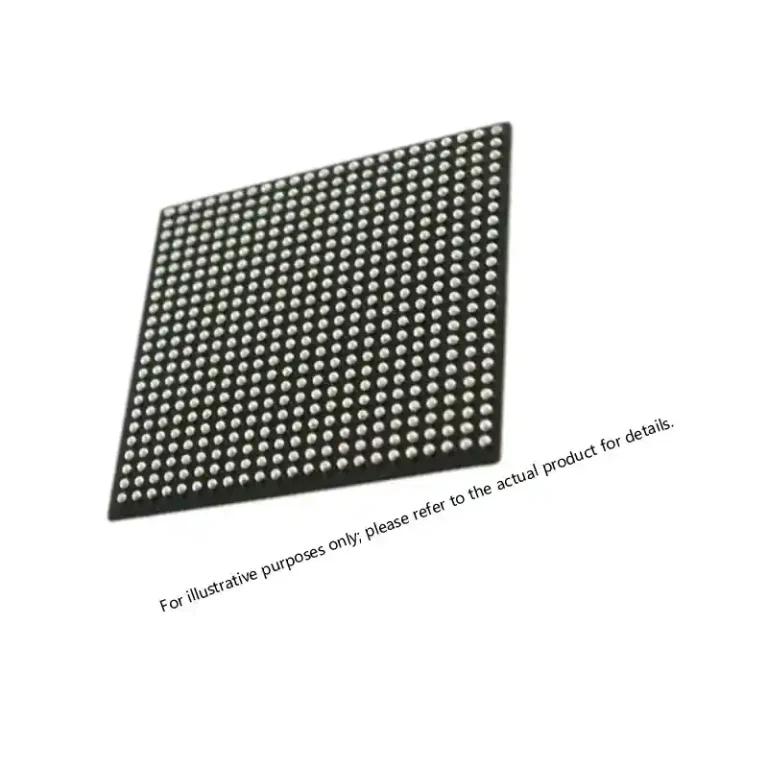
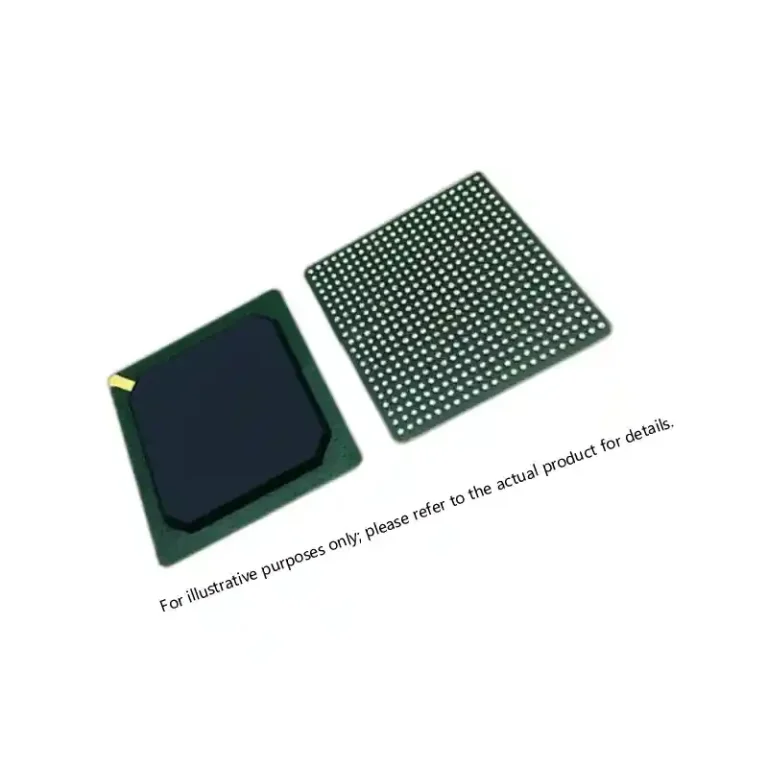
ESD Protection for Military Components: Handling and Storage
Table of Contents
- ESD Failure Mechanisms in Military-Grade ICs
- MIL-SPEC and Industry ESD Control Standards
- What MIL-STD-1686 requires from your supply chain partner
- How J-STD-001 and IPC standards apply to ESD-safe handling
- Evaluating a Distributor’s ESD Handling and Packaging Practices
- What documentation reveals about real ESD discipline
- Creating an ESD-Protected Receiving and Storage Area
- Long-Term Storage, Re-Inspection, and Documentation
- Procurement Questions About ESD and Hi-Rel Component Handling
- Can I rely on a distributor’s ISO 9001 certification as proof of ESD control?
- How do I know if a component is ESD-sensitive if the datasheet does not state a threshold?
- What is the most common ESD failure we see from distributors?
- Should we re-inspect components that have been in storage for more than five years?
ESD protection for military components does not stop at the manufacturing line. It extends across every link in the supply chain — from distributor handling to long-term storage — and a single ungrounded touch can embed a latent failure that surfaces months into a deployment. In my twelve years managing defense electronics supply chains, I have seen procurement teams accept parts from suppliers who could not produce an ESD control program, only to confront intermittent field failures that trace back to static damage during repackaging. Military-grade ICs demand MIL-spec handling from the moment they leave the OEM, and verifying that your supply partner operates under a documented, audited ESD program is your responsibility as a buyer.
ESD Failure Mechanisms in Military-Grade ICs
Electrostatic discharge damage in military components is rarely dramatic. A device does not spark or smoke. Instead, a voltage spike far below human sensation punctures a gate oxide or melts a thin metallization trace, leaving the part functionally intact but with a degraded parameter that will drift over time. We call this latent ESD damage, and it is the most dangerous failure mode because it passes incoming inspection and burns-in only after hundreds of operating hours.
Military ICs built on advanced process nodes — particularly FPGAs, high-speed ADCs, and dense memory devices — are more vulnerable than older 5V logic families. Gate oxides in these components can be as thin as a few atomic layers, and a charge as low as 100V can cause oxide breakdown. A person walking across a vinyl floor can generate 5,000V. Without a rigorous ESD control program, every component that passes through a warehouse or inspection bench accumulates a statistical chance of latent failure.
The failure mechanism is probabilistic, not deterministic. That means a batch of components handled without wrist straps or grounding might produce a 100% pass rate at incoming test, only to exhibit a 2% – 5% field failure rate after six months of thermal cycling and vibration. For a defense system with 1,000 components on a single board, that failure rate becomes operationally unacceptable.
MIL-SPEC and Industry ESD Control Standards
Two primary standards govern ESD control for military electronics: MIL-STD-1686 and ANSI/ESD S20.20. MIL-STD-1686 defines the ESD control program requirements for handling components susceptible to electrostatic damage, while ANSI/ESD S20.20 establishes the technical elements required to maintain an ESD-protected area. In practice, any distributor or contract manufacturer handling military-grade ICs should operate a program aligned with both standards, documented and auditable on demand.
What MIL-STD-1686 requires from your supply chain partner
MIL-STD-1686 does not list specific materials or equipment. It mandates an ESD control program plan that includes training, compliance verification, and periodic auditing. The standard requires your partner to identify all ESD-sensitive items, define protected areas, and maintain records of operator training and equipment calibration. If a supplier cannot produce a program document and a recent audit report, they are not compliant, regardless of what their website claims.
How J-STD-001 and IPC standards apply to ESD-safe handling
J-STD-001, the joint industry standard for soldered electrical and electronic assemblies, includes ESD control as a process requirement. For components that will be soldered into defense-grade assemblies, the handling prior to mounting must meet the ESD control provisions of J-STD-001 Section 3. This matters because many procurement teams assume that ESD control is only the manufacturer’s concern. In reality, any distributor that opens a sealed moisture-barrier bag, re-packages parts, or performs visual inspection must follow J-STD-001 ESD handling procedures — otherwise the component’s J-STD-001 compliance chain is broken.
| Standard | Scope | Compliance Evidence |
|---|---|---|
| MIL-STD-1686 | ESD control program for handling ESD-sensitive items | Program plan, training records, audit reports |
| ANSI/ESD S20.20 | Technical requirements for ESD-protected areas | Grounding measurements, ionizer calibration logs |
| J-STD-001 | Soldering and handling of electronic assemblies | Process documentation, ESD control verification |
| IPC-A-610 | Acceptability of electronic assemblies | Inspection records referencing ESD handling |
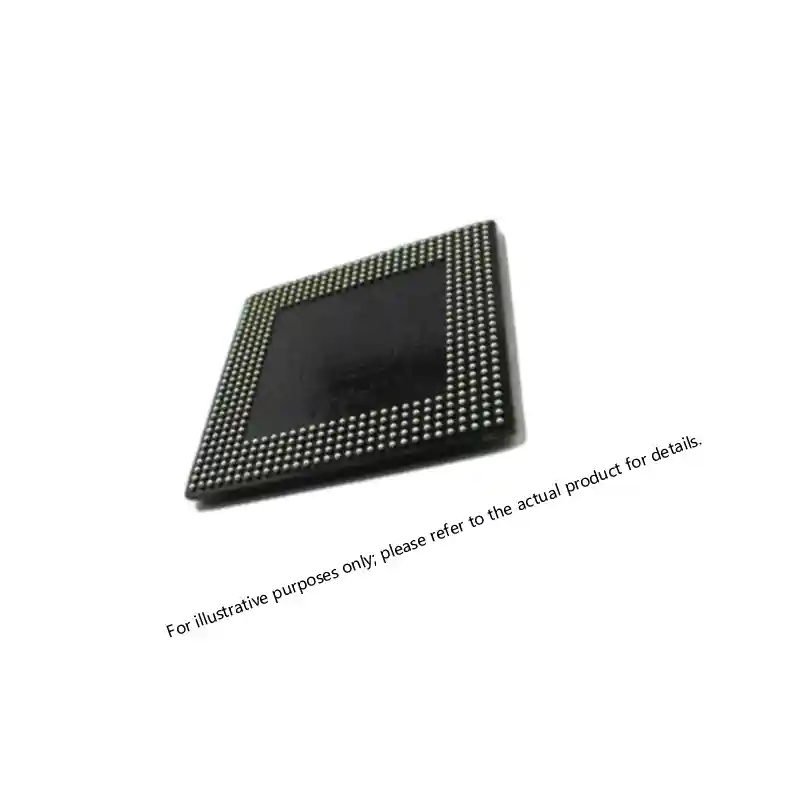
If the system you are qualifying involves high-speed ADCs or radiation-tolerant FPGAs, the voltage thresholds are lower than standard logic, and the ESD program must be validated for devices sensitive below 250V. Ask your distributor to confirm their ESD program accounts for the device sensitivity classification of the parts on your BOM before you commit.
Evaluating a Distributor’s ESD Handling and Packaging Practices
When a defense procurement team evaluates a new component supplier, the conversation often focuses on price, lead time, and certificates of conformance. ESD control is rarely discussed unless the buyer has experienced a field failure directly tied to handling damage. That is a mistake.
I evaluate a distributor’s ESD posture by requesting three documents: their ESD control program plan, the most recent internal or third-party audit report, and a sample packaging certificate showing the materials used for the last shipment of ESD-sensitive components. If all three cannot be produced within a business day, I consider the supplier unqualified for hi-rel parts — no exceptions.
What documentation reveals about real ESD discipline
A well-structured ESD program plan will list grounding methods, personnel training frequency, ionizer types and placement, and the specific static-shielding materials used for packaging. It will also name the individual responsible for ESD program compliance. I have seen audit reports where the training log stopped being updated 18 months earlier and no one noticed. That gap signals that ESD discipline has degraded, and latent-damage risk is elevated.
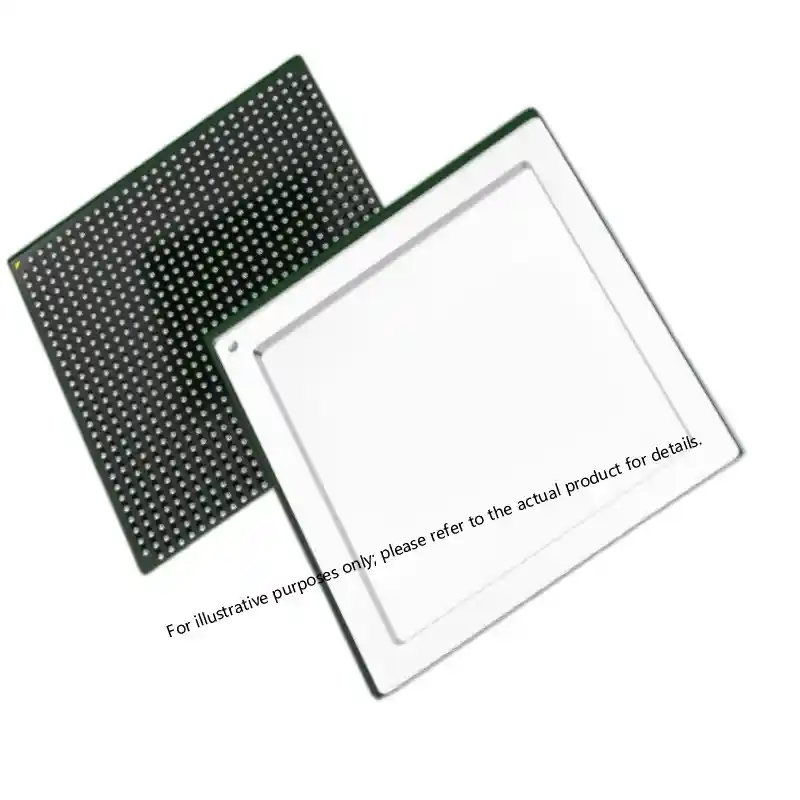
Packaging is the final delivery of ESD control. Military components should leave the distributor in a sealed moisture-barrier bag with a static-shielding outer layer, a humidity indicator card, and a desiccant pack. Re-packaging into non-shielding pink poly bags, even for short transit, introduces risk. Pink poly is antistatic, not static-shielding, meaning it does not prevent a discharge from penetrating to the device inside.
If your program requires long-term storage after incoming, specify that the distributor ship components in their original, unopened moisture-barrier bags. For devices that have been opened and re-inspected, request re-baking per J-STD-033 and re-sealing under nitrogen.
Creating an ESD-Protected Receiving and Storage Area
An ESD-protected area (EPA) does not require a cleanroom. The minimum elements are a grounded bench mat, continuous-wear wrist straps with daily continuity testing, and hardwired grounding through a 1-MΩ resistor to earth ground. Conductive or static-dissipative flooring is strongly recommended for high-activity areas, but for a receiving inspection station that processes a few dozen components per day, a properly grounded mat and wrist strap combination provides adequate protection.
The most common failure I observe is an EPA installed correctly but audited never. Wrist straps fray, ground cords lose continuity, and ionizers drift out of balance. Without a monthly verification cycle, the EPA becomes a paperwork exercise that provides no real protection. I recommend that every incoming inspection station maintain a simple pass/fail log for daily wrist strap checks and monthly bench surface resistance measurements.
Humidity control matters, particularly in dry climates or heated indoor environments in winter. Relative humidity below 30% significantly increases charge generation from personnel movement. Where seasonal humidity dips below that threshold, install an industrial humidifier or limit access to the EPA when RH drops below 20%.
Temperature and humidity data loggers are not expensive, and for military programs that require documented environmental storage conditions, they are a straightforward way to generate the records that quality auditors will ask for.
Long-Term Storage, Re-Inspection, and Documentation
Military components stored for more than 12 months require a re-inspection protocol that verifies both moisture ingress and ESD packaging integrity. Moisture sensitivity level (MSL) becomes the governing factor. A device rated MSL 3 that has been out of its moisture-barrier bag for more than 168 hours without controlled storage must be baked before reflow. ESD packaging degradation over time is subtler: the metalized shielding layer in a static-shielding bag can develop micro-cracks after repeated handling, compromising its faraday-cage effectiveness.
For programs that hold strategic inventory of FPGAs, ADCs, or memory devices, I recommend a shelf-life audit at 12-month intervals. The audit should check bag vacuum integrity (collapsed or ballooning), inspect for punctures, and verify that the humidity indicator card still shows a safe level. If the bag has been opened at any point, the clock starts from the opening date, not the original seal date.
Documentation is what makes the ESD control program defensible during a quality audit. When the defense customer asks to see evidence that the components have been handled properly from factory to installation, the only acceptable response is a complete chain of records: OEM certificate of conformance, distributor ESD program certificate, packaging certification, and your own EPA monitoring logs. A gap in any link transfers risk to the program office.
If your team is preparing for an AS9100 or MIL-PRF-38535 audit, confirm now that your component distributors can produce the full document set before the auditor arrives. Finding out during the audit that a supplier cannot supply ESD compliance records is far more expensive than requesting them during the sourcing phase.
Procurement Questions About ESD and Hi-Rel Component Handling
Can I rely on a distributor’s ISO 9001 certification as proof of ESD control?
ISO 9001 requires a quality management system, but it does not mandate a specific ESD control standard. A distributor can hold ISO 9001 and still have no ESD program in place. Always request the ESD control program plan and audit report directly. If the program references ANSI/ESD S20.20 or MIL-STD-1686, that is a positive indicator, but the supporting records are what matter.
How do I know if a component is ESD-sensitive if the datasheet does not state a threshold?
Military components often have ESD sensitivity classification in the manufacturer’s qualification report or the DSCC 5962 drawing. If the threshold is not published, treat the device as Class 0 (sensitive below 250V) and apply full ESD controls. FPGAs, ADCs, and RF devices nearly always fall into this category.
What is the most common ESD failure we see from distributors?
Opened moisture-barrier bags re-sealed with tape over a tear, and components shipped in pink poly instead of metalized shielding bags. Both suggest that the distributor’s packing personnel either are not trained or that the facility’s ESD program exists only on paper. If we receive a shipment in the wrong packaging, we quarantine the lot and request a documented re-inspection before acceptance.
Should we re-inspect components that have been in storage for more than five years?
Yes, even if the bag integrity appears intact. After five years, the desiccant may be saturated and the internal humidity could have risen enough to cause moisture-related damage during reflow. A bake per J-STD-033 followed by electrical sample testing and re-sealing under nitrogen is the standard practice we recommend for long-dormant inventory. Share your storage duration and part numbers, and we can confirm the reconditioning requirements before you commit the components to a new build.
If you’re interested, check out these related articles:
XCKU115 UltraScale FPGA: Powering Critical Defense Systems
XCKU085 UltraScale FPGA: Performance for Critical Systems
XC7VX485T Virtex-7 FPGA: Performance and Sourcing for Defense
A1020B-PG84B ACT2 FPGA: Specs, Sourcing, and Availability
Virtex-7 690T FPGA: Performance, Packaging, and Reliability Insights