Military-Grade Power Module Selection for Harsh Environments
Table of Contents
- What Environmental Standards Define Rugged Power Module Resilience?
- Which Electrical Parameters Matter Most for Mission-Critical Applications?
- How to Verify MIL-SPEC Compliance and Qualification Testing
- Why Sourcing Strategy Determines Long-Term Program Success
- Securing Your Supply: A Distribution Partner You Can Trust
- Common Questions About Sourcing Military-Grade Power Modules
- What is the difference between a COTS power module and a true MIL-SPEC module?
- A module says “designed to meet MIL-STD-810” on the data sheet. Is that enough?
- How can I ensure counterfeit power modules don’t enter my supply chain?
- My original power module went end-of-life. What are my options?
- Can I upscream a commercial-grade module to meet military standards?
When a power module fails in a deployed military system, the root cause is rarely a single electrical parameter. It is the combination of an environment it was never truly qualified for and a supply chain that delivered a part that could not be verified. Over twelve years of supporting defense programs, I have seen procurement teams focus on voltage and wattage while the module’s vibration tolerance or traceability documentation receive a passing glance. This article addresses that gap. Military-grade power module selection for harsh environments is not just a technical exercise; it is a supply chain commitment. The right module meets MIL-STD-810, MIL-STD-461, and carries documentation that proves it.
What Environmental Standards Define Rugged Power Module Resilience?
The starting point for any defense power module is the physical world it must survive. MIL-STD-810G defines the test methods that simulate decades of field abuse in weeks of accelerated life testing. The method numbers are shorthand for the nightmares a module will endure: 501.5 for high temperature, 502.5 for low temperature, 514.6 for vibration, 516.6 for shock, and 507.5 for humidity. A module that passes all of them without derating or loss of regulation is not a commodity. It is a hardened asset.
A common mistake is reading temperature limits as ambient air numbers. A power module in a sealed avionics bay or a ground vehicle’s engine compartment operates in a thermal envelope that includes self-heating and radiation from adjacent components. The cooling method changes everything. A module rated for 100°C with forced-air cooling may only handle 70°C when conduction-cooled through a cold plate. I have seen programs where a module passed bench tests at 85°C but failed after ten temperature cycles because of solder joint fatigue in the substrate. Cycling matters more than soak temperature.
| MIL-STD-810 Method | Purpose | Typical Failure Mode |
|---|---|---|
| 501.5 High Temperature | Verify operation at elevated ambient | Parametric drift, thermal runaway |
| 502.5 Low Temperature | Cold start and functionality | Startup failure, capacitance loss |
| 514.6 Vibration | Mechanical integrity under transport/use | Lead fracture, connector fretting |
| 516.6 Shock | Handling, ballistic, and crash loads | Internal displacement, open circuits |
| 507.5 Humidity | Moisture and condensation resistance | Corrosion, leakage currents |
Which Electrical Parameters Matter Most for Mission-Critical Applications?
Once the environmental envelope is clear, the electrical specifications become the selection gate. But the data sheet is not the whole story. For a 28V military vehicle bus, the steady-state input might be 28V, but transients from load-dump events can push that to 50V for hundreds of milliseconds. A module with a tight 18–36V input range will shut down or fail at exactly the wrong moment. Look for modules that specify transient withstand capability, not just continuous input range.
Output regulation, line and load, sets how tightly the voltage holds under changing conditions. For sensitive ADCs or FPGA core rails, a 1% regulation may be mandatory. But efficiency trades off against regulation bandwidth. A module that is 92% efficient at full load may drop to 85% during a 50% load step if the control loop is slow. The transient response specification, usually given as a voltage deviation for a specified current step, tells you how the module will behave when a processor wakes up from sleep or a transmitter keys on.
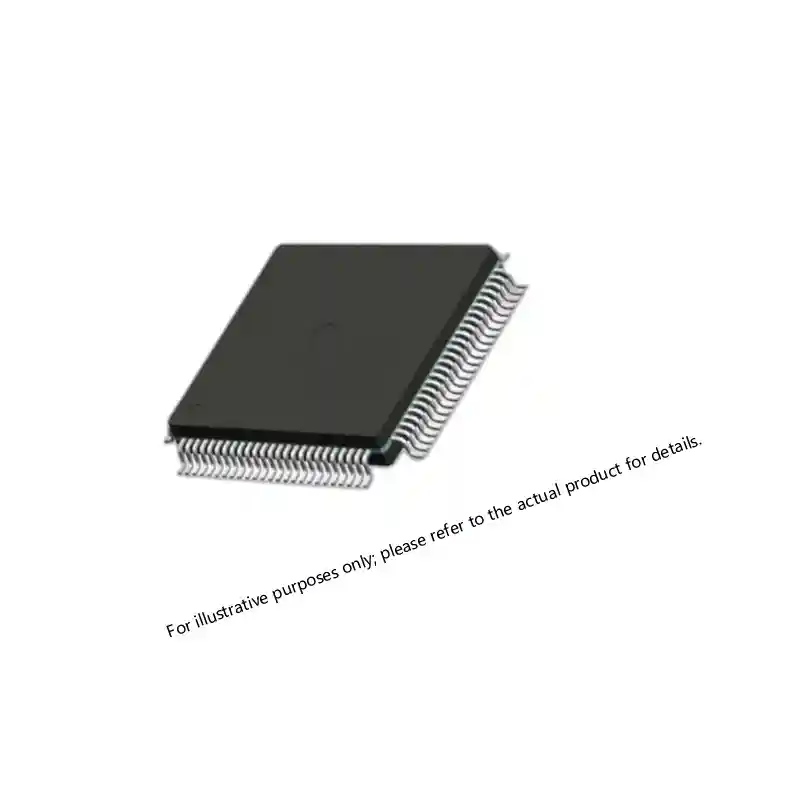
When reviewing a BOM, I always confirm the module can handle the full input voltage swing of a military vehicle’s 28V bus, including the spikes. I also check hold-up time. If the module is behind a diode-OR for redundancy, the hold-up capacitance must bridge the switching gap without letting the output sag below the brownout threshold. That figure, often just a few hundred microseconds, can force a complete redesign if ignored.
How to Verify MIL-SPEC Compliance and Qualification Testing
The difference between a module that survives the lab and one that survives the field lives in the qualification documentation. MIL-PRF-38535 for hybrid microcircuits and MIL-STD-883 for component-level screening form the backbone, but the buyer must go further. The module-level testing should include MIL-STD-461 for conducted and radiated emissions. A power module that fails EMI can couple noise into sensitive sensor chains, and that is often caught too late.
A legitimate certificate of conformance lists the specific lot numbers, the test methods applied, and the actual results, not just a blanket pass statement. We have seen modules sold as “MIL-grade” that came with a one-line C of C and no test report. That is a red flag. For new designs, insisting on first-article inspection reports and qualification test summaries is not excessive. It is the minimum due diligence.
If your program requires a module that meets both MIL-STD-810 and MIL-STD-461 with full documentation, confirming compliance before ordering can save months of rework. Once the spec is locked, reaching out to a supplier who can cross-check availability against the actual test reports eliminates guesswork. Reach us at xuansc2144@gmail.com with your part number requirements, and we can verify which modules in our pipeline already carry the exact qualification data you need.
Why Sourcing Strategy Determines Long-Term Program Success
Specifications and compliance are half the battle. The other half is ensuring that the module you qualify today can still be sourced five years from now, with the same die revision, the same packaging, and the same documentation. This is where the distributor model separates mission success from program risk. Independent distributors without a documented chain of custody cannot guarantee authenticity. Counterfeit power modules, often visually flawless, fail under temperature cycling because the internal passives are not rated for the full military temperature range.
We once helped a program avoid a 12-month delay when the original power module went end-of-life with only six months of forecasted demand remaining. By sourcing a drop-in replacement from an authorized channel, with the same environmental qualification and a full test report package, the program maintained its production schedule. That kind of outcome does not come from a one-time purchase. It comes from a relationship where the supplier understands your program’s lifetime.
Obsolescence management should start at design-in. A distributor that tracks the factory’s product change notices and die-level changes can alert you before the part disappears. We maintain inventory positions on modules from VICOR, VPT, and other defense-qualified lines, and we track lifecycles proactively. When a module begins the decline phase, we notify our program contacts and help secure last-time buys or identify alternate sources that meet the same qualification envelope.
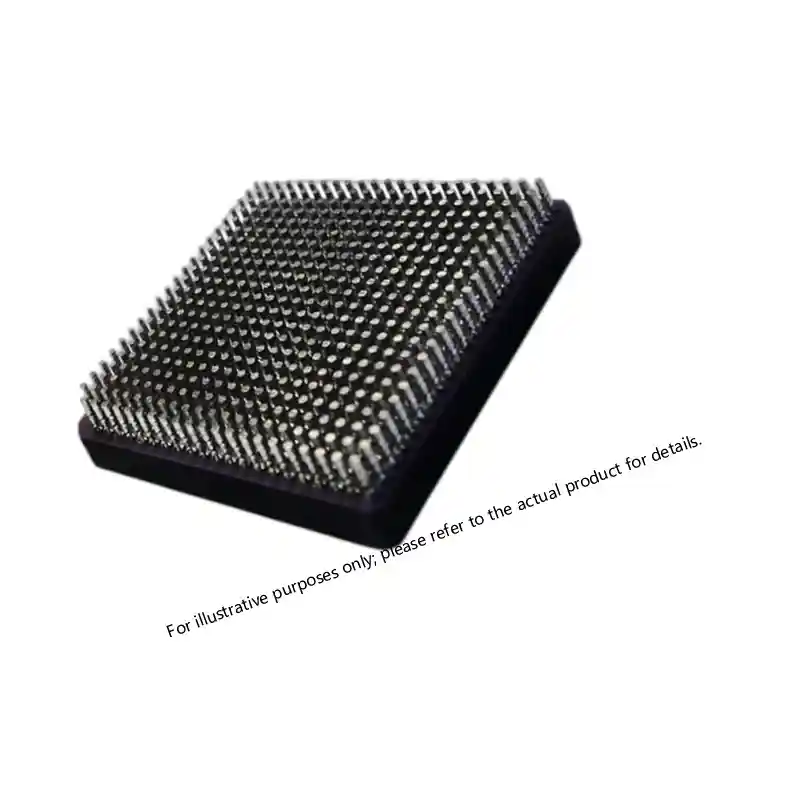
Traceability is not a marketing term. It means that every module can be traced back to the manufacturer’s wafer lot, assembly lot, and test lot. In the event of a field failure, that traceability is what allows a root cause investigation to isolate the problem to a specific production batch. Without it, a program is flying blind.
Securing Your Supply: A Distribution Partner You Can Trust
A military power module is a long-term asset. The decisions made at the selection stage ripple through the entire program lifecycle. Specifications matter. Qualification data matters. But the supply chain that stands behind the part matters just as much. Sparkle Electronics has supported defense contractors, system integrators, and research institutions across more than thirty countries by providing precisely that combination: technically vetted components with the documentation and availability programs can depend on.
We carry a deep inventory of military-grade power modules from VICOR, VPT, and other qualified manufacturers. Our team verifies every incoming lot against the manufacturer’s qualification records and provides the full compliance package, including certificates of conformance, test reports, and chain-of-custody records. We respond to RFQs within twenty-four hours and support programs from prototype to sustainment.
For a BOM review or to confirm availability of a specific power module, send your part numbers and quantity requirements to xuansc2144@gmail.com. We will verify stock, verify documentation, and provide a competitive quotation. If you are dealing with an obsolescence challenge, include the end-of-life notice and we will work with you to find a solution that keeps your program on schedule.
Common Questions About Sourcing Military-Grade Power Modules
What is the difference between a COTS power module and a true MIL-SPEC module?
COTS modules may meet some electrical performance benchmarks, but they rarely carry full environmental qualification to MIL-STD-810 and MIL-STD-461, and they almost never include the supply chain traceability that defense programs require. The risk is that a COTS module will pass initial bench tests but fail after sustained temperature cycling or vibration. For mission-critical systems, the documentation gap alone disqualifies COTS parts unless they have been formally upscreened and qualified by an accredited test house, and even then, the manufacturer’s original materials and processes may not support military temperature ranges.
A module says “designed to meet MIL-STD-810” on the data sheet. Is that enough?
No. “Designed to meet” is a statement of intent, not evidence. A module that has actually passed qualification testing will have a test report that identifies the specific test methods, the test conditions, the acceptance criteria, and the pass/fail results. Always request that report. If the supplier cannot produce it, assume the module has not been formally qualified. We frequently see this language on modules from non-authorized channels, and it is one of the first red flags we check during incoming inspection.
How can I ensure counterfeit power modules don’t enter my supply chain?
The single most effective measure is to purchase only through authorized or manufacturer-direct distribution channels and to require batch-level traceability documents for every shipment. Incoming inspection should verify both the external markings and the electrical performance against the manufacturer’s published specifications. In programs we support, we also cross-reference the lot date code with the manufacturer’s production database when possible. A module that is too cheap or available too quickly from an unknown source is almost always a risk.
My original power module went end-of-life. What are my options?
The answer depends on the program’s remaining life and the volume. For short-term needs, a last-time buy can secure enough inventory to bridge the gap. For longer programs, a drop-in replacement with the same environmental qualification and package footprint should be identified and qualified. In some cases, die banking and continued assembly at an authorized facility can extend availability for decades. We have walked programs through each of these scenarios, and the key is to act the moment the end-of-life notice arrives, not six months later when the last factory stock is already allocated.
Can I upscream a commercial-grade module to meet military standards?
It depends on the module’s internal construction and the specific standards you need to meet. For some low-stress applications, additional temperature cycling and burn-in may push a commercial module into an extended-grade category, but the underlying materials and interconnect methods are often not designed for the full military temperature range or vibration profiles. In practice, the cost and risk of upscreening often exceed the cost of purchasing a genuine MIL-SPEC module from the start. When this question comes up, we always recommend comparing the total cost of qualification, including the statistical failure rate, against a qualified alternative. The math rarely supports upscreening for harsh-environment programs. If you are considering this path, share your target specifications and we can help evaluate whether a qualified module exists that makes the gamble unnecessary.
If you’re interested, check out these related articles:
XC7VX485T Virtex-7 FPGA: Performance and Sourcing for Defense
XCKU115 UltraScale FPGA: Powering Critical Defense Systems
XC7VX485T FPGA: Virtex-7 Performance for Defense
XCKU085 UltraScale FPGA: Performance for Critical Systems
UltraScale KU085 FPGA Specifications for Defense Systems