Sourcing Actel ProASIC Military-Grade FPGAs for Defense Systems
Table of Contents
- Why Actel ProASIC FPGAs Serve Military Requirements So Well
- Comparing ProASIC3, ProASIC3E, and ProASIC3L for Defense Use
- Sourcing Actel ProASIC FPGAs Poses Risks Defense Teams Cannot Afford to Ignore
- Verifying Actel FPGA Authenticity and Compliance Before Accepting Delivery
- Building a Long-Term Supply Partnership for ProASIC Military FPGAs
- Questions Defense Buyers Ask About Actel ProASIC FPGAs
- What is the difference between QML Class Q and /883B screening for ProASIC FPGAs?
- Many engineers assume ProASIC devices are still in full production. Are they?
- Can I replace a discontinued ProASIC3 part with a newer ProASIC3E device?
- How do I trust a distributor’s claim of authenticity without sending every part to a test lab?
Defense programs that rely on Actel ProASIC military-grade FPGAs often discover that sourcing, not design, becomes the biggest schedule risk. These flash-based, non-volatile devices are prized for instant-on operation and resistance to configuration upset, yet finding genuine, fully traceable parts, especially for discontinued variants, requires a procurement strategy that generic distributor RFQs simply cannot provide. In twelve years of supporting military component supply chains, I have watched the same gap surface repeatedly: engineers assume availability, while the market tells a different story. This article examines the ProASIC family’s key specifications, the real-world challenges of sourcing them for defense programs, and the verification steps that separate compliant supply from counterfeit risk.
Why Actel ProASIC FPGAs Serve Military Requirements So Well
Actel (now Microchip) ProASIC FPGAs distinguish themselves in defense electronics with a flash-based architecture that eliminates the need for an external configuration memory. Unlike SRAM-based alternatives, these devices are live at power-up, immune to single-event configuration upsets, and inherently secure because the bitstream is stored on-chip in non-volatile memory. The single-chip solution reduces board space, simplifies thermal management, and removes a potential attack vector for unauthorized reprogramming. For military systems ranging from missile guidance to ruggedized communications, these attributes translate directly into higher reliability and lower integration complexity. The ProASIC family spans gate count options from 30,000 to 3 million, giving design teams latitude to select a part that balances resource density and cost without sacrificing the advantages of a flash architecture.
Comparing ProASIC3, ProASIC3E, and ProASIC3L for Defense Use
The ProASIC3 family splits into three variants that address different performance and power requirements. ProASIC3 is the baseline offering, delivering up to 3 million system gates with a core voltage of 1.5 V. ProASIC3E adds increased speed and I/O density while maintaining the same voltage, making it suitable for processing-intensive payloads. ProASIC3L reduces core voltage to 1.2 V, cutting static power consumption by as much as 40 percent compared to standard ProASIC3 devices, which becomes critical in thermally constrained enclosures like UAV payloads or man-portable radios.
| Series | Max System Gates | Speed Grade | Core Voltage | Key Feature |
|---|---|---|---|---|
| ProASIC3 | Up to 3M | Std, -1 | 1.5 V | Baseline flash FPGA |
| ProASIC3E | Up to 3M | Std, -1, -2 | 1.5 V | Higher performance I/O |
| ProASIC3L | Up to 3M | Std, -1 | 1.2 V | Ultra-low power |
For programs still using earlier ACT2 devices, we previously covered sourcing strategies in our A1020B-PG84B ACT2 FPGA guide.
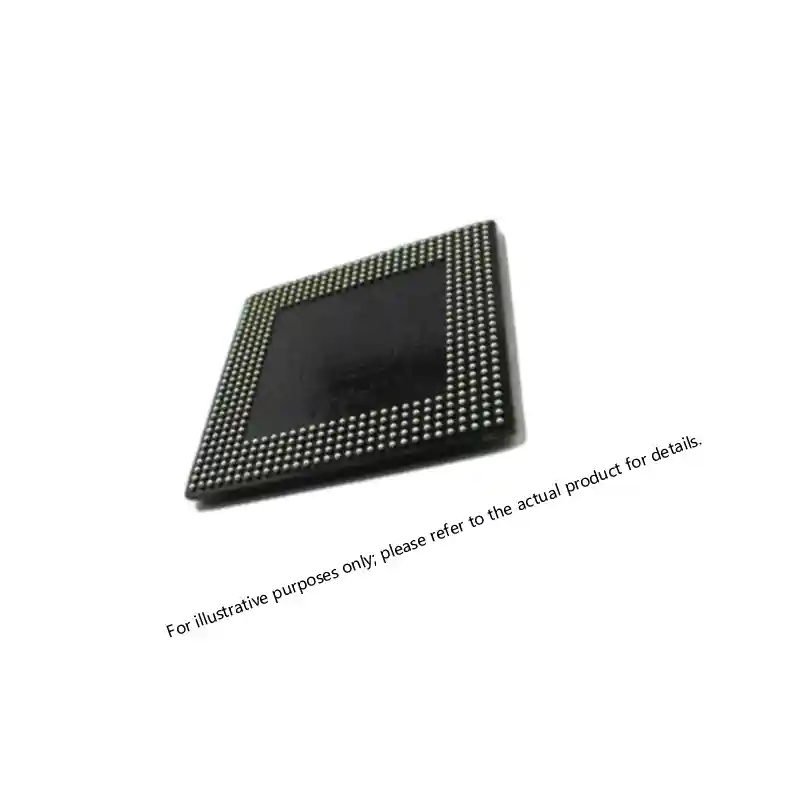
Sourcing Actel ProASIC FPGAs Poses Risks Defense Teams Cannot Afford to Ignore
Despite their technical merits, Actel ProASIC devices present a sourcing challenge that procurement teams often underestimate. Many ProASIC3 and ProASIC3E part numbers have moved to ‘not recommended for new design’ status, and some Axcelerator-based devices have been discontinued outright. In a defense program with a 20-year sustainment timeline, this means the FPGA you selected five years ago may no longer be available from authorized channels when you need a replacement lot. Independent brokers may offer to fill the gap with parts from excess stock, but traceability and authenticity become immediate concerns. I have seen parts that passed visual inspection but failed burn-in testing because they were re-marked commercial devices, not legitimate military-temperature-grade units. For programs operating under DFARS or ITAR constraints, documentation gaps in the chain of custody can trigger compliance audits that delay production far longer than the cost savings of a questionable purchase would justify.
If your program involves long-life platforms where ProASIC part numbers are nearing end-of-life, confirm current stock and alternate sources before finalizing your BOM. Email us at xuansc2144@gmail.com for a cross-reference and availability check.
Verifying Actel FPGA Authenticity and Compliance Before Accepting Delivery
Receiving parts is only the first step. We require every lot of military-grade FPGAs to undergo a verification process that includes visual inspection for package marking consistency, x-ray for die integrity and bond-wire continuity, and electrical testing across the full military temperature range of -55°C to +125°C. For QML Class Q or /883B devices, we also verify that the certification paperwork traces back to the original manufacturer’s test records, not a third-party re-screening facility. This level of scrutiny is not optional when a single counterfeit device can cause an avionics LRU to fail qualification testing, costing months of rework. Beyond the physical device, we confirm that export classification, MSL (moisture sensitivity level), and ESD ratings align with the shipment documentation. In long-running programs, phased deliveries with consistent lot traceability become as important as the unit price, because a lot change midway can introduce subtle differences in timing or power that cascade through a system already through qualification.
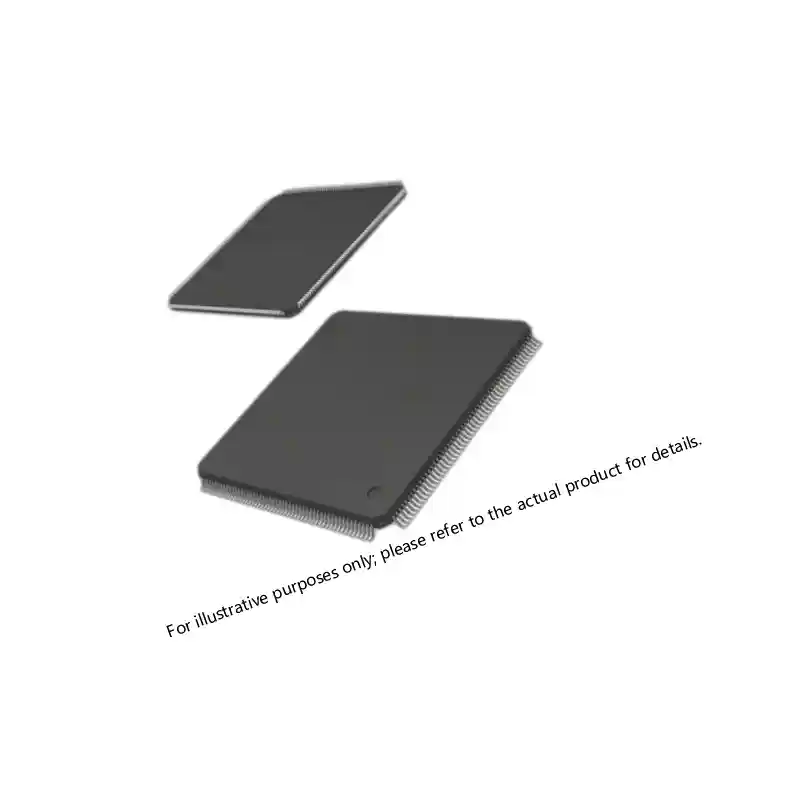
Building a Long-Term Supply Partnership for ProASIC Military FPGAs
Sustainable procurement of Actel ProASIC FPGAs for defense systems depends less on a single purchase order and more on a structured supplier relationship. At Sparkle Electronics, we support programs by maintaining strategic inventory of high-runner ProASIC devices, providing obsolescence monitoring, and offering last-time-buy coordination when Microchip issues discontinuance notices. Our approach to supply chain security includes documented counterfeit mitigation procedures and a commitment to full chain-of-custody records. For programs that require 5962 numbers or QML certification, we verify conformance before the parts ship, not after. Building this kind of partnership early, well before the first BOM is released, prevents the firefighting that I see far too often when a purchasing agent sends a panic RFQ to five brokers at once. A consistent supply partner understands the program’s timeline, the qualification inertia, and the fact that documentation is not an administrative afterthought but a mission-critical deliverable.
We understand that for legacy and active defense systems, every week of component delay can stall integration. Sparkle Electronics maintains a dedicated Actel and ProASIC inventory with testing protocols specifically designed for programs that cannot accept counterfeit or untraceable devices. Send your part number and target quantity to xuansc2144@gmail.com to receive a compliance documentation package and a delivery timeline that aligns with your program schedule.
Questions Defense Buyers Ask About Actel ProASIC FPGAs
What is the difference between QML Class Q and /883B screening for ProASIC FPGAs?
QML Class Q certification follows the MIL-PRF-38535 specification, which holds the supplier to a continuous manufacturing and quality system, while /883B screening is a lot-by-lot testing standard per MIL-STD-883. For defense programs requiring long-term supply assurance, QML is the stronger credential because it proves the production line itself is qualified. A /883B-screened part may meet the same electrical and environmental test thresholds, but the oversight structure is less rigorous. When evaluating a lot of ProASIC3 devices, check whether the certificate of conformance references the original fab location and date code, not just a third-party test house.
Many engineers assume ProASIC devices are still in full production. Are they?
That assumption is dangerous. Microchip continues to support many ProASIC3 and ProASIC3E part numbers, but a growing number of older die revisions and package options have entered “not recommended for new design” status. Once a part reaches that point, the manufacturer may still fulfill orders for a time, but no new design activity is encouraged. Programs with long qualification cycles should validate the lifecycle status of every ProASIC line item at least annually and have a plan for last-time-buy or alternate sourcing well before the discontinuance notice arrives.
Can I replace a discontinued ProASIC3 part with a newer ProASIC3E device?
It depends on the program’s qualification state. In a system that has already passed environmental and EMC testing, you cannot simply drop in a ProASIC3E device without re-characterization because timing, power, and I/O drive strength differ between the families. If the design is still in development, the migration is straightforward and often beneficial. The key is to decide before the BOM is locked, because changing a part number after qualification approval adds months of requalification cost that a program may not have budgeted.
How do I trust a distributor’s claim of authenticity without sending every part to a test lab?
In programs we have supported, the most common pain point is not finding the part but validating its authenticity. The second source may quote a lower price, but if the documentation chain breaks, the savings evaporate during audit. Start by requesting a full lot traceability report that ties the parts to the original manufacturer’s packing slip, and ask for photos of the actual date codes and marking under magnification. The distributor should be willing to share a sample test report from an accredited lab, not just a certificate of conformance. When those documents are provided without hesitation, the risk drops considerably. Share your part number and program requirements with us, and we will walk you through the verification records we provide with each shipment.
If you’re interested, check out these related articles:
Virtex-7 XC7VX690T: Performance, Reliability, and Integration
Virtex-7 690T FPGA: Performance for Mission-Critical Systems