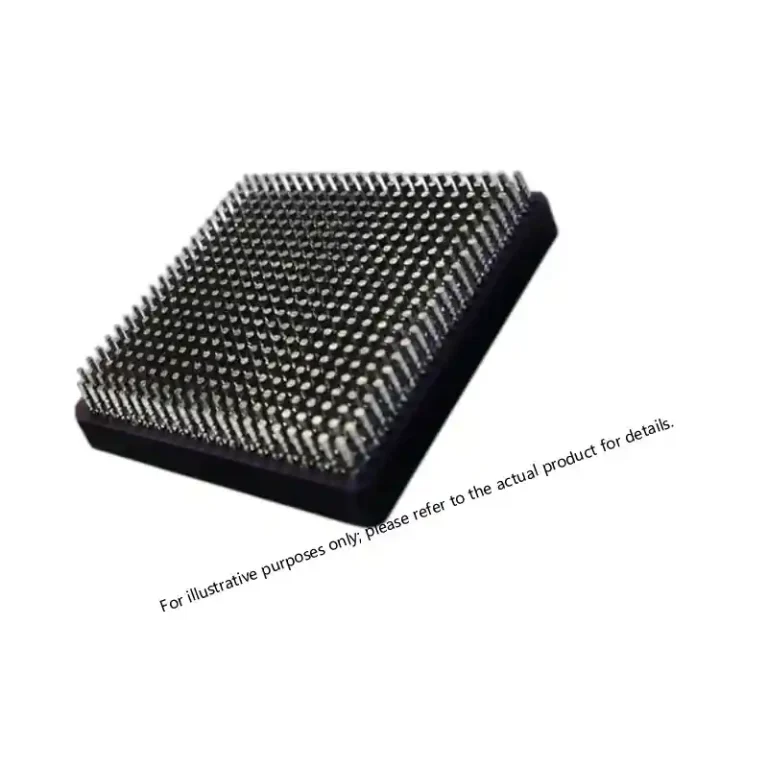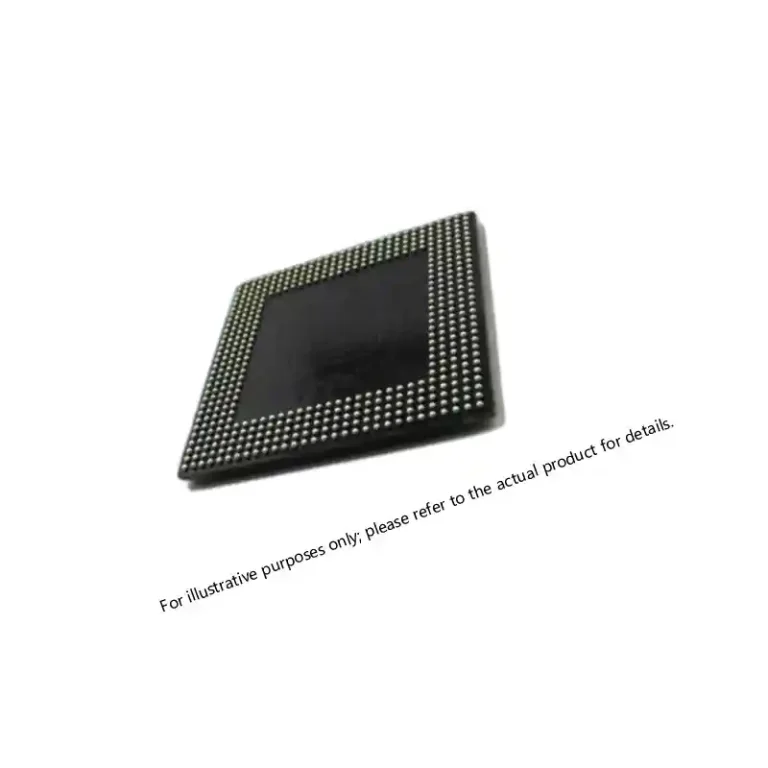
W3J128M72G-800LBI DDR3 SDRAM: Specs and Sourcing Guide
Table of Contents
- What the Part Number Establishes Before You Read the Datasheet
- Matching the 800 MHz Device to the Memory Interface
- Screening and Traceability Requirements for DDR3 in Defense Programs
- What Incoming Inspection Can and Cannot Prove
- RFQ Fields That Make a Military Memory Quote Usable
- Lifecycle Planning When DDR3 Modules Reach End of Life
- What to Send With Your Next Memory Requirement
- FAQ
- Is the W3J128M72G-800LBI a 1 GB device?
- What does DDR3-800 mean in megabytes per second?
- Can a commercial DDR3 part replace this device?
- What documentation should arrive with a military memory shipment?
- Does a certificate of conformance prove the parts are authentic?
- References
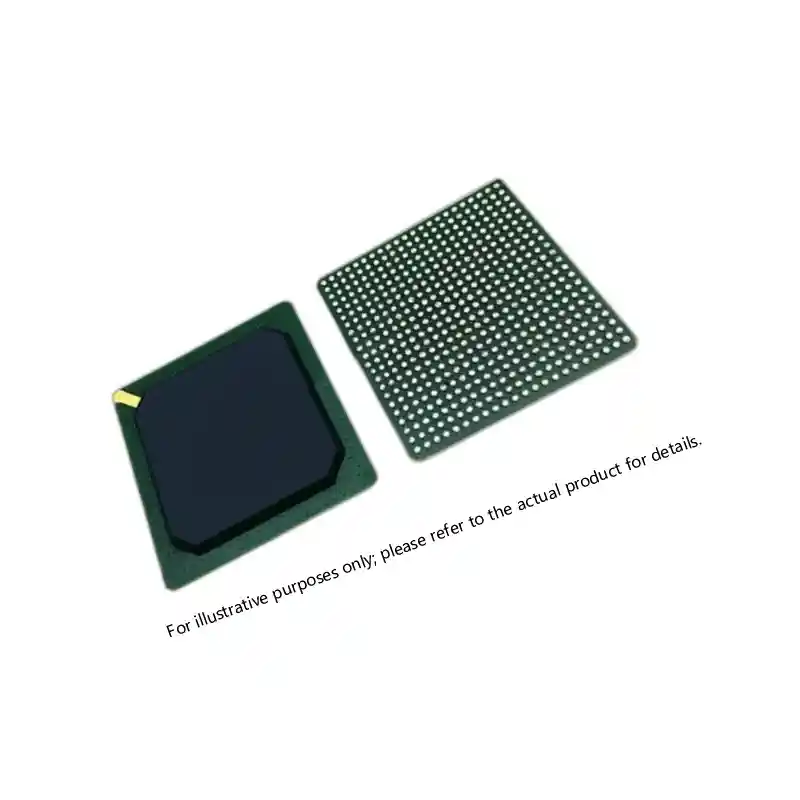
The W3J128M72G-800LBI is a 128M × 72 DDR3 SDRAM that moves 800 million transfers per second, and the part number settles less than a defense program usually assumes. It fixes an organization, a speed bin and a package code. It does not state the screening flow a lot received, the temperature range the units were qualified to, or whether the parts in the box came from the same wafer lot as the parts in the qualification report. Those answers come from records and from measurements. A program that treats them as paperwork eventually holds memory it cannot release to a board.
What the Part Number Establishes Before You Read the Datasheet
A military memory part number is an identity label, not a quality statement. The W3J prefix identifies a family of hi-rel DDR3 memory devices. The 128M × 72 field gives 134,217,728 addressable words at 72 bits each, which is the figure a controller address map has to match. The 800 field sets the JEDEC DDR3-800 speed bin: a 400 MHz clock and 800 million transfers per second [1]. The LBI suffix carries the package and grade code that the manufacturer defines in its own datasheet.
Each of those fields can be checked against a document. None of them describes what happened to the units during test.
| Part number element | What it identifies | Responsible use | What it does not establish |
|---|---|---|---|
| W3J prefix | W3-series hi-rel DDR3 memory family | Family search and cross-reference | That two W3J devices share a die, a package or a screening flow |
| 128M × 72 | 134,217,728 words of 72 bits | Capacity and bus width planning, ECC budgeting | That the controller ECC scheme matches the organization without a check |
| 800 | DDR3-800 speed bin, 400 MHz clock [1] | Timing closure at that bin | Headroom above the bin because a similar device reached it |
| LBI | Package and grade code defined by the manufacturer | Mechanical fit and ordering | Temperature range or screening level, which live in the datasheet |
| No field at all | Individual lot, date code, serial range | Traceability checks at receipt | Anything about the specific units in the shipment |
The device is specified in the standard 1.5 V DDR3 class rather than the 1.35 V DDR3L class, so confirm rail tolerance on the current datasheet before design release. A board built around a low-voltage rail cannot absorb this part without a rail and timing review. Substituting a DDR3L line item for this one changes the electrical basis of the whole interface, and the controller training sequence may not converge at all.
The gap between identity and acceptance is where most sourcing problems start. A supplier can ship the correct part number with the wrong screening level, with a date code outside the program window, or with a refurbished unit that has been re-marked on the top side. None of those errors is visible in a quotation.
Matching the 800 MHz Device to the Memory Interface
Bandwidth for this device is arithmetic rather than a claim. At 800 MT/s across 72 bits, peak data movement is 800 × 72 / 8, or 7,200 MB/s. A 64-bit implementation of the same speed bin reaches 6,400 MB/s. The difference is not free performance: the eight extra bits per word are the error-correction lane, and the protected payload stays at 6.4 GB/s when the controller uses them as check bits.
DDR3 also changed the physical layer in ways that break casual substitution. The address and command bus uses fly-by routing with termination at the far end, write leveling compensates for the skew that fly-by introduces, and the controller trains read timing, on-die termination and ZQ calibration during initialization. A board routed for DDR2 or for an earlier point-to-point scheme cannot take this device as a drop-in, because the pinout, the termination scheme and the training sequence all differ.
The controller side decides whether the part is usable at all. Not every FPGA family carries a hard DDR3 controller, and a soft controller consumes logic and multiplies timing closure effort. When the memory sits next to an FPGA on the same card, the two should be reviewed as one interface rather than as two catalogue items.
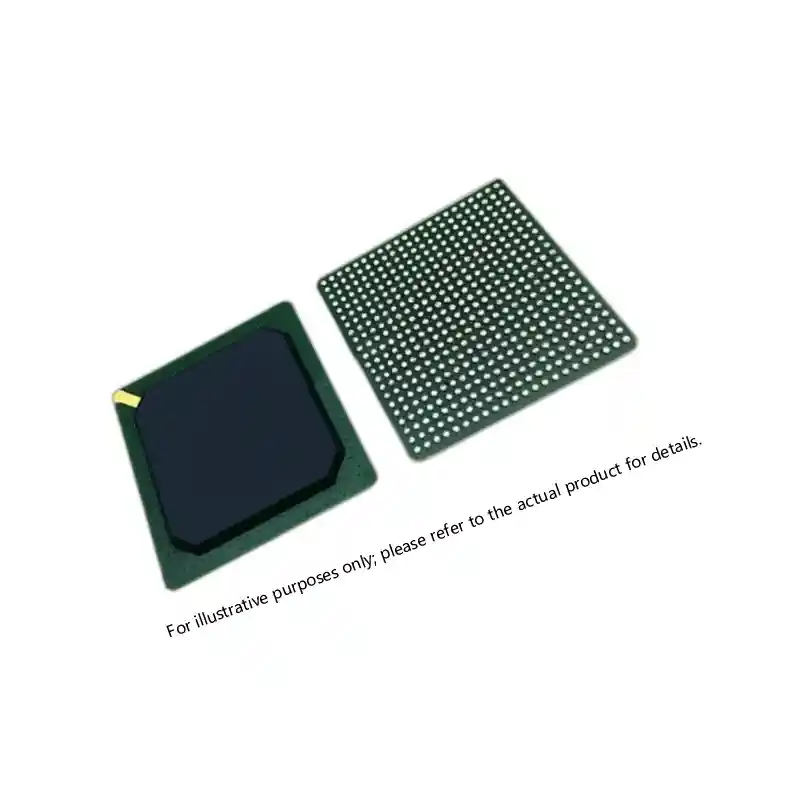
A 7.2 GB/s bus only pays off when the logic behind it can absorb the data, which is why wide memory interfaces usually sit next to high-logic-count devices. <Virtex-7 XC7VX690T: Performance, Reliability, and Integration> covers the performance, reliability and integration considerations for that family.
Screening and Traceability Requirements for DDR3 in Defense Programs
Military screening describes a sequence applied to a lot, not a property that travels with an individual device. MIL-PRF-38535 governs how a manufacturer qualifies and maintains an integrated circuit production line [2], and MIL-STD-883 supplies the test methods that populate a screening flow [3]. A part that passed a screening sequence carries the confidence of that sample and that flow. It carries no guarantee about the next unit off the line.
A certificate of conformance is a declaration. It states that the issuer believes the goods meet a named specification. It reports no measurement and proves no test was run. Treat it as one link in a chain that also includes the manufacturer lot record, the distributor receiving inspection and the buyer own incoming checks.
Chain of custody matters more for memory than for many other categories. DDR3 packages are common, markings are laser-etched, and a re-marked commercial device can survive a visual check by an experienced inspector. AS6081 exists to structure distributor-side detection, mitigation and disposition of suspect parts [4], and it only produces value when the buyer asks for the records the standard generates.
What Incoming Inspection Can and Cannot Prove
Incoming inspection establishes identity, condition and packaging. It can confirm that the marking matches the ordered part number, that the date code is consistent with the lot documentation, that the terminations are undamaged, and that the dry pack arrived intact. Those findings are real and worth recording.
Electrical test establishes behaviour at the moment of test under the conditions applied. A functional run at 800 MT/s on a known-good board shows that the device trains and operates in that socket. It does not show margin over temperature, and it does not tie the tested units to the qualification lot unless the sampling plan was written to do so.
An aged or previously installed module can still help identify a part, and its measured values can be compared against a reference. That does not make those values an acceptance standard for a new buy. Acceptance criteria belong to the specification the purchase order names, not to whatever a sample happened to measure.
Die verification, X-ray inspection and decapsulation answer questions that visual examination cannot reach, but they are destructive or sampled. They belong to a lot qualification decision, not to a routine 100 percent receiving process.
RFQ Fields That Make a Military Memory Quote Usable
A quote that lists a part number and a price can be accepted, and that is exactly the problem. Military memory quotes differ in screening level, test data, packaging and documentation, so a price comparison across those differences compares nothing.
| RFQ field | What to request | Why it matters |
|---|---|---|
| Manufacturer and lot | Manufacturer of record, date code, country of origin | A quote without a lot code cannot be matched to a traceability record |
| Screening level | The exact flow, such as a QML class or a named method set | The phrase military grade describes no test |
| Test data | Attributes or variables data, sample size, test temperature | A pass or fail summary hides the margin behind it |
| Packaging | Moisture sensitivity level, dry-pack status, ESD packaging [5] | A moisture-loaded part can fail during reflow assembly |
| Documentation | Certificate of conformance, test report, chain of custody | Decides whether receiving can release the lot |
| Acceptance terms | Who tests, where, and against which specification | Prevents a dispute after delivery |
Reject this line: “128M×72 DDR3, military grade, best price, please quote.” Replace it with: “W3J128M72G-800LBI, quantity, required screening flow, manufacturer of record, date code window, test temperature and sample size, certificate of conformance and chain of custody required, moisture sensitivity level and dry-pack status stated, country of origin declared.” The second version can be quoted accurately and audited afterwards.
Decide who tests and against what before the order is placed. If the supplier tests, ask for the test specification and the data format. If the buyer tests, state the sample plan and the failure disposition in the purchase order. Most disputes about whether a lot passed trace back to a purchase order that never defined passing.
Lifecycle Planning When DDR3 Modules Reach End of Life
DDR3 is a mature node. New designs move toward DDR4 and low-power variants for density and efficiency, while fielded programs keep buying DDR3 because requalifying a memory interface costs more than the price difference between generations. That split is where lifecycle risk accumulates.
Programs that refresh a processing card usually move the logic and the memory interface together, because the controller and the DRAM train as one system. <UltraScale KU085 FPGA Specifications for Defense Systems> covers the specifications of that device class for defense applications.
A last-time buy converts an availability problem into a storage problem. The parts must survive years of warehouse conditions, which means humidity control, ESD control and a documented handling procedure rather than a shelf in a stockroom. Storage temperature cycling, uncontrolled moisture and informal handling all degrade solderability before the parts ever reach a board. The quantity calculation is also harder than it looks, because it depends on projected build rates that program offices rarely hold stable for a decade. A die or wafer bank solves the same problem at die level for programs that can build modules later, but it requires a manufacturer relationship that most buyers do not control directly.
Long-lived programs often find that logic and memory age on separate schedules, and the parts that are hardest to replace are rarely the newest ones. <A1020B-PG84B ACT2 FPGA: Specs, Sourcing, and Availability> covers specifications, sourcing and availability for one of the antifuse families that still appears in fielded designs.
A form, fit and function alternate is not a drop-in. A different die revision changes on-die termination behaviour, reference voltage range and timing; a different package changes the thermal path; a different manufacturer changes the screening vocabulary. Qualifying an alternate means re-running interface training across temperature and documenting the result, not comparing two datasheet summaries.
Holding stock against a specific approved part list is what makes the end of a lifecycle manageable. Sparkle Electronics maintains hi-rel memory and logic inventory for defense programs, which is the arrangement that lets a program buy a last-time quantity without routing it through uncontrolled channels.
What to Send With Your Next Memory Requirement
If the W3J128M72G-800LBI sits on your bill of materials, the fastest route to a usable quote is to send the line as your program defines it: part number, quantity, required screening level, temperature range, documentation set and any date code restriction. That information turns a price into an offer you can accept against your own acceptance criteria. Send it to Sparkle Electronics at xuansc2144@gmail.com, and we will confirm what is available, what the records show, and what still needs verification before release.
FAQ
Is the W3J128M72G-800LBI a 1 GB device?
The 72-bit organization holds 128M words. Read as 64 data bits plus 8 check bits per word, the protected payload is 1 GB (8 Gbit), while total array capacity is 9.66 Gbit. Programs that describe the device as 1 GB are quoting the protected payload rather than the raw array.
What does DDR3-800 mean in megabytes per second?
DDR3-800 moves 800 million transfers per second on a 400 MHz clock [1]. On a 64-bit bus that is 6,400 MB/s; on this device 72-bit organization the peak is 7,200 MB/s. Sustained throughput is lower, because refresh, bank conflicts and read-write turnaround consume cycles that the peak figure ignores.
Can a commercial DDR3 part replace this device?
Functionally, a commercial device with the same organization often runs in the same socket. What changes is the acceptance basis: screening level, temperature qualification, lot traceability and documentation. Upscreening a commercial part shifts the testing burden to whoever performs it and does not recreate the manufacturer qualification history.
What documentation should arrive with a military memory shipment?
At minimum, a certificate of conformance naming the specification, the manufacturer of record, lot and date codes, quantity by lot, and packaging with moisture sensitivity status [5]. Programs with stricter requirements add variables test data, chain-of-custody records and country of origin declarations. Receiving should be able to match each carton to a lot record before the parts enter stores.
Does a certificate of conformance prove the parts are authentic?
No. A certificate is the issuer declaration that goods meet a named specification. It proves neither independent testing nor die-level identity. Authenticity rests on the whole chain: the manufacturer lot records, the distributor inspection under a standard such as AS6081 [4], and the buyer own receiving checks.
References
[1] JEDEC JESD79-3F, “DDR3 SDRAM Standard,” JEDEC Solid State Technology Association, 2012.
[2] MIL-PRF-38535, “Integrated Circuits (Microcircuits) Manufacturing, General Specification,” Defense Logistics Agency Land and Maritime, current revision.
[3] MIL-STD-883, “Test Method Standard, Microcircuits,” U.S. Department of Defense, current revision.
[4] SAE AS6081, “Fraudulent/Counterfeit Electronic Parts: Avoidance, Detection, Mitigation, and Disposition,” SAE International, current revision.
[5] IPC/JEDEC J-STD-020, “Moisture/Reflow Sensitivity Classification for Nonhermetic Solid State Surface Mount Devices,” IPC/JEDEC, current revision.
If you’re interested, check out these related articles:
XC7VX485T FPGA: Virtex-7 Performance for Defense
Virtex-7 XC7VX690T: Performance, Reliability, and Integration
Virtex-7 XC7VX690T: Performance and Reliability Insights
XCKU115 UltraScale FPGA: Powering Critical Defense Systems
Virtex-7 690T FPGA: Performance, Packaging, and Reliability Insights