ARINC 429 Transceivers and Receivers: Sourcing Military ICs
Table of Contents
- What Makes an ARINC 429 Transceiver or Receiver Suitable for Military Avionics?
- Which Electrical Parameters Should You Lock Down Before Sourcing?
- How Do You Verify Traceability and Documentation for ARINC 429 ICs?
- How Should You Source ARINC 429 Transceivers and Receivers for Sustainment and New Builds?
- How Do You Secure a Compliant ARINC 429 Transceiver Supply?
- What Do Procurement Teams Ask About ARINC 429 Transceivers and Receivers?
- What is the difference between ARINC 429 transceivers and receivers?
- Is ARINC 429 the same as MIL-STD-1553?
- How do you source ARINC 429 receiver part numbers after the original maker discontinues them?
- What documentation should accompany every ARINC 429 transceiver shipment?
ARINC 429 transceivers and receivers are low-speed in name and high-stakes in application. A missing certificate of conformance or an unclear lot trace can stop an avionics build line faster than a failed component test. After twelve years of defense avionics sourcing, I put supplier evidence ahead of part-number convenience. The electrical parameters are well documented; the documentation trail is what separates an ARINC 429 interface IC that can be trusted from an uncontrolled risk. That proof is where most programs lose time before a single part reaches production.
What Makes an ARINC 429 Transceiver or Receiver Suitable for Military Avionics?
ARINC 429 operates as a simplex broadcast databus. One transmitter can drive up to 20 receivers on a single shielded twisted pair, which is why receiver input impedance, hysteresis, and fail-safe behavior matter as much as the driver output stage. Signaling uses bipolar return-to-zero encoding: a logic one becomes a positive pulse, a logic zero becomes a negative pulse, and the line rests at zero between bits. High-speed operation is specified at 100 kbps; the low-speed variant runs from 12.5 to 14.5 kbps.
The 32-bit word format is fixed. Eight bits carry the label, two carry source and destination identifiers, nineteen carry data, two carry sign and status matrix, and one bit carries parity. That structure lets a receiver filter traffic by label and ignore messages not addressed to it.
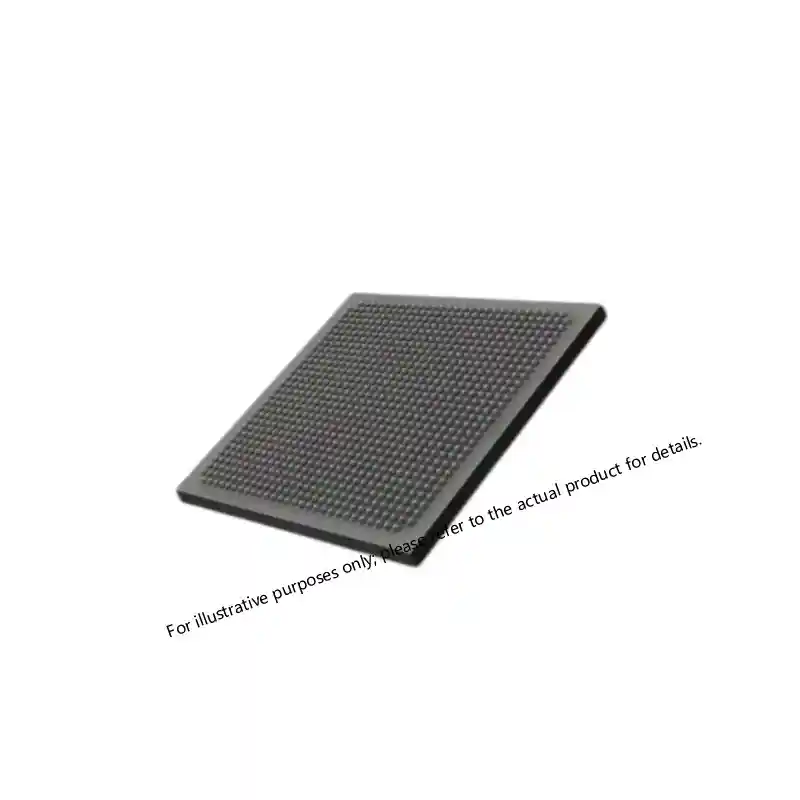
Military avionics adds a layer that the commercial ARINC standard was never designed to govern. Equipment bays on fighters and helicopters cycle through heat, cold, vibration, and electromagnetic interference far beyond a cabin environment. Component selection therefore moves toward ceramic or hermetic packages, temperature grades spanning -55°C to +125°C, and suppliers that can produce lot-level test evidence rather than a datasheet alone. I have seen avionics programs reject parts not because the device was electrically wrong, but because the part mark, date code, and lot documentation did not align across the incoming inspection record. That is the gap where the standard ends and sourcing discipline begins.
Which Electrical Parameters Should You Lock Down Before Sourcing?
Before comparing part numbers, fix the bus speed, the driver output requirements, and the receiver input conditions. The most common sourcing mistakes come from treating an ARINC 429 line driver and a generic differential driver as interchangeable. They are not. The table below separates the two ARINC 429 speed classes for quick reference.
| Parameter | High speed | Low speed |
|---|---|---|
| Bit rate | 100 kbps | 12.5 to 14.5 kbps |
| Encoding | Bipolar return-to-zero | Bipolar return-to-zero |
| Differential output | ±10 V nominal | ±10 V nominal |
| Rise and fall time | Tight | Relaxed |
| Typical placement | Flight-critical data paths | Maintenance and non-critical paths |
Driver current matters when a single transmitter must reach multiple receivers on a long cable run. If the driver cannot source enough current while holding the differential voltage within tolerance, the far-end receiver may see marginal levels under load. We size this path first when a new avionics LRU design moves from schematic to sourcing.
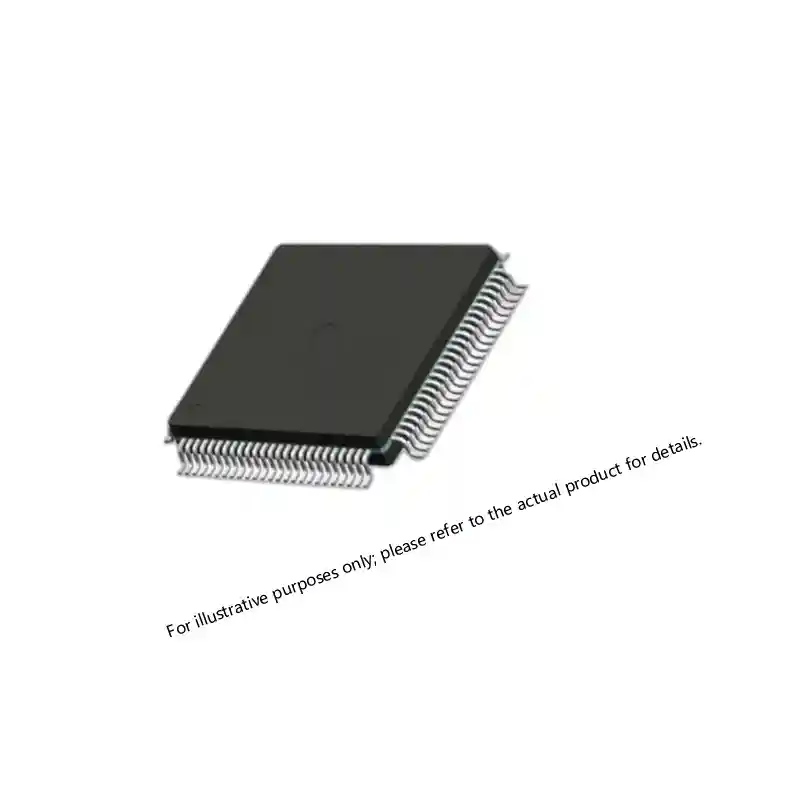
Receiver sensitivity and common-mode range deserve equal attention. Military installations route ARINC 429 wiring through bundles that also carry high-power switching signals, so the receiver must reject coupled transients without mistaking noise for valid words. Lightning and induced transient hardening, often verified under DO-160 Section 22 test levels, is a differentiator between a true hi-rel ARINC 429 receiver and a commercial part with an extended temperature label. If your program must survive those transients, confirm the receiver’s tested immunity level before committing to a part number.
How Do You Verify Traceability and Documentation for ARINC 429 ICs?
Traceability is where ARINC 429 sourcing either holds together or falls apart. A part number matched at a lower price means little if the certificate of conformance does not tie back to the original manufacturer lot, or if the date code and country of origin do not align with the documentation.
For every ARINC 429 transceiver or receiver lot, the paper trail should include the certificate of conformance, the date code, the lot number, the country of origin, and the supplier’s source authorization or equivalent evidence of the supply chain path. Where the program mandates inspection testing, request the test report and confirm the test lot matches the shipped lot. Incoming inspection at most defense avionics sites will reject any lot where those identifiers do not line up, and that rejection can sit in a quarantine queue for weeks.
Counterfeit risk exists because older ARINC 429 part numbers are attractive to gray-market channels. A device that has been resurfaced or relabeled may pass a quick electrical check and then fail later under thermal or vibration stress. We look for signs of inconsistent marking, duplicate date codes across supposedly different lots, or vendors that cannot explain where a discontinued part came from. When the chain of custody cannot be documented, the correct response is to walk away from that lot.
If your program needs ARINC 429 transceivers and receivers with specific C of C formatting, source authorization letters, or third-party test reports, confirm the documentation trail before finalizing the BOM. Send a sample of your incoming documentation requirements to xuansc2144@gmail.com and we will confirm what can be provided.
How Should You Source ARINC 429 Transceivers and Receivers for Sustainment and New Builds?
New builds and sustainment programs present different supply risks. A new build starts with a known production lot and a fresh qualification record. A sustainment program may need a part number the original maker discontinued years ago, and the engineering team may be looking for a form-fit-function replacement without reopening a qualification.
For new builds, distributor stock that carries full lot traceability is often the fastest path to production. For sustainment, the sequence changes: first verify whether the original part number still has authorized supply, then evaluate alternate pin-compatible parts, and only then consider last-time-buy or excess inventory. Excess stock from an unknown source should be treated with the same suspicion as any other uncontrolled lot.
Obsolescence management starts early. Avionics programs that run for two or three decades will outlive several individual ARINC 429 product life cycles. Program managers who wait until a shortage appears will pay schedule pressure rather than planning. The more durable approach records the original part number, the approved alternates, and the qualification evidence in one place, so the next shortage does not trigger a new engineering investigation.
How Do You Secure a Compliant ARINC 429 Transceiver Supply?
Most sourcing delays are not about price. They come from waiting on documentation, verifying lot identity, or discovering that an alternate part no longer matches the original package outline. A compliant ARINC 429 transceiver supply gets built before the first order is placed.
If your program needs ARINC 429 transceivers and receivers with full lot traceability, C of C paperwork, and confirmed lead times, send your part numbers and required documentation to xuansc2144@gmail.com. We will respond with stock status, lead time, and the compliance trail for the specific lots we can offer.
What Do Procurement Teams Ask About ARINC 429 Transceivers and Receivers?
What is the difference between ARINC 429 transceivers and receivers?
A transceiver combines a line driver and a line receiver in one package; a receiver only senses incoming differential data. If the LRU only listens on the bus, a receiver saves board space and cost. If the unit must transmit and receive, a transceiver reduces parts count and simplifies layout. Driver-only parts also exist for transmit-only functions.
Is ARINC 429 the same as MIL-STD-1553?
No. ARINC 429 and MIL-STD-1553 are separate databus standards with different signaling, topology, and word formats. ARINC 429 is a simplex broadcast bus running at 100 kbps or 12.5 to 14.5 kbps. MIL-STD-1553 uses a dual-redundant transformer-coupled bus at 1 Mbps with command and response addressing. They can coexist in the same aircraft, but a transceiver from one standard does not replace a transceiver from the other.
How do you source ARINC 429 receiver part numbers after the original maker discontinues them?
It depends on whether the program accepts form-fit-function alternates. If the qualification permits an alternate, evaluating a pin-compatible transceiver or receiver from another hi-rel supplier is often the fastest path. If the program will not accept an alternate, distributor stock, last-time buys, or excess inventory from a documented source remain the only options. In that second case, lot traceability becomes the deciding factor, because uncontrolled excess stock carries the most counterfeit risk.
What documentation should accompany every ARINC 429 transceiver shipment?
In programs we have worked on, the shipments that clear incoming inspection fastest carry a complete set: a certificate of conformance matched to the lot, a visible and consistent date code, country of origin, manufacturer source evidence, and test data when required. Missing any one of those can push the parts into quarantine. Before you commit to a supplier, ask for a sample paperwork package for the specific part number you plan to buy. Share your part numbers and documentation requirements with xuansc2144@gmail.com and we will confirm the compliance trail available for those lots.
If you’re interested, check out these related articles:
Virtex-7 690T FPGA: Performance, Packaging, and Reliability Insights
Virtex-7 XC7VX690T: Performance, Reliability, and Integration
Virtex-7 690T FPGA: Performance for Mission-Critical Systems
XC7VX485T FPGA: Virtex-7 Performance for Defense
XC7VX485T Virtex-7 FPGA: Performance and Sourcing for Defense