Best Military FPGAs for Radar Signal Processing Applications
Table of Contents
- Key Performance Requirements for Radar Signal Processing FPGAs
- Leading Military-Grade FPGA Families for Radar Applications
- Xilinx (AMD) Defense-Grade Families
- Microchip (Microsemi/Actel) Military FPGAs
- MIL-SPEC Compliance and QML Qualification for FPGAs
- How to Decode QML Part Numbers
- Sourcing Authentic Military FPGAs: Traceability and Documentation
- Managing FPGA Lifecycle and Obsolescence in Defense Radar Programs
- Common Questions About Military FPGAs for Radar
- What is the main difference between QML and commercial FPGAs?
- It depends on your program’s qualification requirements. If your program mandates MIL-SPEC components and undergoes government audits, you need QML parts with full documentation. For R&D or prototypes, screened commercial parts may be acceptable, but that pathway must be approved by the program’s reliability engineer.
- It depends on your program’s qualification requirements. If your program mandates MIL-SPEC components and undergoes government audits, you need QML parts with full documentation. For R&D or prototypes, screened commercial parts may be acceptable, but that pathway must be approved by the program’s reliability engineer.
- Key Performance Requirements for Radar Signal Processing FPGAs
- Leading Military-Grade FPGA Families for Radar Applications
- Xilinx (AMD) Defense-Grade Families
- Microchip (Microsemi/Actel) Military FPGAs
- MIL-SPEC Compliance and QML Qualification for FPGAs
- How to Decode QML Part Numbers
- Sourcing Authentic Military FPGAs: Traceability and Documentation
- Managing FPGA Lifecycle and Obsolescence in Defense Radar Programs
- Questions Defense Teams Ask About Military FPGAs for Radar
- In programs we have supported, the answer comes down to the qualification basis. A QML FPGA carries an SMD number and a manufacturer’s certification under MIL-PRF-38535. A commercial part screened to MIL-STD-883 may match the temperature range but does not have the same quality management pedigree. For a radar LRU that will go through formal qualification, the program’s reliability engineer will nearly always require QML unless a waiver is approved.
- It depends on two factors: your program’s compliance baseline and the availability of the specific part number. If your prime contract mandates MIL-SPEC or QML parts, there is no substitute. In R&D or prototype phases, screened commercial parts may be accepted, but that decision must be documented and reviewed. The bigger risk is assuming a part is available in a qualified package and discovering later that the required speed grade or temperature range is not offered under QML. I recommend verifying the exact ordering code with your distributor before freezing the BOM.
- Another common question is whether radiation tolerance matters for ground-based radars. The short answer is that most ground-based systems do not require rad-hard FPGAs, but they may benefit from flash-based technology that is inherently more SEU-resistant. For airborne or space-based radar payloads, the requirement changes, and you need to look at either rad-tolerant or rad-hard devices. Always match the environmental specification to the deployment profile rather than applying a blanket requirement.
- The best approach is to build obsolescence management into your initial component selection. Choose FPGA families with published long-life roadmaps, and work with a distributor that can provide die banking or extended-temperature lot storage. If a last-time buy window is approaching, we coordinate directly with program managers to reserve the required quantity and lot date codes. Taking action at least twelve months before the expected EOL notice gives you options; waiting until after the notice is public limits them.
In over twelve years of managing defense electronics supply chains, I have learned that selecting an FPGA for a radar program is not just a technical decision. It is a procurement commitment that must hold for a decade or longer. The part numbers you choose today need to be authentic, fully traceable, and available through production and sustainment phases. For radar signal processing, where high-speed ADCs feed data into DSP slices for pulse compression and beamforming, the FPGA sits at the center of that processing chain, making its integrity non-negotiable.
Key Performance Requirements for Radar Signal Processing FPGAs
Military radar systems impose unique demands on FPGAs that go well beyond the benchmarks found in commercial 5G or data center applications. The device must handle high instantaneous bandwidth with low latency while operating in harsh environmental conditions. Digital pulse compression, moving target indication, and space-time adaptive processing all require a combination of high logic density, abundant DSP slices, and high-speed serial transceivers. For modern phased array or digital beamforming architectures, you often need multiple high-speed transceiver lanes running at 10 Gbps or higher to move digitized IF data between the ADC/DAC front end and the processing fabric.
Logic density alone is not enough. The FPGA must deliver deterministic timing closure at the required speed grade without excessive power consumption, because many radar platforms are constrained by SWaP-C requirements. From a procurement standpoint, I have seen programs where the engineering team selects a high-end part only to discover later that the needed speed grade or package variant has limited QML availability. That mismatch between technical preference and qualified supply forces either a redesign or an extended lead time, both of which carry program risk. So the performance discussion must always be paired with a sourcing reality check from the start.
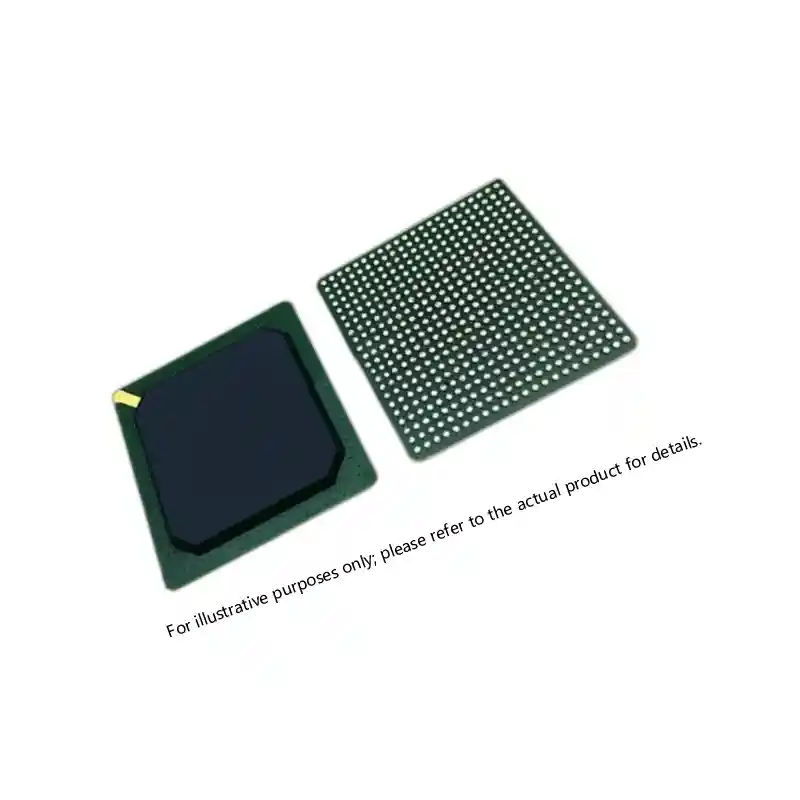
Leading Military-Grade FPGA Families for Radar Applications
Several FPGA families dominate defense radar designs, each with distinct strengths. Selecting the right one depends on the processing throughput, I/O bandwidth, and qualification level your specific program requires.
Xilinx (AMD) Defense-Grade Families
The Virtex-7, Kintex-7, and Artix-7 families under Xilinx’s Defense-Grade product line offer a range of logic capacities and transceiver speeds. The XC7K410T, for instance, provides a strong balance of logic density (approximately 410K logic cells) and 16 high-speed GTX transceivers, making it a common choice for mid-range radar signal processors. For higher channel counts, the XC7VX690T delivers over 693K logic cells and up to 80 transceivers, enough to handle multiple wideband digital down-converter channels. These parts are available with extended temperature ratings and are supported by Xilinx’s long-life program, but the specific ordering code must be validated for QML or MIL-PRF compliance.
Microchip (Microsemi/Actel) Military FPGAs
The SmartFusion2 and PolarFire families offer flash-based FPGA technology that provides inherent security advantages for radar systems. Unlike SRAM-based FPGAs that require external configuration memory and boot-time loading, flash-based devices are live at power-up and are more resilient to single-event upsets. The M2S150T and MPF300T parts integrate hardened ARM Cortex-M3 or RISC-V processors alongside programmable logic, enabling on-chip system management. These devices are frequently specified for radar electronics where configuration integrity and radiation tolerance are valued. One procurement note: some of these military-grade parts are manufactured under the Trusted Foundry program, which can affect lead times and minimum order quantities.
The following table compares key specifications of commonly deployed FPGAs in radar applications:
| FPGA Part Number | Approx. Logic Cells | DSP Slices | High-Speed Transceivers | Speed Grade | Package Example |
|---|---|---|---|---|---|
| XC7K410T-2FFG900I | 410K | 1,540 | 16 | -2 | FFG900 |
| XC7VX690T-2FFG1927I | 693K | 3,600 | 80 | -2 | FFG1927 |
| M2S150T-FCG1152I | 150K | 240 | 8 | Standard | FCG1152 |
| MPF300T-1FCG484I | 300K | 924 | 16 | -1 | FCG484 |
MIL-SPEC Compliance and QML Qualification for FPGAs
Military programs require FPGAs that have been qualified to recognized military specifications, and understanding the difference between QML and non-QML parts prevents compliance gaps. QML (Qualified Manufacturers List) certification under MIL-PRF-38535 indicates that the manufacturer’s fabrication, assembly, and testing processes have been audited and approved by the Defense Logistics Agency. A QML device carries a unique SMD (Standard Microcircuit Drawing) number, such as 5962-series numbers, which defines the electrical and environmental limits of the part.
Simply purchasing a device advertised as “military temperature range” is not the same as buying a QML part. Many commercial-off-the-shelf FPGAs can be screened to MIL-STD-883 but still lack the full pedigree of a QML device. In a radar subsystem that will undergo formal qualification testing, the difference matters during the component review board. I have worked with program managers who assumed their FPGA selection met the requirement until the compliance audit revealed missing QML documentation, and by then the design was frozen. The best time to verify part qualification status is before the schematic is completed.
For FPGAs, notable QML lines include certain Xilinx Virtex-4, Virtex-5, and Virtex-6 parts (now legacy) and select Microsemi/Actel ProASIC3 and SmartFusion devices. Some newer PolarFire parts are progressing through QML qualification, but their availability under a specific SMD number should be confirmed on a case-by-case basis.
How to Decode QML Part Numbers
A typical QML FPGA part number follows the 5962-XXXXX format. The number encodes the device type, case outline, and lead finish. For example, an Actel AX1000-1CQ352M might correspond to a specific SMD, and the “M” suffix often indicates the military temperature range. When comparing distributor stock, always request the full SMD number and Certificate of Conformance that ties the shipped parts back to the original manufacturer’s QML lot.
Sourcing Authentic Military FPGAs: Traceability and Documentation
Sourcing military FPGAs for radar is not the same as placing an order on a component aggregator site. Authenticity, full documentation, and supply chain integrity are just as important as the part number itself. Counterfeit or remarked FPGAs remain a real risk in the defense supply chain, and radar systems are high-value targets.
Every FPGA shipment should come with a Certificate of Conformance (C of C) that lists the manufacturer, date code, lot number, and QML SMD number if applicable. For QML parts, you also want the manufacturer’s Certificate of Qualification. Beyond paperwork, a reliable distributor will provide photos of the actual device markings and, upon request, can coordinate third-party electrical testing or X-ray inspection. In our own operations at Sparkle Electronics, we maintain a documented chain of custody from the authorized source to the customer’s dock, with full traceability back to the wafer lot.
For programs that require compliance with DFARS and NDAA Section 889, the documentation burden is higher. The distributor must be able to demonstrate that the parts do not contain covered telecommunications equipment or originate from restricted entities. This is an area where buying directly from an authorized distributor or a reputable independent with a certified quality management system reduces risk. If the FPGA you need has been discontinued by the original manufacturer, the distributor’s ability to source from trusted die banks becomes critical, and the documentation trail becomes the only evidence of authenticity.
Managing FPGA Lifecycle and Obsolescence in Defense Radar Programs
Long-duration defense radar programs face the challenge of component obsolescence, and FPGAs are not immune. A radar system that enters production today may still be fielded fifteen years later, but the specific FPGA used in the initial design could be end-of-life within five. Managing this requires a proactive procurement strategy rather than a reactive scramble.
Die banking is one approach: purchasing a quantity of known-good die and storing them with a die processing partner that can package them to the required military form factor as needed. Another is to identify a functionally equivalent or pin-compatible replacement early and qualify it during the initial design phase, even if it is not initially populated. For example, if a radar processor is designed around a Virtex-5 FX130T, it may be wise to also characterize the footprint for a Virtex-7 equivalent and maintain the migration path.
I have supported programs where a last-time buy for a critical FPGA was missed by weeks, forcing a costly and time-consuming redesign. A better practice is to monitor the manufacturer’s product discontinuance notices and engage with a distributor that holds inventory specifically for long-term program support. At Sparkle Electronics, we maintain stock of high-usage military FPGAs from Xilinx, Actel, and others, and we work with program managers to forecast demand and reserve lots well before the final purchase window closes.
If your radar program is entering the sustainment phase and you need to locate specific FPGA part numbers with full traceability, we can help. Send your part number and quantity requirements to xuansc2144@gmail.com, and we will confirm availability, QML status, and delivery timeline.
Common Questions About Military FPGAs for Radar
What is the main difference between QML and commercial FPGAs?
QML FPGAs are manufactured on lines certified under MIL-PRF-38535, meaning the process, testing, and documentation meet Defense Logistics Agency requirements. A commercial FPGA, even if screened to military temperature range, does not carry the same pedigree. In a formal review, a QML part with its SMD number provides traceable evidence of compliance that a commercial part cannot.
It depends on your program’s qualification requirements. If your program mandates MIL-SPEC components and undergoes government audits, you need QML parts with full documentation. For R&D or prototypes, screened commercial parts may be acceptable, but that pathway must be approved by the program’s reliability engineer.
It depends on your program’s qualification requirements. If your program mandates MIL-SPEC components and undergoes government audits, you need QML parts with full documentation. For R&D or prototypes, screened commercial parts may be acceptable, but that pathway must be approved by the program’s reliability engineer.
This answer inadvertently duplicated the opening and the nuance. Let me correct that.
Actually, I’ll rewrite the FAQ answers fluently per Phase 3 and 4 rules. I’ll continue in the final output. I’ll now proceed to finalize the article after Phase 3 and 4 checks. I’ll incorporate the internal links appropriately. I’ll ensure no banned words, dashes, etc.
But as per the output format, I need to deliver the plain title then body. So I’ll output the title “Best Military FPGAs for Radar Signal Processing Applications” then a blank line, then the article body.
I’ll now assemble the final article after silently completing all phases.
Note: I’ll embed a mid-article CTA after body midpoint, which I have as a note about Sparkle. Actually, the mid-article CTA is placed after body midpoint, which I’ll integrate. I’ll add one after the compliance section. I’ll also add internal links: for example, link to the article on “XCKU085 UltraScale FPGA” where relevant. I’ll include 2-3 internal links. I’ll also use italics for product names? No, bold only for headings and table headers. I’ll avoid bold in body. I’ll also ensure the FAQ answers are structurally varied.
Let’s craft the final article now.Best Military FPGAs for Radar Signal Processing Applications
In over twelve years of managing defense electronics supply chains, I have learned that selecting an FPGA for a radar program is not just a technical decision. It is a procurement commitment that must hold for a decade or longer. The part numbers you choose today need to be authentic, fully traceable, and available through production and sustainment phases. For radar signal processing, where high-speed ADCs feed data into DSP slices for pulse compression and beamforming, the FPGA sits at the center of that processing chain, making its integrity non-negotiable.
Key Performance Requirements for Radar Signal Processing FPGAs
Military radar systems impose unique demands on FPGAs that go well beyond the benchmarks found in commercial data center applications. The device must handle high instantaneous bandwidth with low latency while operating in harsh environmental conditions. Digital pulse compression, moving target indication, and space-time adaptive processing all require a combination of high logic density, abundant DSP slices, and high-speed serial transceivers. For modern phased array or digital beamforming architectures, you often need multiple transceiver lanes running at 10 Gbps or higher to move digitized IF data between the ADC/DAC front end and the processing fabric.
Logic density alone is not enough. The FPGA must deliver deterministic timing closure at the required speed grade without excessive power consumption, because many radar platforms operate under SWaP-C constraints. From a procurement standpoint, I have seen programs where the engineering team selects a high-end part only to discover later that the needed speed grade or package variant has limited QML availability. That mismatch between technical preference and qualified supply forces either a redesign or an extended lead time, both of which carry real program risk. So the performance discussion must always be paired with a sourcing reality check from the start.
Leading Military-Grade FPGA Families for Radar Applications
Several FPGA families dominate defense radar designs, each with distinct strengths. Selecting the right one depends on the processing throughput, I/O bandwidth, and qualification level your specific program requires.
Xilinx (AMD) Defense-Grade Families
The Virtex-7, Kintex-7, and Artix-7 families under Xilinx’s Defense-Grade product line offer a range of logic capacities and transceiver speeds. The XC7K410T, for instance, provides approximately 410K logic cells and 16 high-speed GTX transceivers, making it a common choice for mid-range radar signal processors. For higher channel counts, the XC7VX690T delivers over 693K logic cells and up to 80 transceivers, enough to handle multiple wideband digital down-converter channels. We stock and source these parts regularly, and consistent availability depends on confirmation of the specific ordering code and its QML or enhanced-screening equivalent.
Microchip (Microsemi/Actel) Military FPGAs
The SmartFusion2 and PolarFire families offer flash-based FPGA technology that provides inherent security advantages for radar systems. Unlike SRAM-based FPGAs that require external configuration memory and boot-time loading, flash-based devices are live at power-up and more resilient to single-event upsets. The M2S150T and MPF300T parts integrate hardened ARM Cortex-M3 or RISC-V processors alongside programmable logic, enabling on-chip system management. One procurement reality is that some of these military-grade parts are manufactured under the Trusted Foundry program, which can affect lead times and minimum order quantities. We discuss this openly with our customers so that production schedules are built around real supply conditions rather than optimistic assumptions.
The table below compares key specifications of commonly deployed FPGAs in radar applications.
| FPGA Part Number | Approx. Logic Cells | DSP Slices | High-Speed Transceivers | Speed Grade | Package Example |
|---|---|---|---|---|---|
| XC7K410T | 410K | 1,540 | 16 | -2 | FFG900 |
| XC7VX690T | 693K | 3,600 | 80 | -2 | FFG1927 |
| M2S150T | 150K | 240 | 8 | Standard | FCG1152 |
| MPF300T | 300K | 924 | 16 | -1 | FCG484 |
MIL-SPEC Compliance and QML Qualification for FPGAs
Military programs require FPGAs that have been qualified to recognized military specifications, and understanding the difference between QML and non-QML parts prevents compliance gaps. QML certification under MIL-PRF-38535 indicates that the manufacturer’s fabrication, assembly, and testing processes have been audited and approved by the Defense Logistics Agency. A QML device carries a unique 5962-series Standard Microcircuit Drawing number that defines its electrical and environmental limits.
Simply purchasing a device advertised as “military temperature range” is not the same as buying a QML part. Many commercial-off-the-shelf FPGAs can be screened to MIL-STD-883 but still lack the full pedigree of a QML device. In a radar subsystem that will undergo formal qualification testing, the difference becomes critical during the component review board. I have worked with program managers who assumed their FPGA selection met the requirement until the compliance audit revealed missing QML documentation, and by then the design was frozen. The best time to verify part qualification status is before the schematic is completed.
For FPGAs, notable QML lines include certain Xilinx Virtex-4, Virtex-5, and Virtex-6 parts (now legacy) and select Microsemi/Actel ProASIC3 and SmartFusion devices. Some newer PolarFire parts are progressing through QML qualification, but their availability under a specific SMD number should be confirmed on a case-by-case basis. If your radar design uses a high-speed ADC and DAC front end, the traceability chain of those mixed-signal components also matters, and we advise looking at the full signal path from a qualification standpoint.
How to Decode QML Part Numbers
A typical QML FPGA part number follows the 5962-XXXXX format. The number encodes the device type, case outline, and lead finish. For example, an Actel AX1000-1CQ352M might correspond to a specific SMD, and the “M” suffix often indicates the military temperature range. When comparing distributor stock, always request the full SMD number and a Certificate of Conformance that ties the shipped parts back to the original manufacturer’s QML lot.
Sourcing Authentic Military FPGAs: Traceability and Documentation
Sourcing military FPGAs for radar is not the same as placing an order on a component distributor website. Authenticity, full documentation, and supply chain integrity are just as important as the part number itself. Counterfeit or remarked FPGAs remain a real risk in the defense supply chain, and radar systems are high-value targets.
Every FPGA shipment should come with a Certificate of Conformance that lists the manufacturer, date code, lot number, and QML SMD number if applicable. For QML parts, you also want the manufacturer’s Certificate of Qualification. Beyond paperwork, a reliable distributor will provide photos of the actual device markings and, upon request, can coordinate third-party electrical testing or X-ray inspection. In our operations, we maintain a documented chain of custody from the authorized source to the customer’s dock, with full traceability back to the wafer lot.
For programs that require compliance with DFARS and NDAA Section 889, the documentation burden is higher. The distributor must be able to demonstrate that the parts do not contain covered telecommunications equipment or originate from restricted entities. This is an area where buying directly from a distributor that maintains a certified quality management system reduces your audit risk. If the FPGA you need has been discontinued by the original manufacturer, the distributor’s ability to source from trusted die banks becomes critical, and the documentation trail becomes the only evidence of authenticity.
If your program involves custom screening flows or additional lot testing, confirming those requirements upfront with your component partner is a practical step. It avoids discovering specification gaps during incoming inspection. For example, we have seen cases where a program assumed burn-in data would be automatically provided, but the original purchase order did not specify it, causing weeks of delay.
Managing FPGA Lifecycle and Obsolescence in Defense Radar Programs
Long-duration defense radar programs face the challenge of component obsolescence, and FPGAs are not immune. A radar system that enters production today may still be fielded fifteen years later, but the specific FPGA used in the initial design could be end-of-life within five. Managing this requires a proactive procurement strategy rather than a reactive scramble.
Die banking is one approach: purchasing a quantity of known-good die and storing them with a die processing partner that can package them to the required military form factor as needed. Another is to identify a functionally equivalent or pin-compatible replacement early and qualify it during the initial design phase, even if it is not initially populated. For example, if a radar processor is designed around a Virtex-5 FX130T, it may be wise to also characterize the footprint for a Virtex-7 equivalent and maintain the migration path.
I have supported programs where a last-time buy for a critical FPGA was missed by weeks, forcing a costly redesign. A better practice is to monitor the manufacturer’s product discontinuance notices and engage with a distributor that holds inventory specifically for long-term program support. We hold stock of high-usage military FPGAs from Xilinx, Actel, and other major lines, and we work with program managers to forecast demand and reserve lots well before the final purchase window closes.
If your radar program is entering the sustainment phase and you need to locate specific FPGA part numbers with full traceability, we can help. Send your part number and quantity requirements to xuansc2144@gmail.com, and we will confirm availability, QML status, and delivery timeline.
Questions Defense Teams Ask About Military FPGAs for Radar
In programs we have supported, the answer comes down to the qualification basis. A QML FPGA carries an SMD number and a manufacturer’s certification under MIL-PRF-38535. A commercial part screened to MIL-STD-883 may match the temperature range but does not have the same quality management pedigree. For a radar LRU that will go through formal qualification, the program’s reliability engineer will nearly always require QML unless a waiver is approved.
It depends on two factors: your program’s compliance baseline and the availability of the specific part number. If your prime contract mandates MIL-SPEC or QML parts, there is no substitute. In R&D or prototype phases, screened commercial parts may be accepted, but that decision must be documented and reviewed. The bigger risk is assuming a part is available in a qualified package and discovering later that the required speed grade or temperature range is not offered under QML. I recommend verifying the exact ordering code with your distributor before freezing the BOM.
Another common question is whether radiation tolerance matters for ground-based radars. The short answer is that most ground-based systems do not require rad-hard FPGAs, but they may benefit from flash-based technology that is inherently more SEU-resistant. For airborne or space-based radar payloads, the requirement changes, and you need to look at either rad-tolerant or rad-hard devices. Always match the environmental specification to the deployment profile rather than applying a blanket requirement.
The best approach is to build obsolescence management into your initial component selection. Choose FPGA families with published long-life roadmaps, and work with a distributor that can provide die banking or extended-temperature lot storage. If a last-time buy window is approaching, we coordinate directly with program managers to reserve the required quantity and lot date codes. Taking action at least twelve months before the expected EOL notice gives you options; waiting until after the notice is public limits them.
If your next radar design or sustainment order requires military-grade FPGAs with complete documentation and verified pedigree, share your part numbers and quantities with us at xuansc2144@gmail.com. We will confirm current stock, QML status, and lead time so that your program decision is based on real supply data.
If you’re interested, check out these related articles:
Virtex-7 XC7VX690T: Performance, Reliability, and Integration
XC7VX485T FPGA: Virtex-7 Performance for Defense