Sourcing High-Speed MIL-SPEC DACs for Radar Waveform Generation
Table of Contents
- How Sample Rate and Bandwidth Drive Radar DAC Selection
- MIL‑SPEC Screening and What “883” Actually Means for a DAC
- Sourcing Legacy Radar DACs Without Stalling Your Program
- Avoiding Counterfeit DACs in the Military Supply Chain
- Planning DAC Obsolescence for a 15‑Year Radar Sustainment Timeline
- What Radar System Teams Ask About MIL‑SPEC DAC Sourcing
Selecting the right high-speed digital-to-analog converter for radar waveform generation is a decision that directly impacts system performance, from range resolution to jamming resistance. For defense programs relying on MIL‑SPEC components, the choice goes beyond paper specification comparisons. It is a sourcing challenge shaped by lead times, obsolescence, and compliance demands. Drawing on over a decade of military electronics procurement experience, this article walks through the critical parameters, supplier landscape, and practical sourcing strategies that determine whether a DAC choice holds up under program execution, not just under lab conditions. While most articles on this topic focus on device datasheets, this one addresses the procurement reality defense engineers face: balancing performance requirements against what is actually available, compliant, and supportable over a 15‑year program lifecycle.
How Sample Rate and Bandwidth Drive Radar DAC Selection
Instantaneous bandwidth and sample rate are the first filter that eliminates most converters from a radar shortlist. A modern phased‑array radar or electronic warfare system often requires direct synthesis of waveforms at intermediate frequencies of several hundred megahertz to several gigahertz. That translates to DAC sample rates of at least 2.4 GSPS when generating a 1 GHz wide chirp, and higher if the architecture uses direct‑RF synthesis. Devices like the AD9162 or the DAC38RF82, which run at 12 GSPS and 9 GSPS respectively with 16‑bit resolution, have become the reference designs for wideband digital radar exciters. At these speeds, the converter’s bandwidth bottleneck often shifts from the DAC core itself to the JESD204B/C serial interface and the FPGA that feeds it. Before locking in a part number, it is worth checking both the analog output bandwidth and the maximum lane rate of the digital interface, because a DAC that meets the waveform specification alone is not yet a usable channel.
If your program involves direct‑RF synthesis above 6 GHz, it is worth confirming the DAC’s updated clock rate with the latest silicon revision, as some devices have been respun for higher Fmax since their original datasheet publication. Reach out at xuansc2144@gmail.com to verify current lot capabilities.
MIL‑SPEC Screening and What “883” Actually Means for a DAC
The gap between an industrial‑temperature AD9164 and its military‑screened equivalent is not a single test flag. It is an additional set of environmental screening steps defined by MIL‑STD‑883, Method 5004, and for Class B or S devices, the extended visual inspection, stabilization bake, temperature cycling, constant acceleration, and particle impact noise detection tests that catch package and die‑attach failures before a converter ever reaches a burn‑in rack. For radar waveform generators, the most common screening requirement is /883B, which adds 160 hours of burn‑in at 125°C and requires all pre‑ and post‑burn‑in electrical tests to fall within the datasheet limits, not an acceptance delta. We have seen programs attempt to save cost by sourcing commercial converters and performing upscreening externally, only to find that the die revision of the commercial part is not the same as the MIL‑qualified version, a mismatch that invalidates the wafer lot traceability required for a Certificate of Conformance. For a radar exciter that will be depot‑maintained for two decades, the paperwork gap alone can outweigh the unit cost difference.
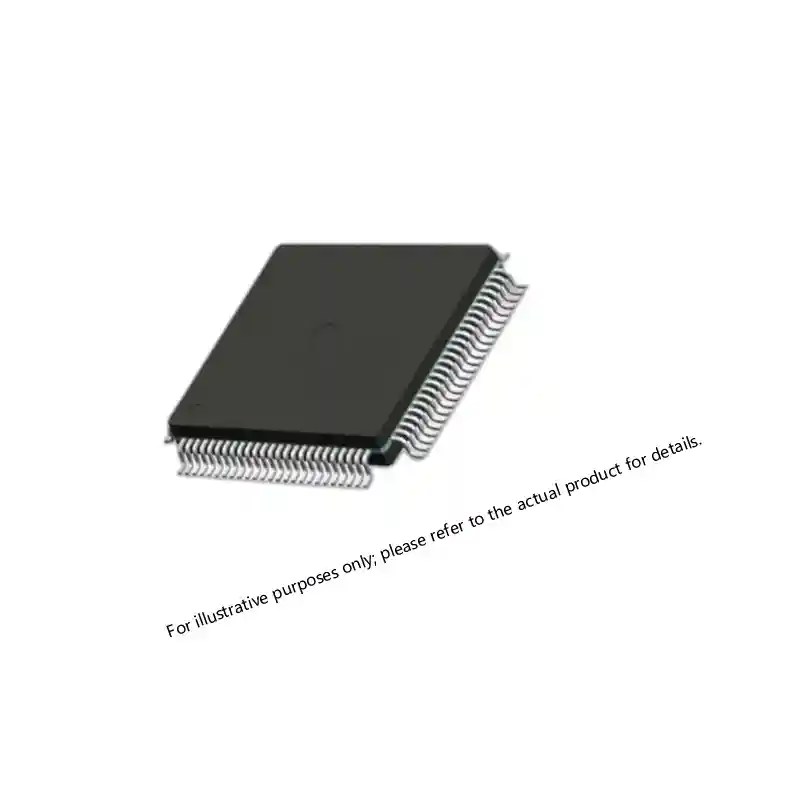
| DAC Part Number | Sample Rate | Resolution | Output Type | Interface | Screening Options |
|---|---|---|---|---|---|
| AD9164BBCAZ | 12 GSPS | 16‑bit | RF DAC | JESD204B | /883B, QML‑V |
| DAC38RF82IAAV | 9 GSPS | 16‑bit | RF DAC | JESD204B | QML‑V |
| AD9172BBPZ | 12 GSPS | 16‑bit (dual) | RF DAC | JESD204B | /883 |
| DAC5675AMHFG‑V | 400 MSPS | 16‑bit (dual) | Current‑Output | LVDS | MIL‑PRF‑38535 |
| AD9154BCPZ | 2.4 GSPS | 16‑bit (quad) | Current‑Output | JESD204B | /883 |
Sourcing Legacy Radar DACs Without Stalling Your Program
One of the more difficult sourcing problems in defense electronics is the active radar program that was designed around a DAC now marked as “not recommended for new design” or constrained to last‑time‑buy status. Devices like the DAC5675A or the AD9788, once standard for S‑band and X‑band phased‑array exciters, still appear in depot maintenance bills of material and in ongoing production builds because the waveform qualification effort for a form‑fit‑function replacement is often measured in years, not months. What a component distributor can contribute in that situation is not just the part number at a price, but access to wafer bank and die bank programs that the OEM may have already closed to new orders. At Sparkle Electronics, we regularly support legacy radar programs by sourcing from multiple authorized and qualified independent channels, with every device accompanied by a full chain‑of‑custody documentation package that starts from the original manufacturer’s lot traveler and includes third‑party electrical verification when required. If your program is facing an end‑of‑life notification on a radar DAC, a practical first step is to send the exact part number and remaining program quantity to us at xuansc2144@gmail.com. We can often locate factory‑sealed inventory from die banks that are not visible through standard distribution portals.
Avoiding Counterfeit DACs in the Military Supply Chain
The counterfeit component risk for high‑speed data converters is not evenly distributed. Parts that are in short supply, have long lead times, or have a known premium between commercial and military grades attract the most attention from counterfeiters, and radar‑grade DACs check all three boxes. The most common forgery techniques we have encountered are blank packages that are relabeled with laser‑etched military part numbers, and functional but commercial‑grade converters that have been remarked as /883 devices after a surface scrub. Neither will survive a proper incoming inspection that includes decapsulation and die marking comparison against the original manufacturer’s known‑good die photograph, but many smaller defense contractors lack an in‑house failure analysis lab and rely entirely on the distributor’s own authentication. For that reason, the single most protective measure a buyer can take is to source MIL‑SPEC DACs only through distributors that maintain AS9120 or AS6081 certification and that can provide a full lot‑traceability package, not just a generic Certificate of Conformance. At Sparkle, every military data converter we ship is visually inspected under 40× magnification, electrically tested to the manufacturer’s test limits when the line item quantity justifies it, and shipped with the original manufacturer’s lot codes intact and verifiable.
Planning DAC Obsolescence for a 15‑Year Radar Sustainment Timeline
When a radar system enters the sustainment phase, the DAC becomes a single‑point failure risk for the entire waveform generation chain. An obsolescence management plan that waits for a discontinuation notice is already late, because by that point the OEM’s remaining wafer stock may be fully allocated to the largest primes. For a program with a 15‑year sustainment horizon, the procurement strategy should include a technology refresh trigger at approximately year seven that evaluates both pin‑compatible replacements and platform‑level redesign options. In our experience, the most resilient approach is to establish a die bank when the system first enters production, purchasing a quantity of wafers or tested dice equal to the projected sustainment demand and storing them under nitrogen at the foundry or at an accredited third‑party die bank. This is not a low‑cost option, but for a radar system where re‑qualifying the waveform chain would cost more than the die bank, it is a straightforward insurance decision. Even without a formal die bank, maintaining a strategic stock of fully packaged and tested DACs for the most constrained part numbers, such as certain military‑grade AD9164 speed grades that have historically been on allocation, provides a buffer that buys time for a redesign when allocation windows tighten unexpectedly.
What Radar System Teams Ask About MIL‑SPEC DAC Sourcing
What is the real lead time difference between commercial and MIL‑SPEC DACs?
Lead time for a commercial‑grade DAC might be 8 to 12 weeks when demand is stable, but the same die in an /883B flow often extends to 26 weeks or more because the burn‑in and post‑burn‑in test steps add fixed calendar time that cannot be compressed. This difference must be factored into production scheduling from the beginning; ordering a MIL‑SPEC DAC three months before assembly is unrealistic and will cause a line‑down situation.
Can I use an industrial‑temperature DAC in a radar if the enclosure is temperature‑controlled?
This decision is more about program documentation than about silicon capability. Many industrial‑temperature converters share the same die as the military version, but the part number and the associated qualification paperwork will not satisfy a customer that requires MIL‑PRF‑38535 compliance. If the prime contract or the system specification explicitly calls out QML or /883 requirements, substituting an industrial part, even with additional screening, creates a configuration management discrepancy that can lead to a corrective action request during a quality audit.
How do I confirm that a distributor’s MIL‑SPEC DAC is authentic?
Request the original manufacturer’s certificate of conformance that traces the lot date code back to the wafer fab and assembly site. Follow up with a visual comparison of the device marking against the manufacturer’s known‑good marking standard, which is usually available from the OEM’s quality organization. For high‑quantity line items, consider random sample testing at an independent test house that can run key AC parameters, such as spurious‑free dynamic range and two‑tone intermodulation, against the datasheet limits. If the distributor hesitates on any of these steps, treat the lot as unverified and do not accept it into your incoming inventory.
Is a die bank worth the cost for a radar program that only builds 50 units per year?
If the DAC is a sole‑source, high‑speed converter that is essential to system operation, a die bank that covers 10 years of production at 50 units per year, plus a 20% attrition margin, is likely cheaper than a mid‑life redesign that requires new waveform qualification, EMI recertification, and flight test. Compare the die bank cost, usually a few hundred thousand dollars for a device like the AD9164, against the full cost of a technology refresh program, which often runs into the millions, and the business case becomes clear.
Why should I work with a distributor that specializes in military components rather than buying directly from the OEM?
OEMs typically enforce minimum order quantities, allocate scarce parts to their largest accounts first, and do not provide the same level of lot‑specific documentation support for small to mid‑sized programs. A specialized military component distributor maintains inventory across multiple OEMs and part numbers, can combine smaller line items into a single compliant shipment, and often holds stock of allocation‑constrained DACs that are not available to general distribution. If your program requires a specific date code or a particular screening flow, share your requirements at xuansc2144@gmail.com and we will confirm what is in stock and what can be sourced with the necessary documentation.
If you’re interested, check out these related articles:
XC7VX485T Virtex-7 FPGA: Performance and Sourcing for Defense
XCKU085 UltraScale FPGA: Performance for Critical Systems
Virtex-7 XC7VX690T: Performance, Reliability, and Integration
Virtex-7 690T FPGA: Performance, Packaging, and Reliability Insights
XCKU115 UltraScale FPGA: Powering Critical Defense Systems