Space-Grade FPGAs for Satellite Payload: A Sourcing Guide
Table of Contents
- What radiation requirements matter for satellite payload FPGAs?
- Anti-fuse, SRAM, or flash: which FPGA technology is right for your satellite payload?
- How do you source space-grade FPGAs with confidence?
- What documentation and certifications should you demand?
- How can you manage lead times and obsolescence for long-duration satellite programs?
- Common Questions About Space-Grade FPGA Procurement
- What is the difference between QML Class V and Class Q for space applications?
- Can I up-screen a commercial FPGA for a LEO satellite program?
- How long are typical lead times for space-grade FPGAs from manufacturers?
- What should I look for in an independent distributor for space-grade FPGAs?
- Is it safe to buy discontinued space-grade FPGAs from excess inventory?
Selecting an FPGA for a satellite payload involves more than choosing the highest gate count or fastest speed grade. The device must survive the radiation environment of space, meet stringent qualification standards, and arrive with documentation that proves its authenticity and compliance. For procurement managers and design engineers alike, the real challenge is finding a reliable source that can deliver space-grade FPGAs with the necessary traceability and without derailing program schedules. Drawing on over a decade of supporting aerospace and defense electronics supply chains, I have seen how a sourcing decision made early in the design cycle either stabilizes a satellite bus or becomes a costly delay. This guide outlines what to look for in space-grade FPGAs and how to source them for mission success.
What radiation requirements matter for satellite payload FPGAs?
The radiation environment a satellite encounters depends on orbit altitude and inclination. For low Earth orbit, the primary threats are trapped protons and electrons; for geostationary or deep-space missions, cosmic rays and solar particle events become dominant. Three metrics define an FPGA’s suitability for these environments:
Total ionizing dose indicates how much cumulative radiation the device can absorb before parametric drift causes failure. Single-event latchup describes a condition where a heavy ion triggers a parasitic thyristor structure, potentially destroying the device unless power is cycled. Single-event upset refers to a transient bit flip in a configuration memory cell, which in an SRAM-based FPGA can corrupt the logic function.
Space-grade FPGAs are typically rated to TID levels between 100 krad and 300 krad (Si) and characterized for SEL immunity at linear energy transfer thresholds above 60 MeV·cm²/mg. QML Class V qualification per MIL-PRF-38535 subjects devices to accelerated aging, burn-in, and radiation testing beyond commercial off-the-shelf screening. The table below summarizes these key radiation tolerance parameters across several widely used device families.
| FPGA Family | Technology | TID Rating (krad) | SEL Immune | SEU Mitigation |
|---|---|---|---|---|
| Microchip RTG4 | Flash-based | 300 | Yes | On-chip error correction |
| Microchip SmartFusion2 | Flash-based | 100 | Yes | Flash and SRAM ECC |
| Xilinx Virtex-5QV | SRAM with hard mask | 200 | Yes | External scrubbing required |
| Microchip PolarFire | Flash-based | 100 | Yes | Built-in SEU detection and correction |
| Microchip ProASIC3E | Flash-based | 100 | Yes | SEU-immune configuration memory |
Engineers often ask whether a radiation-tolerant commercial FPGA with up-screening can replace a fully qualified device. In limited cases, for short-duration LEO missions with redundancy and mitigation, a screened part may be acceptable. But for high-consequence payloads where a latchup event cannot be tolerated, QML-classified, SEL-immune devices remain the standard. The extra cost is insignificant compared to a mission loss.
Anti-fuse, SRAM, or flash: which FPGA technology is right for your satellite payload?
Space-grade FPGAs come in three fundamental technologies, each with distinct trade-offs for radiation performance, density, and reconfigurability.
Anti-fuse parts are one-time-programmable and inherently immune to configuration memory upsets. They have been used for decades in single-function payload data paths where the logic never changes after deployment. Their limitation is capacity: most anti-fuse FPGAs top out at a few million gates. For modern high-throughput digital signal processing or on-board processing payloads, that gate count is often insufficient.
SRAM-based devices, such as Xilinx’s Virtex-5QV, offer the highest logic density and performance. However, their configuration memory is volatile and susceptible to single-event upsets. Any design using an SRAM FPGA must include a scrubbing mechanism to continuously check and correct the bitstream, plus a radiation-hardened configuration storage device. This adds board complexity, power overhead, and verification effort.
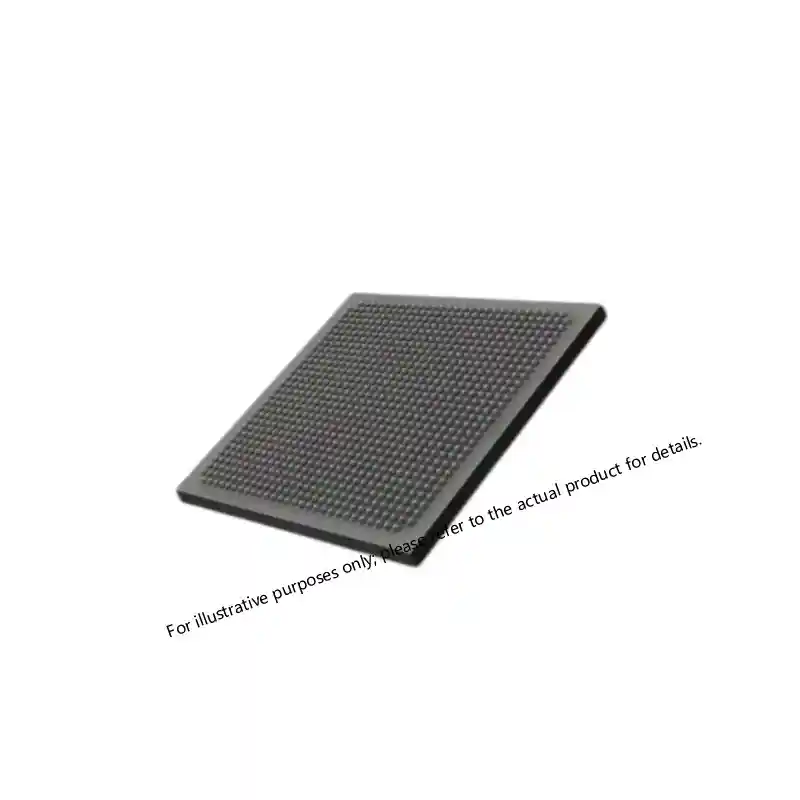
Flash-based FPGAs store their configuration in non-volatile flash cells that are inherently immune to SEU. Families like Microchip’s RTG4 and SmartFusion2 combine this immunity with densities adequate for most satellite payload processing tasks. RTG4, for example, supports 150K logic elements, multiple high-speed SERDES lanes, and error-corrected embedded SRAM. With no external configuration device required, the board-level design is simpler and the single-event upset risk is eliminated for the configuration plane.
Over the past several years, I have watched many programs shift from SRAM and anti-fuse to flash-based FPGAs as the middle-ground technology matured. The design team gains enough density for complex payload algorithms while avoiding the scrubbing burden of SRAM. Programs that previously designed a Virtex-5QV scrubbing controller from scratch can now spend that engineering time on higher-level algorithm validation.
How do you source space-grade FPGAs with confidence?
Sourcing space-grade FPGAs is not the same as placing an order with a broadline catalog distributor. The devices are not shelf-stock items. Lead times of 26 to 52 weeks from the manufacturer are common, and some QML variants are build-to-order with minimum quantities that can exceed the needs of a single satellite bus program.
Authorized distributors offer factory-direct parts with full manufacturer warranty, but they may lack the flexibility to hold inventory for small-quantity, intermittent demand. Independent distributors often stock de-committed build lots, excess inventory, and discontinued parts that are still needed for legacy programs. The challenge is verifying that these parts are authentic, have been stored in controlled conditions, and come with the necessary documentation.
When evaluating a potential supplier for space-grade FPGAs, I advise procurement teams to focus on three capabilities. First, can the distributor provide lot-specific test reports — not just a generic blanket Certificate of Conformance? Second, does the distributor have an in-house or contracted inspection capability for visual and electrical screening? Third, does the distributor understand ITAR, EAR, and export classification, and can they handle end-use statements and documentation without delays?
A supplier that stores components in dry-packaging with humidity indicators, maintains temperature-controlled facilities, and can provide a full chain-of-custody record is worth building a long-term relationship with. I have seen programs delayed by six months because a sourcing partner could not produce the test data the prime contractor’s quality team required.
What documentation and certifications should you demand?
If you cannot trace a component back to the manufacturer’s wafer lot, you cannot trust it in a satellite payload. The baseline document package for every space-grade FPGA procurement should include:
- A Certificate of Conformance referencing the manufacturer’s part number, date code, lot code, and applicable military specification.
- A Certificate of Compliance stating that the parts meet the specific QML class or screening level required.
- Manufacturer lot test data, including temperature cycling, burn-in, and functional test results.
- Chemical analysis reports for RoHS compliance if required by the integrator.
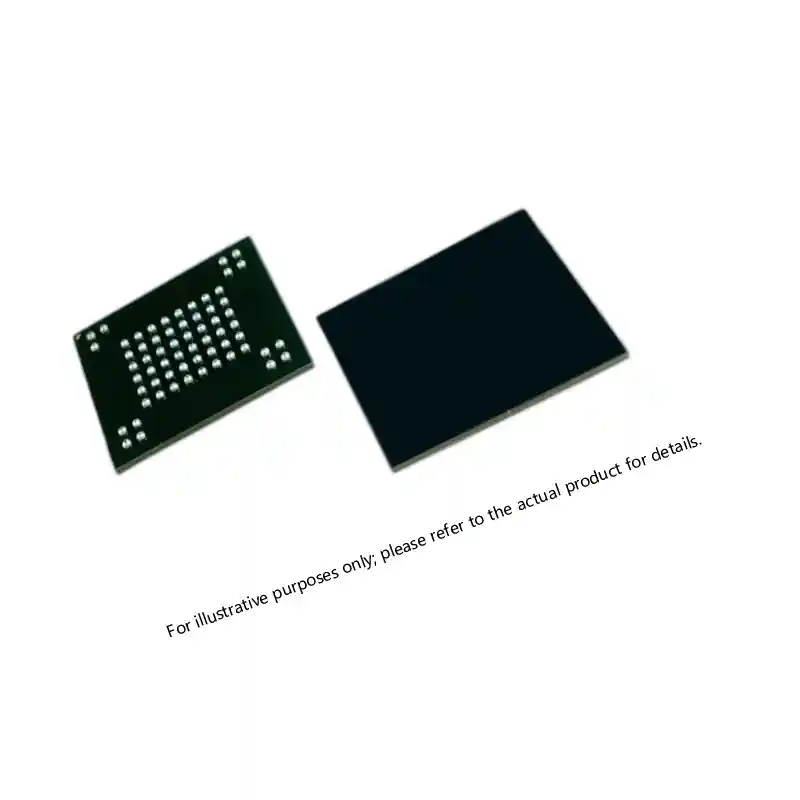
For parts sourced from independent distribution, I always request high-resolution photographs of the actual parts, including legible markings and back-side indicators. A photograph of the package before opening the moisture barrier bag is a simple check that has caught re-marked parts more than once.
Documentation alone does not guarantee authenticity, but gaps or inconsistencies in the paper trail are the first warning sign. If a supplier cannot produce a clear line from the manufacturer’s assembly site to your receiving dock, walk away. Every space program we support includes a documentation review step before parts are released for board assembly. That step has never been optional, and I have never seen a program manager request less documentation over time.
How can you manage lead times and obsolescence for long-duration satellite programs?
Satellite programs often span five to fifteen years from design to end-of-life. The FPGA selected during the design phase may not be in production when the program needs spares or follow-on units. Lead times for space-grade devices rarely improve during a chip shortage cycle, and manufacturer discontinuance notices often arrive with short notice.
A practical mitigation is die banking: purchasing unpackaged die from the manufacturer and storing them in a controlled environment for future assembly. Several foundries offer this under their Defense and Aerospace business agreements. Die banking locks in the specific process revision and fab line, and it can be less expensive than buying finished-packaged parts upfront.
Another strategy is to maintain a strategic buffer stock of the exact part number through a distributor, with periodic electrical testing to confirm storage integrity. For programs using common SRAM-based FPGAs, this can also involve stocking radiation-hardened configuration memories and supporting interface components.
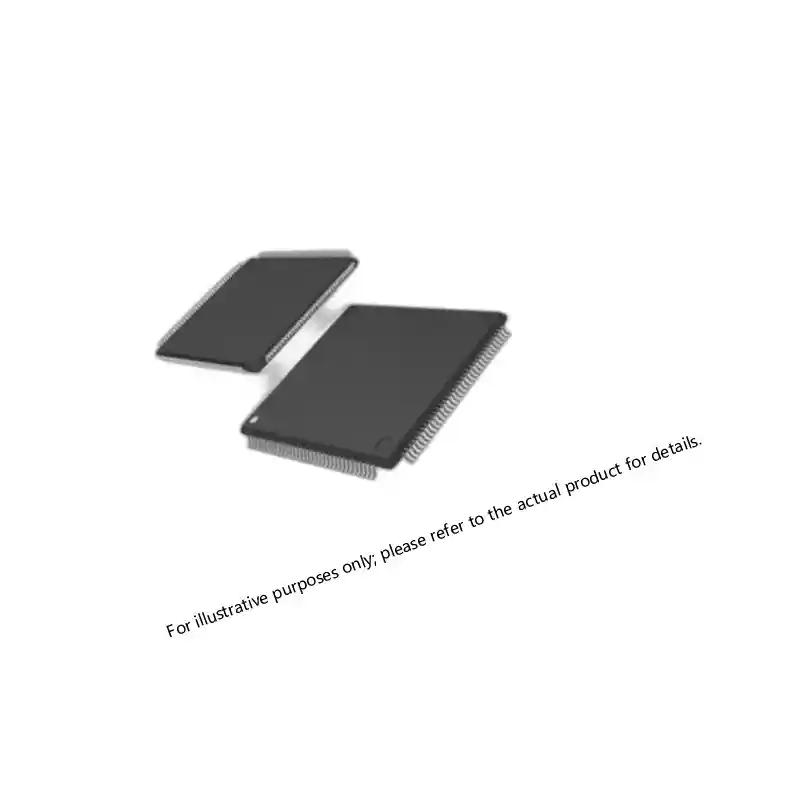
For legacy programs with obsolete FPGAs, independent distribution becomes a critical resource. I have located EOL ProASIC3 and Axcelerator devices for programs that had no alternative — and could not redesign — by working through excess inventory channels. In those situations, incoming inspection with third-party test house verification is non-negotiable. A part that has been sitting in uncontrolled conditions for years may have whisker growth or moisture ingress that renders it unusable despite perfect visual appearance.
Planning for obsolescence should start at the design review. Include a lifecycle risk assessment for each major FPGA part number and identify at least one alternate sourcing path. The cost of a few additional weeks of analysis early in the program is trivial compared to the cost of an emergency redesign when a key part disappears from the market.
If your program involves space-grade FPGAs with specific speed grades, package variants, or QML screening requirements, reach out with your part numbers. Confirming availability, lead-time outlook, and documentation status before the bill of materials is locked can prevent a sourcing bottleneck later. Sparkle Electronics can help with that pre-qualification step and can support your program with traceable, tested devices. Send your part numbers and quantity requirements to xuansc2144@gmail.com.
Common Questions About Space-Grade FPGA Procurement
What is the difference between QML Class V and Class Q for space applications?
QML Class V is reserved for space and launch vehicle applications and includes additional tests such as particle impact noise detection, more stringent screening, and traceability to the wafer lot. QML Class Q is for military ground and aircraft systems. For a satellite payload that must survive launch vibration and the radiation environment, Class V is the standard. Class Q parts do not meet the same total dose or latch-up guarantees.
Can I up-screen a commercial FPGA for a LEO satellite program?
Up-screening commercial FPGAs for space is possible but requires a detailed failure mode analysis. The process involves exposing devices to temperature cycling, burn-in, and radiation testing to weed out infant mortalities and characterize radiation response. However, the base silicon process may not be optimized for radiation tolerance, and latchup susceptibility cannot be fixed by screening. For critical payloads, using a device designed and characterized for space from the start is safer and often ends up less expensive when the cost of the up-screening program and residual risk are accounted for.
How long are typical lead times for space-grade FPGAs from manufacturers?
Lead times vary by family and manufacturer. Popular SRAM-based devices like the Xilinx Virtex-5QV can have lead times of 40 to 52 weeks. Flash-based devices from Microchip typically range from 26 to 40 weeks, but specific package and speed-grade combinations may be longer. Build-to-order QML parts with low annual demand can exceed 52 weeks. Planning a buffer of at least six months beyond the quoted lead time is prudent.
What should I look for in an independent distributor for space-grade FPGAs?
Look for adherence to AS9120 or AS6081 quality standards, demonstrated experience in hi-rel component supply, and a willingness to share lot-specific documentation before purchase. An independent distributor should have access to third-party test labs for authentication and should offer full traceability back to the original manufacturer. Avoid any distributor that cannot provide clear photographs of the actual parts or that resists documentation requests. A distributor’s inventory management practices directly affect the reliability of the parts you receive.
Is it safe to buy discontinued space-grade FPGAs from excess inventory?
It can be safe if the distributor has maintained the parts in moisture-barrier packaging and can provide evidence of storage conditions and periodic electrical testing. When purchasing excess inventory, always request a sample lot for independent test house verification. In programs I have supported, this extra step has caught date-code manipulation and mixed-lot shipments that could have caused integration failures. For help verifying discontinued space-grade FPGAs, send your part number and sourcing history to xuansc2144@gmail.com and we will confirm compliance documentation availability.
If you’re interested, check out these related articles:
A1020B-PG84B ACT2 FPGA: Specs, Sourcing, and Availability
Virtex-7 XC7VX690T: Performance, Reliability, and Integration
XC7VX485T Virtex-7 FPGA: Performance and Sourcing for Defense
Virtex-7 690T FPGA: Performance, Packaging, and Reliability Insights
UltraScale KU085 FPGA Specifications for Defense Systems